
In its entire operating life our rating engine has never issued a SELL. Not once, across every card it has ever rated, including Leafeon VMAX, where our own disclosed target sits 55% below the market price. A desk that never says sell is either extraordinarily bullish or has a rule that cannot fire, and in our case it is the rule: a SELL needs a score of -4 or worse, the observed scores across 62 rated cards run from -3 to +6, and the floor is structural rather than accidental. That finding came out of a count we ran on our own machinery, so here is the rest of the count. The dossiers carry a rating block showing seven signals voting into a weighted score: value against cohort, finish momentum, character demand, gem-rate drift, market float, grading expected value, and registry supply. It looks like breadth. As of September 2, 2026 the engine holds 195 dossiers, prints a call on 62 of them, and on the median rated card exactly two of the seven signals cast any vote at all. A seven-factor display running on two factors is not a seven-factor model, and a reader deserves to be told which one they are reading.
The most common output is a refusal, and that part works
Two thirds of the book declines to print a number, and all but one class of refusal names its own reason in the dossier. The taxonomy is the interesting part, because it shows what a price target actually needs before it deserves to exist.
Why 133 dossiers print no target (September 2, 2026)
| Refusal reason | Dossiers |
|---|---|
| Cohort-implied fair value sits more than 2.5x from the market price (sanity band) | 35 |
| Raw price below the $1.50 signal floor, where listing minimums dominate | 29 |
| No verified PSA 10 median on the tape at all | 21 |
| Fewer than the 10 verified PSA 10 comps a target requires | 19 |
| Payload carries no rating block at all (all 17 are Japanese-catalog cards) | 17 |
| No reference cohort of 20+ members that prices cards like this one | 12 |
The seventeen in the middle row are a different kind of silence from the other six and we separate them deliberately. Those dossiers do not refuse a target, they never reach the rating stage: every one of them is a Japanese-catalog card whose payload is built without a rating block, so there is no reason string because there was no decision. Counting them as reasoned refusals would flatter the engine's discipline with cards it never looked at.
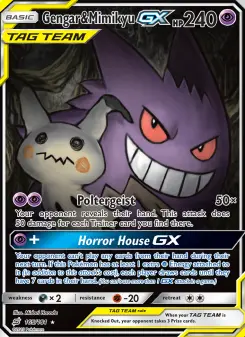
Gengar & Mimikyu GX from Team Up is the clean illustration of the last category. It has a $1,734.49 raw price and an $8,000 PSA 10 median on 54 verified comps, numbers most sites would happily build a target from. The engine will not, because no cohort of at least twenty cards whose price range brackets this one carries a usable PSA 10 to raw multiple, and a valuation borrowed from a cohort that does not contain your card is not a valuation. That is the same discipline behind the seven cards our desk refused to rate, except automated and applied to every dossier every day.
Now the uncomfortable part: the signals barely vote
Signal activity across the 62 rated cards
| Signal | Weight | Votes cast | Bullish | Bearish |
|---|---|---|---|---|
| Value vs cohort | x3 | 45 | 29 | 16 |
| Grading EV | x1 | 25 | 25 | 0 |
| Gem-rate drift | x1 | 25 | 23 | 2 |
| Character demand | x1 | 16 | 15 | 1 |
| Registry supply | x1 | 14 | 9 | 5 |
| Market float | x1 | 5 | 5 | 0 |
| Finish momentum | x2 | 0 | 0 | 0 |
Finish momentum carries the second-heaviest weight in the model, two of the ten points available, and has never cast a vote. All 62 rated dossiers print the identical line: no finish-cohort favor recorded. The feature that would populate it, a sentiment reading on card finishes, exists in the payload and is simply blank for every card that also clears the rating gates. Two of ten points of the model's declared machinery are decorative today. That is not a bug the engine can detect on its own, which is precisely why an audit like this has to be published rather than run privately.
Grading EV has the opposite pathology: it fires often and only ever one way. It is computable on 51 of the 62 rated cards, it has never printed a negative expected net in that cohort, and its bullish vote is withheld by design whenever the value signal already fired bullish, because both would otherwise price the same raw-to-graded gap twice. So its 25 recorded votes are all positive and structurally cannot corroborate a bearish case. Market float has cast five votes in 62 chances, all bullish, because the float gate needs both a population of 500 or more and a recorded listing count, and the listing feed reaches only a minority of the book so far.
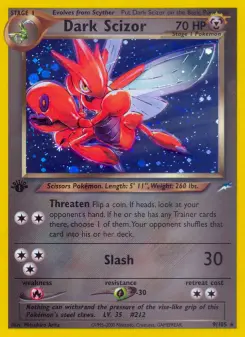
Put together, the distribution of how many signals fire per rated card is stark: four cards rate with zero signals firing, eighteen with one, seventeen with two, fifteen with three, seven with four, one with five. Not a single dossier has ever had six or seven signals speak at once. Dark Scizor from Neo Destiny is the representative case, an +80.1% implied upside built on the value anchor alone with the other six silent, and the dossier says so in its own formula line. What that lone surviving anchor is actually tracking, once you line its 62 calls up against the desk's written notes on the same cards, is the subject of The Gate Is the Market: a single variable, how hard the card is to gem.
The rule that cannot fire
A BUY needs a score of +4 or better with positive printed upside; a SELL needs -4 or worse with negative upside. Across 62 rated cards the observed scores run from -3 to +6. The bearish gate has never been reached, so the engine has issued 17 BUY calls, 45 HOLDs, and zero SELLs, and it is structurally close to unable to issue one: the value anchor alone is capped at -3, and the six non-value signals have cast eight bearish votes between them across the entire book. The consequence is visible on the most extreme name we carry. Leafeon VMAX from Evolving Skies prints a $188 target against a $417.47 raw price, minus 55%, our most negative disclosed view of any card, and the call on it is HOLD, because value voted bearish alone and nothing joined it. Twenty-four of the 62 calls carry negative implied upside, nine of them by 25% or more, and all of them are HOLDs.
One more label worth explaining before someone misreads it. Nineteen of the 62 calls read strong conviction. On a HOLD, strong does not mean we feel strongly; it means the absolute score is 1 or less, so the signals are genuinely balanced rather than merely quiet. A strong HOLD and a moderate HOLD differ in how contested the evidence is, not in how sure we are. That is a disclosed definition rather than a fixed problem, but a reader skimming the badge would get it backwards, so it belongs in an audit.
Counts pulled from the live v12 card report payloads on the moonstone book on September 2, 2026: 195 dossiers, 62 with a printed call, 133 without one, classified by the refusal string each payload records where there is one and by the absent rating block where there is not. Dossier counts drift daily as the warm-reports cron adds cards, so the total moves; the rated count and every signal figure below are as of that date. Signal activity counts a vote as cast when the recorded vote is non-zero; weights are the disclosed model weights (value x3, finish x2, all others x1). Score, call, conviction, target, and upside are the figures the dossiers themselves publish, not recomputations. The rated cohort is not a random sample of the market: it is the subset that clears comp-depth, price-floor, cohort-size, and sanity-band gates, which biases it toward deeply traded modern cards. Ratings move as tape moves, so the same card can be rated one week and refused the next; this is a snapshot, and the frozen edition ledger is the permanent record. Not financial advice.