We ended up running an accidental experiment. Between August 29 and August 31, 2026 the desk published 316 long-form house views, 111,864 words, one card at a time. Each was drafted by our research system under editorial direction, working from that card's recorded tape, and each figure in each note was reviewed against the payload it came from before publication. Separately, a rating engine computes a target and a call from disclosed formulas with no access to any of that prose. Sixty-two cards carry both. If the two instruments were reading different things, they would disagree in interesting ways. They do not. They turn out to be reading one number.
The same sentence, written two ways
Sort the 51 rated cards that carry a recorded lifetime gem rate, of the 62 rated in all, and split them into thirds of seventeen. The hardest-gemming third gems at a median 22.7% and carries a median implied upside of +102.7%, with 10 of its 17 names rated BUY. The easiest-gemming third gems at a median 59.4% and carries a median implied upside of minus 21.6%, with 1 BUY in 17. Now read the desk's titles for those same cards, written before anybody computed a correlation.
The hard end: machine calls and the desk's own headline
| Card | Gem rate | Machine | Desk title, verbatim |
|---|---|---|---|
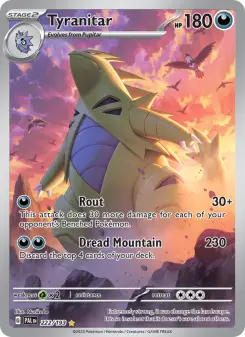
| Tyranitar, Paldea Evolved | 17.67% | BUY +142.5% | One new ten in twelve days on a card that refuses to gem |
| Charizard V, SWSH promo | 17.96% | BUY +125.6% | Five tens in a fortnight: the odds line fell below break-even |
| Pikachu V, SWSH promo | 19.26% | BUY +134.9% | Ten or bust: the nine sells under the ask at a 92nd percentile gem gate |
| Mewtwo, SVP promo | 20.73% | BUY +140.5% | Forty thousand slabs, a hardening gate, and a nine that refunds |
| Gengar, Lost Origin TG | 23.38% | BUY +130.8% | Fastest inflow in the era, hardest recent gate: both at once |
The easy end: same two instruments, same agreement
| Card | Gem rate | Machine | Desk title, verbatim |
|---|---|---|---|
| Blaziken VMAX, Chilling Reign | 65.57% | HOLD -37.7% | The gem gate is so wide the stamp has almost nothing to sell |
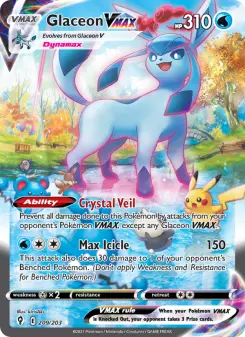
| Glaceon VMAX, Evolving Skies | 71.10% | HOLD -36.5% | Seven slabs in ten gem, and forty raw copies sit on the shelf |
| Leafeon VMAX, Evolving Skies | 71.61% | HOLD -55.0% | The era's flattest premium leaves the grading room nothing to earn |
| Espeon VMAX, Fusion Strike | 59.92% | HOLD -31.5% | A gem machine priced honestly, with a tight shelf under it |
| Mega Dragonite ex, Ascended Heroes | 63.11% | HOLD -26.1% | A registry compounding at four and a half percent a week flattens every premium |
Five prose notes and five machine calls, arrived at by different routes, saying the same thing in two dialects. When the gate is hard, the stamp is scarce and the premium is defensible. When the gate is wide, the stamp is a commodity and the premium is a tip. Nothing in the modern graded market we track tracks the shape of a card's price ladder as closely as the single number describing how often it gems.
How much of this is real and how much is arithmetic
Some of that correlation is built in, and we would rather say so than let a reader be impressed by a tautology. The machine's target divides a card's PSA 10 median by the median multiple of its price band, and that multiple is itself partly a function of gem rate, which the multiple ladder study measures in full. So a hard-gemming card mechanically prints a higher target, and the machine half of this convergence is doing less independent work than it looks like. The prose half is not formulaic: no note was written from the rating engine's output, and the notes cover 254 cards the machine declines to rate at all. But we should not oversell that either. Both instruments read the same recorded field, the lifetime gem rate on the same payload, so what happened here is two readers CONVERGING ON ONE FIELD rather than two independent measurements agreeing. The result worth keeping is narrower and still useful: given that field, a formula and a written argument reach the same ranking of 62 cards.
The book is also honest about its own thinness, which is what makes the convergence worth trusting. Of the 316 notes, 143 are single-paragraph stubs and 125 run under 200 words, because at the bottom of the tape-depth ranking the evidence supports a sentence, not a thesis. The median note is 444 words. Among the 167 substantial notes, 99% carry an explicit what-changes-the-call paragraph, 80% flag the tape's own thinness somewhere, 81% warn about a same-name printing that could contaminate a comp pool, and 93% discuss a rival grader's tape. That last habit is why the book noticed the cross-grader structure we later measured in the eight-to-one stamp.
Where they actually disagree, the data is missing
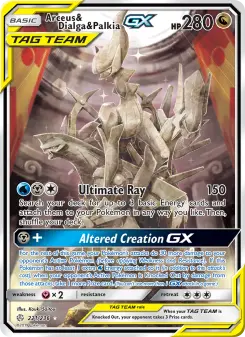
The single loudest disagreement on the book is the machine's most bullish number. Arceus & Dialga & Palkia GX from Cosmic Eclipse carries a $1,385 target against a $565.42 raw price, +145%, the largest implied upside anywhere in the 62. The desk's note on the same card is titled All spread, no cushion: the widest grade gap in its class. The reason for the split is not a difference of opinion about the market. It is that this card has no registry series at all in our tape: no population, no gem rate, no drift window, no float, and a PSA 10 median resting on 37 verified comps. Exactly one signal fired to produce that +145%, which is close to the engine's normal condition rather than an aberration, as our audit of the rating engine sets out in full. The desk, looking at the same hole, wrote caution.
The pattern repeats further down the list. Raichu from Paldea Evolved sits twelfth of the 62 by implied upside at +110.6%, well behind the +142.5% on Tyranitar that ranks second, and the desk's title is Scarcity priced at double the peer rate, on a registry two snapshots deep, one of the files the desk formally declined to trade. Across the ten largest implied upsides in the book, only five carry a measured drift window and only three carry a listing count; across the ten most negative, six carry drift. The machine's biggest bargains are, disproportionately, its worst-observed cards. That is the failure mode to watch in any cohort-anchored valuation, ours included: the cards that look cheapest against a peer group are frequently the cards the peer group knows least about.
House views: 316 notes on the moonstone desk, published August 29 to 31, 2026 from live report payloads, 111,864 words total, median 444 words, 143 single-paragraph stubs. Provenance, stated plainly because the convergence argument depends on it: these notes were DRAFTED BY OUR RESEARCH SYSTEM under editorial direction, not typed by a person, and each was reviewed for accuracy against the payload it was written from before publication. The read on the figures is the desk's editorial position; the figures themselves are the tape's. What the notes did not have access to was the rating engine's output, which is the only independence this article claims for them, and both instruments do read the same recorded gem-rate field. Theme frequencies are keyword matches over note text and are indicative, not exact taxonomies; the long-note subset is the 167 notes of 350 words or more. Machine ratings, targets, upsides, gem rates, and registry fields are the figures the live v12 dossiers printed on September 2, 2026; 62 rated cards, of which 51 carry a recorded lifetime gem rate and form the correlation sample. Thirds are cut on lifetime gem rate, 17 cards per outer third. Correlation is Pearson on gem rate against printed upside percent and is descriptive: part of the relationship is mechanical through the target formula, as stated in the text. RECHECKED 2026-09-22: the note corpus reproduces exactly, 316 notes, 111,864 words, a 444-word upper-middle median, 143 single-paragraph stubs, 125 notes under 200 words and 167 at 350 or more, authored August 29 to 31; the rival-grader and what-changes-the-call frequencies recompute to 93% and 99%. The thirds sentence said 62 where the cut is on the 51 cards carrying a recorded gem rate, and is fixed. Machine targets move nightly and the ones quoted here are the September 2 dossiers. Not financial advice.