

We now run a price target across the whole book rather than one card at a time, using a formula that is printed on the page it appears on. The result is not 22,000 targets. It is 3,228 targets and 18,746 refusals, and the refusals are the more interesting half. A model that values everything you point it at is not a model, it is a random number generator with a confidence interval. This one declines four cards out of five, and every decline states its reason in words on the card's own page.
What it refuses, and why
The target is a card's own graded tape re-priced at what its reference class pays for that grade. That sentence contains two inputs, and either one missing is fatal. So the refusal reasons are not a long tail of edge cases; two buckets carry 16,408 of the 18,746, and everything else put together is 728.
Why the model declines to value a card
| Reason | Cards |
|---|---|
| The raw price sits below the $1.50 signal floor | 8,729 |
| No verified PSA 10 median is on the tape | 7,679 |
| Fewer than ten PSA 10 comps on the tape | 1,610 |
| The cohort's implied value is more than 2.5x from the price | 622 |
| The PSA 10 median fails the 0.85x to 40x sanity band against raw | 90 |
| No reference cohort of at least 20 comparable cards | 16 |
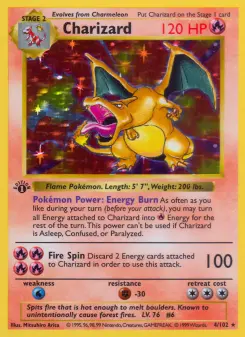
The floor is the one people argue with, so it is worth defending. Below about a dollar and a half the quoted price of a card is mostly the marketplace's own minimum, the seller's postage and the seller's patience. A model that reads that number as demand will happily tell you a bulk common is 40% undervalued, and it will be reading the shipping policy. The floor cuts where it has to rather than where it is comfortable: Defender from Base Set is refused at $1.46, four cents short, and we would rather decline a real Base Set card than publish a target built on postage. The second bucket is simpler: a card with no recorded PSA 10 sales has no graded tape, and there is nothing to re-price. That is why Base Set Charizard carries no target: the most recognisable card in the hobby has no verified PSA 10 median on our own tape, and we print that sentence instead of an estimate.
What the 3,228 actually say
A valuation model built by people who own the platform it appears on has an obvious failure mode: it says everything is cheap. Ours does not, and that is checkable rather than a promise.
The call, across every card the model will value
| Call | Cards | Average upside | Average raw price |
|---|---|---|---|
| BUY | 242 | +54.2% | $39.30 |
| HOLD | 2,818 | +3.5% | $35.65 |
| SELL | 168 | -35.7% | $28.52 |
Two thirds of the calls are HOLD with an average upside of 3.5%, which is the honest answer for most cards most of the time and the least satisfying one to publish. BUY and SELL together are 410 cards, 12.7% of the valued book. The largest BUY in the book by price is Charizard GX from Burning Shadows, $749.77 raw against a $965 target on 22 verified comps; the largest SELL is Roaring Moon ex from Prismatic Evolutions, $164.85 raw against a $74.50 target. And the upside distribution leans negative: 1,820 targets sit below the card's current price against 1,401 above it, with 7 landing exactly on it.
Where the 3,228 targets sit against today's price
| Target against current price | Cards |
|---|---|
| More than 25% below | 1,014 |
| Between 25% below and level | 802 |
| Between level and 25% above | 515 |
| Between 25% and 50% above | 343 |
| More than 50% above | 554 |
The single largest bucket is cards the model thinks are worth more than a quarter less than they cost. That is not a comfortable thing for a site that also sells a membership to say, and it is the main reason the distribution is worth printing rather than summarising as an average. The average upside across the whole valued book is +5.3%, which sounds mildly bullish and conceals a book with a fat negative tail.
Why a target can disagree with itself
One thing has to be said plainly because a reader could otherwise catch us in it. The full Market Report on a card computes the same target with four extra inputs that this whole-book pass does not hold: the float, the grading expected value, the character demand index and the finish-favour percentile. Each can move the number by up to 2.5% and three of them can move it down. So on a card that has both, the two figures can differ, and on a minority of cards they differ enough to change the call.
That is a real defect rather than a nuance, it was found by an adversarial review of our own code, and it is not fixed yet. Until it is, the report's number is the authoritative one on any card that has a report, and the card-page target is the whole-book approximation. We would rather print that sentence than let a reader discover it.
How to use a number like this
A target is a statement about a card's graded tape against its reference class, over a 180 day horizon, and it is nothing else. It does not know about a set rotating into a format, a character appearing in a film, or a print run being announced. It is most useful where it disagrees loudly with the price and you can name the reason it might be wrong. It is least useful where it agrees, which is most of the time, because agreement is what a cohort median does by construction. Our multiple ladder covers why a gem premium is mostly a statement about the price tag, which is the same arithmetic seen from the other side.
Read from moonstone production on September 17, 2026, across the 21,974 catalogue cards carrying a nightly feature row. The target is a disclosed deterministic formula, printed in full on every report that carries one: base equals the card's PSA 10 median divided by the median PSA-10-to-raw multiple of its reference cohort, where the cohort is its price band within its era, falling back to its price band, its era, then its set, first with at least 20 members; the base is then multiplied by fixed plus or minus 2.5% adjusters for float, gem-rate drift, finish favour and character demand. Gates that force a refusal, each printed on the card: raw price at or above $1.50, a PSA 10 median on at least 10 verified comps and inside a 0.85x to 40x sanity band against raw, a cohort cell with at least 20 members, and a resulting target within 0.4x to 2.5x of raw. The call is a weighted vote over seven recorded signals at fixed thresholds, BUY at +4 and SELL at -4. THE WHOLE-BOOK PASS DOES NOT HOLD FOUR OF THE SIGNAL INPUTS (float, grading expected value, species demand, finish favour), so its targets can differ from the same card's Market Report and on some cards differ enough to change the call; that is stated in the body and is an open defect, not a rounding difference. Horizon is 180 days. No figure here is a forecast of a specific card's price and none of it is investment advice.