

Every collector owns a box of cards worth nothing, and every collector quietly wonders whether time fixes that. Here is the honest, measured answer from live market prices across our priced English sample: time does fix it, but it takes decades, and it works from the bottom up. The floor is not a story about chase cards. It is a story about what happens to the WORST cards in a set when enough copies leave the world.
The floor, era by era (live base-printing market prices)
| Era | Median card | Share under $1 | 10th-percentile price |
|---|---|---|---|
| WotC (1999-2003) | $39.34 | 4.3% | $2.34 |
| Sun & Moon (2017-2019) | $0.41 | 62.5% | $0.16 |
| Sword & Shield (2020-2022) | $0.33 | 60.5% | $0.07 |
| SV / Mega era (2023-) | $0.60 | 61.9% | $0.19 |
The floor forms at the bottom, not the top
Look at the 10th percentile, the price of a genuinely unloved card in each era. Modern eras cluster between seven and nineteen cents: printing is effectively infinite and every card that is not a chase is bulk. WotC's 10th percentile is $2.34, which means the WORST tenth of a 1999-2003 set outprices the median card of every modern era by multiples. Only 4.3% of priced WotC cards trade under a dollar at all. Attrition did that: play wear, moves, moms, and landfills removed most copies, and the survivors inherited the demand. Even a Wizards league-night stadium card sits at four figures now, and a Base Set Venusaur never stopped clearing at real money in any condition.
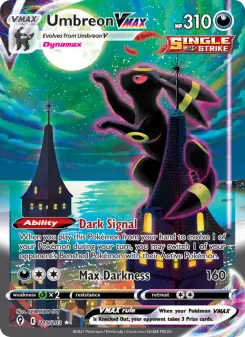
The modern counterexample matters too. Evolving Skies is the most valuable modern set in our sample, yet its value is almost entirely its alt-art peak around Umbreon VMAX: our concentration study, where the money sleeps, measured the era's top 1% holding 48.7% of its value. Modern sets are mountains with one gold summit and an ocean of seven-cent commons; vintage sets are plateaus where even the commons stand on a $2 floor. Those are different assets that happen to share a card back.
Live base-printing market prices from moonstone's daily TCGplayer sync, August 28, 2026, across every priced English catalog card (era classified by set; the priced sample skews toward cards with active listings, so true bulk floors are, if anything, LOWER than shown for modern eras and the vintage contrast understated). Median, under-$1 share, and 10th-percentile computed per era. The WotC sample is 92 priced cards. Correction, 2026-09-22, from an independent recomputation against production: that sentence used to add that the unpriced vintage bulk 'is thin', and it is not. Our English price coverage quadrupled in the days after this piece ran, and 1,652 WotC cards now carry a live base-printing price. On that fuller book the WotC median is $8.59 rather than $39.34, the under-a-dollar share 12.0% rather than 4.3%, and the tenth percentile $0.86 rather than $2.34, which turns the headline 33x gap over Sword and Shield's seven cents into about 12x. The direction holds and it is still the largest gap on the board; the multiple in the title belongs to the 92-card sample of August 28, 2026. The Sword and Shield row is unchanged on the fuller book: the under-a-dollar share is still 60.5% and the tenth percentile still $0.07. Concentration and registry-depth references link to their own methodologies. Not financial advice.