Every serious collector eventually stands at the same fork: send the card to PSA, or sell it raw. The hobby answers with folklore. We answered with arithmetic. For every card in our data where we hold a PSA 10 sale median, a PSA 9 sale median, a live raw market price, and a real gem rate from PSA population growth, we computed the expected value of a submission. Fees included. The pattern that falls out is not what the folklore says.
Expected value, not best case
The mistake almost everyone makes is pricing the dream. A submission is not a PSA 10; it is a lottery ticket whose odds are the card's gem rate. The honest formula is simple: multiply the PSA 10 price by the probability of gemming, add the PSA 9 price times the probability of not gemming, subtract fees, and compare the result to what the raw card sells for today. We used 25 dollars per card for fees, which covers PSA's value tier plus shipping. Cards where the sub-9 tail matters are noted, and our conservative shortcut of treating every non-gem as a 9 flatters grading slightly, which makes the negative results below even more damning.
Modern chase cards: the full expected-value ledger
These are the modern cards with the deepest sample sizes in our graded feed, sorted by expected edge: the percentage a submission is expected to return over just selling raw, after fees, weighted by the card's actual gem rate. Sample sizes are the number of graded sales behind each median.
Expected value of a PSA submission (August 2026)
| Card | Raw | PSA 9 | PSA 10 | Gem rate | Expected edge |
|---|---|---|---|---|---|
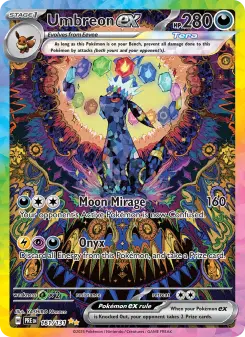
| Umbreon ex SIR (Prismatic) | $1,496 | $1,535 | $6,225 | 29.8% | +94% |
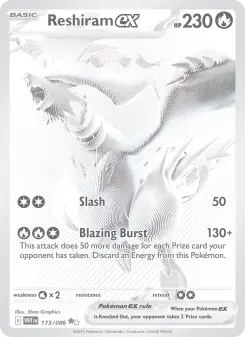
| Reshiram ex (White Flare) | $509 | $458 | $1,322 | 58.8% | +85% |
| Lugia V Alt Art (Silver Tempest) | $529 | $539 | $1,348 | 54.9% | +81% |
| Rayquaza VMAX Alt (Evolving Skies) | $1,254 | $1,005 | $2,808 | 68.3% | +76% |
| Victini (White Flare) | $555 | $471 | $1,499 | 48.8% | +71% |
| Mega Dragonite ex (Ascended Heroes) | $727 | $629 | $1,540 | 63.1% | +62% |
| Pikachu with Grey Felt Hat | $1,109 | $971 | $2,850 | 42.9% | +58% |
| Pikachu ex (Ascended Heroes) | $1,160 | $960 | $2,375 | 62.7% | +57% |
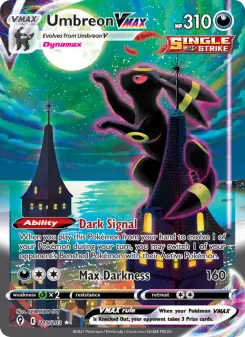
| Umbreon VMAX Alt (Evolving Skies) | $2,320 | $2,049 | $4,325 | 69.5% | +55% |
| Dragonite V Alt (Evolving Skies) | $553 | $500 | $1,250 | 50.7% | +55% |
| Charizard GX (Hidden Fates SV) | $760 | $698 | $1,475 | 49.0% | +39% |
Read the gem rate column against the edge column and the folklore dies. The Prismatic Umbreon ex gems less than half as often as the original Moonbreon, 29.8 percent against 69.5 percent, and it is still the single best submission on the board, because its PSA 10 trades at more than four times raw. Gem rate alone tells you nothing. What matters is the break-even gem rate, the odds you need for the submission to beat selling raw, and for every card in this table that number sits between 9 and 16 percent. Modern chase cards clear their own bar three to seven times over.
The PSA 9 is the silent killer
Here is the number the grading economy does not advertise: for ten of the twelve modern chase cards above, the PSA 9 median is below the raw market price. A 9 on the Ascended Heroes Mega Gengar ex sells for 83 cents on the raw dollar. A 9 on the Fusion Strike Gengar VMAX alt art sells for 88 cents. Team Rocket's Mewtwo ex, with 894 graded sales behind the number, sells at 93 cents raw-equivalent in a 9. Slabbing a modern card and missing the gem does not just cost you the fee. It converts a liquid raw card into a certified disappointment that buyers discount below ungraded copies, because the 9 removes the dream that the raw copy still carries.
Old cards break the model in both directions
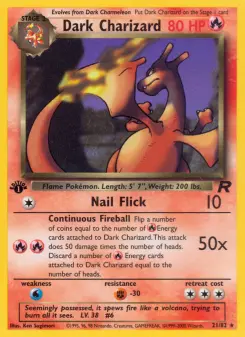
Vintage flips every intuition. A Team Rocket Dark Charizard has a gem rate of 2.6 percent, among the worst we track, and it is still one of the best submissions in the data, because the PSA 9 alone trades at roughly six times the raw market. The raw pool for a 2000-era card is dominated by played copies, so certifying any clean example at any grade lifts it out of that pool. The expected edge on clean vintage is not a gem lottery; it is an authentication premium that pays even on the 8s and 9s.
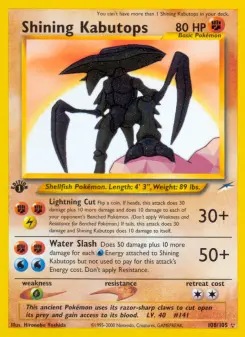
The trap runs the other way too. Shining Kabutops from Neo Destiny carries a 3,710 dollar PSA 10 median, and our model still scores the submission NEGATIVE at population-average odds, minus 15 percent expected edge, because it gems at 9 percent and the raw market already prices in the difficulty. High-value vintage 10s are lottery jackpots, not strategies. The submission only makes sense if you have real reason to believe your copy beats the population, and sellers of raw copies believe that far more often than PSA agrees.
The cards doing the arguing
PSA 9 and PSA 10 prices are moonstone's eBay sold-listing medians as of August 6, 2026, with sample sizes stated per card (the modern table ranges from 91 to 894 sales per median). Raw prices are the canonical-printing TCGplayer market from our daily price feed. Gem rates are cumulative PSA 10s divided by total PSA population from our population snapshots. Expected value = gem rate x PSA 10 median + (1 - gem rate) x PSA 9 median - $25 in fees; treating all non-gems as 9s slightly flatters grading, so negative results are conservative. Cards with grade-inverted medians on thin samples (n < 10) were excluded, not smoothed. Vintage graded comps can mix First Edition and Unlimited printings; vintage rows are therefore discussed with that caveat and excluded from the modern table.