Moonbreon. Sunbreon. Tina. When a card transcends its printed name and earns a community nickname, collectors read it as proof of an elite tier, and a common belief follows: nicknamed cards have better historic performance. It is a testable claim, so we tested it. We took every alternate art card in the three sets where the famous nicknames live, Evolving Skies, Fusion Strike and Lost Origin, split them into nicknamed and not, and compared real TCGplayer price growth over the same eighteen months. The nicknamed cohort lost. Not by a little, and not only to cheap outliers.
Three nicknames against twenty-seven silent alt arts
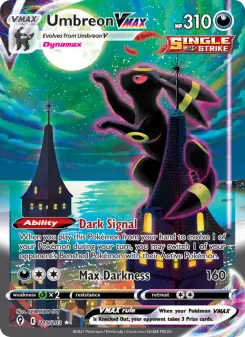
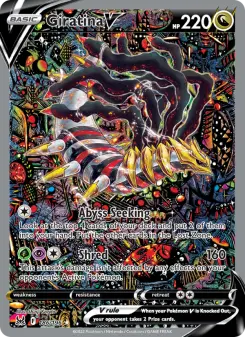
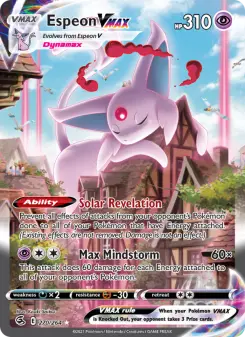
The treatment group is the three cards with genuinely established community nicknames: Moonbreon (Umbreon VMAX Alternate Art, Evolving Skies), Sunbreon (Espeon VMAX Alternate Art, Fusion Strike) and Tina (Giratina V Alternate Art, Lost Origin). The control group is the other 27 alternate arts across those same three sets, same treatment class, same era, same pull structure. Growth is measured on real Near Mint sale prices, February 2025 through August 2026, point to point.
Nicknamed vs unnicknamed alternate arts, 18-month growth (measured August 8, 2026)
| Cohort | Cards | 18-month median | 6-month median | Median price |
|---|---|---|---|---|
| Nicknamed (Moonbreon, Sunbreon, Tina) | 3 | +25% | +26% | $838 |
| All other alt arts | 27 | +39% | +36% | $154 |
| Price-matched controls ($200+) | 12 | +44% | +40% | $412 |
The nickname is a receipt, not a coupon
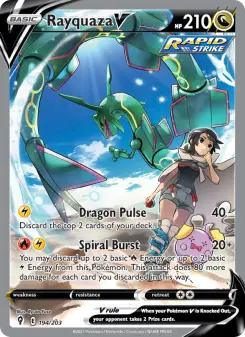
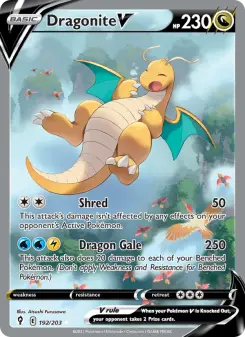
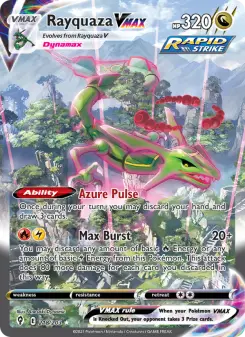
Every nicknamed card underperformed the price-matched control median. Moonbreon grew +44%, respectable and almost exactly the cohort norm. Tina grew +25% and Sunbreon +11%, both clearly below it. Meanwhile the two best cards of the whole universe, Rayquaza V (+167%) and Dragonite V (+163%), have no nickname at all. The mechanism is not mysterious: a nickname forms AFTER a card becomes famous, and fame is exactly the thing markets price first. By the time the community has agreed on what to call a card, its demand premium is already in the sticker. You are not buying early information; you are buying a receipt for information the market processed years ago.
Depth, not growth
This is not an argument that Moonbreon is a bad card to own. Our market-cap study measured it as the deepest pool of graded money in the hobby, a $107 million market across 30,696 slabs, and depth is real value: tight spreads, instant exits, a price that absorbs a sale without moving. That is what the nickname buys you. What it does not buy is excess return, and the eeveelution block around it is the cautionary tale: Leafeon VMAX Alt (-1%), Sylveon VMAX Alt (-3%) and Glaceon VMAX Alt (-10%) all went backwards over a window in which no-name alt arts of dragons doubled. Fame concentrated in a franchise family is not a growth engine; it is a comfort premium.
The cohorts, deep-linked
Universe: all 30 cards whose printed name marks them Alternate Art in Evolving Skies, Fusion Strike and Lost Origin, from full-history pulls on August 8, 2026 (real TCGplayer Near Mint sale prices; history depth begins late January 2025, so the 18-month window is point to point from the earliest recorded price). Treatment cohort: the three cards with established community nicknames (Moonbreon, Sunbreon, Tina); nicknames that are simple species shorthand (Zard) or official collaboration titles (Van Gogh Pikachu) are out of scope. Medians throughout. The treatment cohort is three cards; that is the entire population of established alt-art nicknames in these sets, not a sample, but small-N caution still applies and per-card figures are shown so nothing hides in an average.