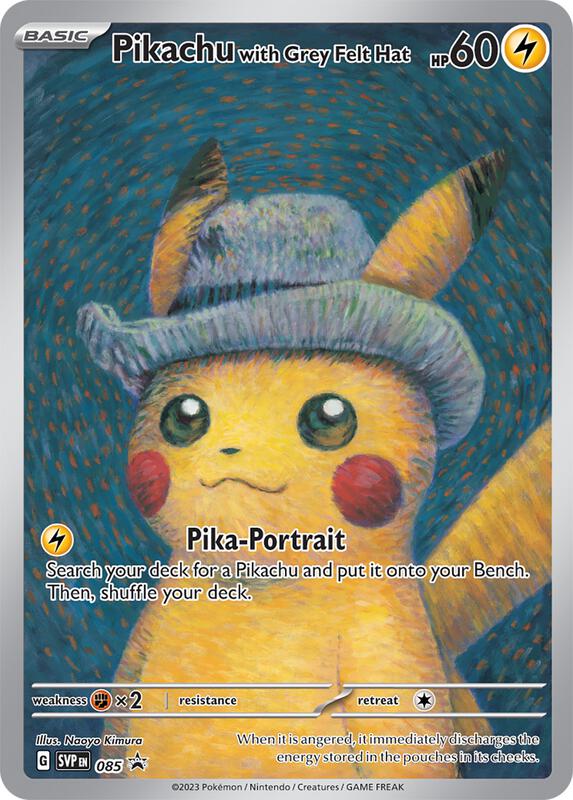


The Van Gogh Museum Pikachu is the perfect control specimen for a question the hobby argues about endlessly: does PSA's line move? The card is young, printed once, distributed in a protective sleeve, and submitted in enormous volume continuously since 2023. Handling decay and submitter-mix stories are weaker here than for any card we track. And its gem rate just fell by half.
Ruling out the innocent explanations
Our Gem Rate Drift study found the whole market tightening by 3.3 points on average, so some drift here is expected. But 21 points is six times the market's move, on a card whose supply story resists the usual excuses: it was handed out sleeved at a museum and instantly treated as an asset, so the 'clean copies got graded first' mechanism has less late-stage junk to draw from than a playground card. What remains is submitter mix (casual owners finally sending their souvenir in) and the grader's line itself. Both are probably true; the tape cannot split them. What the tape CAN say is that a submission today faces half the odds a 2024 submission faced, and the Paldean Fates Charizard ex at 40.6% to 15.8% says the Felt Hat is not alone.
The trade implication is mechanical. The card's grading EV was built on a 43% gem assumption; at 22%, the expected cost per PSA 10 roughly doubles, which quietly RAISES the floor under existing tens even as it punishes new submitters. Meanwhile Latias ex drifts the opposite direction (35.0% to 53.7%), meaning fresh tens are getting CHEAPER to mint there. Drift direction is now a live input to every grade-or-hold decision, and it is on the card pages.
Gem rates from moonstone daily PSA registry snapshots, read August 28, 2026: lifetime = gem/total at window start; recent = gem-delta over total-delta across a 200+-slab window. The registry snapshot is not daily on every card, so the window runs between the first and last snapshots we hold on or before that read, which for this card is August 2 to August 20, 2026 (736 added slabs) and for the Paldean Fates Charizard ex the same two dates (285 slabs). The drift ranking is over the 99-card cohort of the companion study, whose mean drift is -3.34 points. Cohort context and method caveats in the Gem Rate Drift study. Attribution between submitter mix and grading standards is discussed, not asserted. Not financial advice.