Every card shop has a case, and every case has stickers, and the sticker is the start of a negotiation whether the shop admits it or not. The difference between paying fair and paying the tourist tax is three questions you can answer from your phone in under a minute.
Question one: what do solds say?
A sticker is what the shop hopes. A verified sold median is what buyers pay. Vintage raw cards routinely carry marketplace asks far above their auction medians because condition risk transfers to you at the register. Check the sold median for the exact card before the sticker anchors you. If the shop price sits under recent solds, that happens too, and it is how you find the good shops.
Question two: which printing is this, exactly?
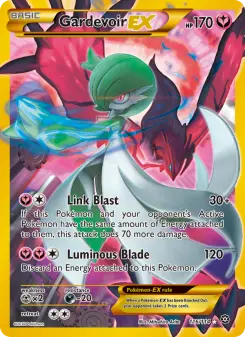
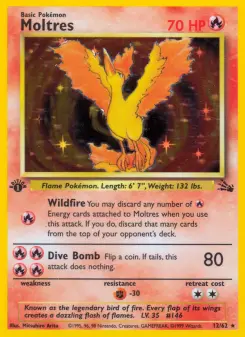
Steam Siege Gardevoir EX is a $5 card as number 78 and a $107.59 card as number 116, and behind glass at an angle they are easy to confuse. Fossil birds are one price Unlimited and several times that with a 1st Edition stamp. Read the collector number and the stamp through the glass, or ask to see the card. A shop that will not show you the number is answering a different question.
Question three: what does the grade add here?
A slab is worth its grade's own sold median, not the raw price plus hope. A PSA 9 Fossil Moltres had 72 verified sales saying $199.99 when we wrote this, on August 25, 2026. If the case wants $350 for it, that is a $150 story. If it wants $150, that is a real discount you can verify on the spot. And a 9 is not a 10: on many modern cards the 9 sells within a few dollars of raw while the 10 carries the entire premium.
Prices referenced are verified sold medians from individual eBay listings and TCGplayer market data, August 2026, with sample sizes on their card pages. Raw prices in this piece are asks; the Moltres figure is a sold median, and the two are never compared without saying which is which. Photo identification runs our production scanner first and a vision model read second; unidentifiable photos are said to be unidentifiable rather than guessed. RECHECKED 2026-09-22: the Moltres reading reproduces exactly from our recorded graded tape for August 25, 2026, 72 sales at a $199.99 median, and has since moved to $239.25 on 214 sales as a deeper comp set took over that card's row. The two Steam Siege Gardevoir EX prints now ask $5.08 and $107.47. Fossil's 1st Edition holo premium over Unlimited runs about 2.5x to 3.7x across the three birds, which is the "several times" the text claims. Cynthia's photo path was rebuilt on September 22, 2026 as a detection pass plus a single embedding call, so any timing you may have read elsewhere for the older pipeline no longer describes it.