
Everyone knows what a PSA 10 is worth. Almost nobody publishes what a PSA 7 is worth, and that is the grade a great many submissions actually come back as. We took every card where we hold both a graded ladder and a live raw price, 337 of them, and asked a plain question: at what grade does the slab stop being worth more than an ungraded copy of the same card? The answer is PSA 7, where the median card trades at 0.96 times its raw price and more than half the sample is worth less encased than loose.
The ladder, measured against the raw price of the same card
| PSA grade | Cards | Verified comps | Median grade / raw | Share worth less than raw |
|---|---|---|---|---|
| 10 | 209 | 21,562 | 10.89x | 0% |
| 9 | 242 | 17,026 | 2.50x | 13.6% |
| 8 | 195 | 4,309 | 1.35x | 34.9% |
| 7 | 89 | 1,162 | 0.96x | 52.8% |
| 6 | 56 | 773 | 0.80x | 80.4% |
| 5 | 37 | 421 | 0.62x | 83.8% |
| 4 | 19 | 161 | 0.52x | 84.2% |
The step that costs everything, and the three that cost almost nothing
Comparing grades across different sets of cards is a trap, because the cards that have a deep PSA 10 tape are not the cards that have a deep PSA 4 tape. So we took the 57 cards that carry all of PSA 10, 9, 8 and 7 with at least three verified comps each, and looked only at those. Their median prices are $437.50, $110.00, $81.21 and $60.98. As a share of the PSA 10: 1.00, then 0.25, then 0.19, then 0.14. The 10 to 9 step costs 75% of the card's value. The 9 to 8 step costs 26%. The 8 to 7 step costs 25%. Below a 9 the ladder is close to flat and converges on a dollar floor around $50 to $80, almost regardless of which card it is.
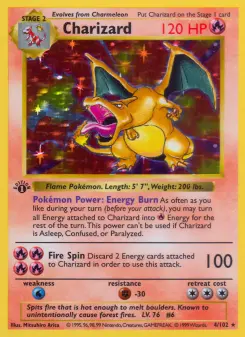
That flatness is the finding. The market pays enormously for a 10, meaningfully for a 9, and then broadly stops caring. A Base Set Charizard is the clearest illustration: raw $868.56, PSA 8 $1,025 on 31 comps, PSA 7 $636.50 on 24 comps, PSA 6 $477.50, PSA 5 $399. Four grades spanning $626, against a single 9 to 10 step that is worth multiples of the whole range.
Where those slabs actually are
This would be academic if the low grades were rare. They are not. Across 220 cards with a full per-grade population breakdown, covering 1,578,048 PSA slabs, 23.25% sit below a PSA 9 and 10.7% below a PSA 8. The era split is stark. On 44 WotC cards holding 205,961 slabs, only 2.96% are PSA 10 and the single most common grade is a PSA 8 at 21.62%, with 60.9% of the entire registry below a 9. On 43 Sword and Shield cards holding 474,295 slabs, 53.56% are PSA 10 and only 11.0% sit below a 9.
Base Set Charizard has 17,577 copies in PSA 7 against 16,330 in PSA 8 and 18,615 in PSA 6, which makes the 6 its single most common grade and the 7 its second. The modal Base Charizard is not a gem. It is a played card in a slab, and the ladder above says that slab is worth about three quarters of what the raw card is. Read those three counts as the registry line rather than as one product: PSA reports Base Set Charizard against a line our snapshot totals at about 105,000 slabs, well above any single printing of the card, because first edition, shadowless and unlimited copies share it. The shape of the distribution is the point; the absolutes are a family, not a card.
Where the ratio inverts
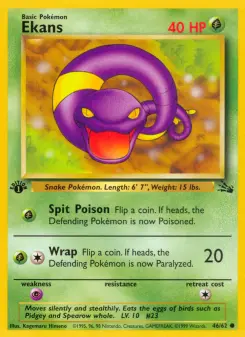
On cheap vintage the arithmetic runs the other way, because the slab price is essentially the grading fee. Ekans from Fossil is $0.48 raw and $13.40 in a PSA 7, a ratio of 27.9. Zubat is $0.50 raw and $12.99 graded. Mr. Fuji $1.11 and $17.25. Nobody is making money on these, but they establish that the low grade market has a floor set by cost rather than by the card, which is exactly why the ladder flattens.
Cards in this study
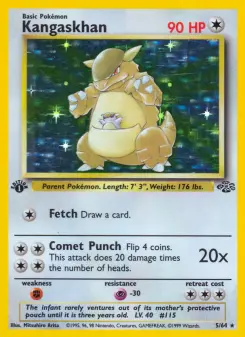
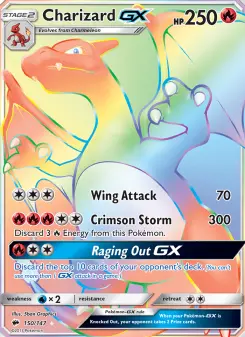
Population: graded ladders exploded from our stored graded payloads, 13,000 grade rows across 1,344 distinct keys and seven graders, resolved to catalog ids with printing-resolved keys preferred and the canonical printing chosen by the same penalty rule the card pages use. 683 English cards carry a usable PSA ladder and 337 also carry a live raw price. Grade prices are provider verified sold medians with their comp counts stated; raw prices resolve through the shared canonical printing rule, not the dump's dearest printing field. Rows with fewer than three verified comps are excluded from every ratio. The unfiltered per grade samples are different sets of cards, with median raw price rising from $14.73 in the PSA 10 sample to $208.70 in the PSA 1 sample, so the headline pattern is confirmed on a 57 card balanced panel carrying all four of grades 10, 9, 8 and 7. No regression is run anywhere in this piece: grade medians and raw prices come from independent sources and are never algebraically linked. Condition multipliers are measured from 901 product printings carrying per condition prices. Population figures are registry counts as reported, on 220 cards; PSA reports many vintage cards against one registry line shared by several printings, so per grade absolutes on those cards describe the line, not a single product. Correction, 2026-09-22, from an independent recomputation against production: the balanced panel's shares of the PSA 10 were first printed as 1.00, 0.19, 0.14 and 0.11, which is the list shifted by a row; on the panel's own medians they are 1.00, 0.25, 0.19 and 0.14, and the step costs quoted beside them (75%, 26%, 25%) were already computed correctly. The Base Set Charizard card note also claimed the PSA 7 was its most common grade, which the same paragraph's own counts contradict: the PSA 6 is, at 18,615. The graded payloads behind the ladder are refreshed in place and carry no history, so the seven grade rows, the 57 card panel medians and the era population splits are as of September 4, 2026 and cannot be recomputed at that date; a rebuild on today's payloads returns the same shape, with the PSA 7 median landing on 1.00x raw and 50.4% of that grade's cards worth less encased than loose.