
Gem rate is the most quoted number in card grading and the least measured. Everyone knows that vintage cards are hard to grade and modern cards are easy, and almost nobody has checked the shape of that curve. We can now check it. Our population tracker holds PSA registry counts for 8,590 English cards with at least 50 submissions each, covering 15,708,231 graded copies and 5,904,682 PSA 10s. Two findings came out of it. The first is that the overall gem rate is much higher than the folklore suggests. The second is that the age curve is not a curve at all, and the worst era to send in is one almost nobody names.
Age does not predict gem rate. Print technology does.
If gem rate fell steadily with age, the table below would descend in order. It does not. It falls to a floor in the Diamond and Pearl years, then climbs back up as you keep going backwards into the 1990s. Base Set era cards grade roughly five times better than Diamond and Pearl cards, and more than three times better than Black and White.
Median gem rate by era (cards with 50 or more PSA submissions)
| Era | Cards | Median gem rate | 10th pct | 90th pct |
|---|---|---|---|---|
| Mega (2026 to date) | 437 | 58.8% | 13.7% | 71.2% |
| Sword and Shield (2020-2022) | 1,625 | 51.8% | 26.4% | 69.9% |
| Sun and Moon (2017-2019) | 1,073 | 39.9% | 12.3% | 59.3% |
| Scarlet and Violet (2023 to date) | 1,449 | 36.3% | 18.5% | 54.8% |
| WOTC (1999-2003) | 1,632 | 20.7% | 2.2% | 40.8% |
| XY (2014-2016) | 508 | 12.8% | 1.8% | 34.5% |
| EX (2003-2007) | 828 | 9.8% | 3.3% | 27.7% |
| Black and White (2011-2013) | 304 | 6.4% | 1.9% | 17.2% |
| HeartGold SoulSilver (2010-2011) | 135 | 4.6% | 1.3% | 14.3% |
| Diamond and Pearl (2007-2011) | 341 | 3.8% | 1.4% | 10.1% |
Median gem rate by era
Two effects pointing in opposite directions
The shape makes sense once you stop treating the population as a random sample of printed cards. It is a sample of cards somebody chose to pay to grade, and that choice is made differently depending on the card's age.
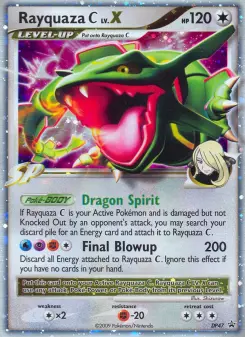
Working forward from 2007, the physical explanation dominates. The Diamond and Pearl and HeartGold SoulSilver holo pattern sits on a thin, glossy stock that curls, and the foil layer shows handling on the surface rather than hiding it. Those cards were also opened by children in 2008 with no expectation of resale. Black and White inherited the stock problem and added a printing registration issue that produces off-center backs. The result is a decade of cards where a PSA 10 is genuinely rare: Rayquaza C has produced a single PSA 10 across 1,300 submissions.
Working backwards from 2007, selection takes over. A 1999 Base Set card that survived twenty-seven years and got submitted in 2025 was chosen for submission because it looked good. The bad copies were thrown away, played with, or never sent. So the WOTC population is a filtered survivor pool, and its 20.7 percent median reflects that filtering rather than the print quality of 1999. The cards that were genuinely hard to grade still show it: Lugia from Neo Genesis sits at 0.1 percent across 12,258 submissions, and Vaporeon from Jungle at 0.2 percent across 16,445.
The cards where the registry is nearly empty at the top
The eleven hardest to gem, 1,000 or more submissions
| Card | Set | Gem rate | Submissions |
|---|---|---|---|
| Rayquaza C | DP Black Star Promos | 0.1% | 1,300 |
| Typhlosion | Neo Genesis | 0.1% | 4,218 |
| Blissey | Neo Revelation | 0.1% | 1,033 |
| Lugia | Neo Genesis | 0.1% | 12,258 |
| Latios | XY Black Star Promos | 0.1% | 1,369 |
| Venusaur | Wizards Black Star Promos | 0.2% | 5,429 |
| Ampharos | Neo Revelation | 0.2% | 1,135 |
| Team Aqua's Kyogre EX | Double Crisis | 0.2% | 5,846 |
| Rayquaza | XY Black Star Promos | 0.2% | 1,006 |
| Latias | XY Black Star Promos | 0.2% | 1,438 |
| Vaporeon | Jungle | 0.2% | 16,445 |
The four easiest to gem, 1,000 or more submissions
| Card | Set | Gem rate | Submissions |
|---|---|---|---|
| Lapras VMAX | Sword and Shield | 86.3% | 1,776 |
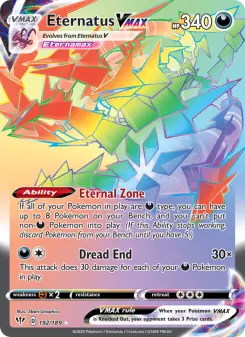
| Eternatus VMAX | Darkness Ablaze | 85.0% | 2,053 |
| Charmander | MEP Black Star Promos | 84.1% | 19,036 |
| Charmander | First Partner Pack | 84.0% | 21,779 |
The bottom table is the more useful one for anyone thinking about grading costs. A card that gems at 85 percent is not a lottery ticket, it is a fee. You are paying roughly one grading fee per PSA 10 you receive, so the PSA 10 price has to clear the raw price plus that fee plus shipping before the submission makes sense. At the top of the first table you are paying something closer to a thousand fees per ten, which is why those cards trade at the multiples they do.
The threshold we had to throw away
This study started as a validation of a signal in our own pick engine, and it ended by killing the version of that signal we had written. The factor tested a card's gem rate against a fixed threshold of 35 percent. Measured against the rated universe on the complete September 8 reading, that fired on 58.9 percent of cards, and on 80.7 percent of WOTC cards against 19.9 percent of Sword and Shield cards. It was not selecting hard-to-grade cards. It was selecting old ones, and doing it with an air of precision. The factor now ranks a card against its own era and price band, which is the only version of the question the data supports. Our momentum study published alongside this one describes a larger version of the same mistake.
PSA registry counts read from our population tracker, one row per card per day, latest row per card as of 2026-09-08. Universe is English cards with at least 50 recorded PSA submissions, which is 8,590 cards and 15,708,231 submissions. Gem rate is PSA 10 count divided by total population, computed by us from the per-grade counts rather than read from the provider's own rate field, which arrives in mixed units. Rows whose PSA 10 count is absent rather than zero are excluded: an absent count was previously stored as zero and would have manufactured a 0.0 percent gem rate on cards that simply had no breakdown published. These figures are a SUBSET of everything we track, and the difference is deliberate: the Grading Desk reports the full tracked universe of 13,900 cards and 16,226,272 submissions, while this study restricts to the 8,590 cards that carry at least 50 submissions and a gem rate their row can actually support. Rates are only meaningful on that subset, so the two pages report different totals on purpose. Era is assigned from set identity. Cards with fewer than 30 measured examples in an era are not shown in the era table, and neither is the residual bucket of cards whose set identity maps to no named era, which is not an era and is not reported as one. The registry refreshes through the day, so the headline counts are the state of the table at the moment of the pull rather than a figure a later reader can reproduce exactly; the era medians, which are what the study argues from, are stable to a tenth of a point across the whole of that day. The threshold figures in the last section are recomputed on the complete September 8 reading, which is why their universe is larger than the headline count.