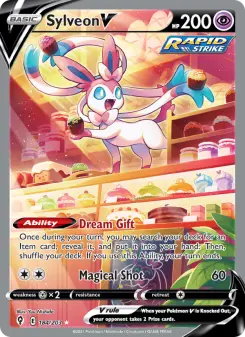
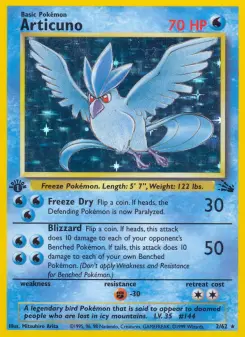
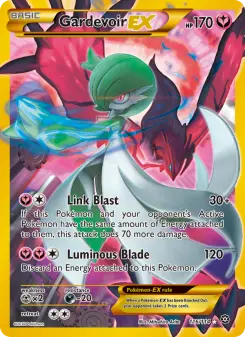
Ask any card scanner what it fears and it will not say blurry photos. It will say twins: pairs of cards that share the same artwork while trading at wildly different prices. The Fossil Articuno holo and its non-holo twin. The plain 151 Ekans and its Poke Ball pattern variant. The VMAX Climax alt arts reprinted stroke for stroke in VSTAR Universe. Steam Siege Gardevoir EX, which is a $5 card as number 78 and a $107.59 card as number 116. Get the twin wrong and every downstream number is wrong.
Why twins break naive scanners
Image matching runs on visual similarity, and twins are engineered to be visually identical. The separators are tiny: a set code printed at a few points of type, a collector number, a holo layer that photographs as a faint shimmer, a texture overlay. On a clean single-card photo these survive. Crop that card out of a binder page or a display case photo and the pixels holding the set code might number in the dozens. A scanner that answers anyway is guessing, and its inventory imports are silently wrong.
Twin classes we test against, with real August 2026 prices
| Twin pair | Separator | Price gap |
|---|---|---|
| Gardevoir EX, Steam Siege 78 vs 116 | collector number | $5.00 vs $107.59 |
| Fossil Articuno 2 vs 17 | holo layer only | holo commands the premium |
| 151 Ekans plain vs Poke Ball pattern | texture overlay | pattern variant premium |
| VMAX Climax alts vs VSTAR Universe reprints | set code in the footer | different markets entirely |
| Paldean Fates 114/091 vs 014/091 | one digit, often occluded | secret rare vs common |
How we got to 15 of 15 on composite photos
On August 26, 2026 we ran an accuracy loop against synthetic binder pages and showcase scenes built from ground-truthed listing photos. The starting score was 66.7%, 18 of 27 pockets. Nine root causes came out of it, and most of them were plumbing rather than identification: a rectifier that had to run per crop, a capture scale that did not match a real phone, a corpus flag recorded the wrong way round. But the failures that survived the plumbing fixes were all twins, and they still are. The fixes that mattered: rectify each region into a clean card face before matching, ship the footer strip at native resolution so the digit reader sees real pixels, arbitrate multiple geometric interpretations instead of trusting one, and treat the model-based refine as a reranker that may only promote a card retrieval already surfaced, never an oracle inventing one. The suite closed at 15 of 15 across three consecutive fresh draws and repeatedly since, while the 159-case single-card regression gate held at 159 for 159 on all four certifying rounds. The residual class we name rather than hide is Japanese same-art twins under composite degradation.
Twin cases and scores from the binder and showcase accuracy loop of August 26, 2026: synthetic pages composed from the certified regression corpus, scanned through production, with the 159-case raw and slab regression gate run twice after every scanner change. The 66.7% baseline is 18 of 27 pockets across three synthetic three-by-three pages; the closing score is 15 of 15 on three consecutive fresh draws; the gate figure is 159 of 159 on all four rounds that certified the one scanner change the loop shipped. Prices are TCGplayer market and verified eBay sold medians pulled August 2026. RECHECKED 2026-09-22: the two Steam Siege Gardevoir EX prints now read $5.08 and $107.47 against the $5.00 and $107.59 printed here, and the Fossil Articuno pair $80.06 holo against $10.35 non-holo. The scanner has since been certified again, five consecutive rounds of a 26-case error suite plus the 159-case gate twice, on September 3, 2026.