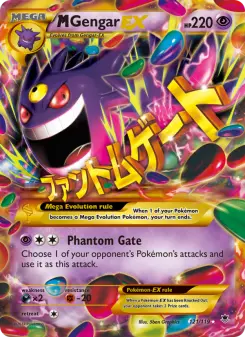
We track prices on more than 56,000 cards, which lets us ask a question most collectors answer by vibes: when a set is worth money, where does the money actually live? The answer, measured across 212 sets with meaningful price coverage, is concentrated: the top five cards hold 55.6% of total set value on average. But the average hides two completely different kinds of set.
Top-5 concentration: share of set value held by five cards
| Set | Top-5 share | What it means for a buyer |
|---|---|---|
| Champion's Path | 90.3% | two Charizards, the V and the VMAX, are most of the set; everything else is packaging |
| Phantom Forces | 89.9% | same lottery shape, 2014 edition |
| Average across 212 sets | 55.6% | half the value in five cards is normal |
| World Championship Decks | 10.8% | value spread across the whole print, no chase |
Lottery sets vs ledger sets
A high concentration set behaves like a lottery ticket: opening product is a bet on pulling one specific card, singles buyers should skip the middle of the checklist entirely, and the set's index moves when one card moves. A low concentration set behaves like a ledger: value accrues broadly, bulk holds meaning, and the set index describes something real about demand for the whole print run. Neither is better. They are different instruments, and pricing tools that treat a set as one number hide the difference.
The practical read: before buying into a set, check where its value lives. If five cards are 90% of it, either buy those five cards or admit you are buying entertainment. If value is spread, set-level bets like sealed and bulk actually track the thing you think you own.
Concentration computed from our set value histories: top five card share of summed card market values per set, 212 sets with a stored value history, August 2026. Catalog: 56,426 tracked cards. Note two things about the average. The population is every set that carries a history, with no floor on how many of its cards are priced, so a handful of tiny promo rows with three priced cards sit in it at a trivial 100%; and the average is unweighted across sets, so a 1,900-card set counts once and a 20-card set counts once. RECHECKED 2026-09-22: neither the catalog nor the value store carries history, so August cannot be replayed. Rebuilding today over the 200 sets that now hold a value history returns an average top-five share of 55.9% against the 55.6% printed here, 53.2% if the population is cut to the 172 sets with at least twenty priced cards. Champion's Path reads 90.3% and Phantom Forces 90.0%. World Championship Decks has moved to 12.2%. The hero figure has been corrected: 89.9% is the share held by the five dearest Phantom Forces cards together, and M Gengar EX is the third of those five, worth 19.1% of the set on its own behind Dialga EX at 35.8% and Gengar EX at 26.7%. The catalog now holds 63,600 rows; 1,212 TCGplayer product ids are claimed by two of those rows each, so any count of rows runs about 2% above a count of distinct products.