Every modern Pokémon card wears one of a handful of foil treatments, and the market prices them as tiers: the matte painted frame of an Illustration Rare, the etched full-canvas texture of a Special Illustration Rare, the mirror gloss of a shiny, the stamped gold of a Hyper Rare. We pulled eighteen months of daily Near Mint prices for 480 cards across seven sets and asked a simple question: which physical treatment actually compounds? The answer has a shape, and it is not the one the pull-rate sheet implies.
What the foils physically are
A quick decoder, because the names obscure the physical reality. Illustration Rares (IR) are matte-finish extended artworks with a painted border, the successor to SWSH Alternate Arts. Special Illustration Rares (SIR) add etched texture and a full-canvas frame, the top pull slot of every SV set. Art Rares and Special Art Rares are the Japanese equivalents. Shiny Rares carry mirror-foil backgrounds around shiny-colored Pokémon. Hyper Rares are the gold-stamped full-metal cards at the very end of the sheet. Ultra Rares are the standard full-art ex and V treatments. Double Rares are the plain in-frame ex cards. And one treatment exists only as a nine-card fossil: the Amazing Rare, a paint-splatter holo that sprays across the frame line, printed for a single stretch of the SWSH era and never again. The pull rates get rarer roughly in that order, which is exactly why the price data below is so interesting.
Eighteen months of growth, by tier
Median growth by rarity tier, Feb 2025 to Aug 2026 (480 cards, 7 sets)
| Tier | Cards | 18-month median | Last 6 months | Median price today |
|---|---|---|---|---|
| Illustration Rare | 52 | +77.4% | +78.7% | $19.18 |
| Ultra Rare | 163 | +44.9% | +28.6% | $7 range |
| Shiny Ultra Rare | 8 | +42.3% | +42.0% | $5 range |
| Double Rare | 22 | +40.0% | +29.4% | $2 range |
| Secret Rare (SWSH) | 50 | +33.5% | +19.8% | $14 range |
| Shiny Rare | 119 | +31.6% | +53.2% | $5 range |
| Special Illustration Rare | 31 | +29.5% | +47.0% | $45 range |
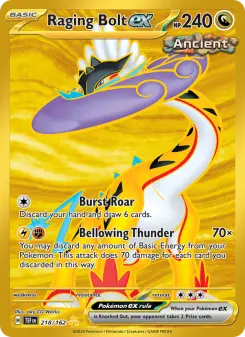
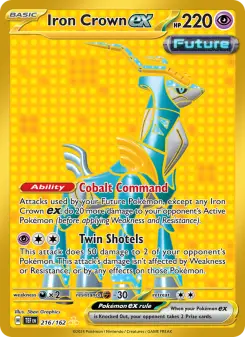
| Hyper Rare (gold) | 18 | +13.7% | +15.7% | $11 range |
The art floor: collectors buy illustrations, not print odds
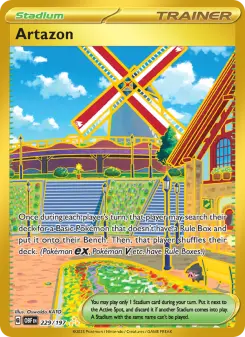
The cleanest reading of the table is that price follows artistic desirability, not pull rate. Golds are the rarest pulls in most sets and finished dead last at +13.7%, with several outright negative. IRs are among the EASIEST hits in the premium slots and they lead everything at +77.4%, accelerating rather than fading. This extends the finding from our earlier scarcity-tax study with six more tiers and a longer window: the market keeps re-rating cards people want to look at, and keeps ignoring cards whose only argument is the odds sheet. We call the pattern the art floor, because well-illustrated commons-tier pulls keep finding a rising floor under them while stamped gold sinks.
The SIR reconciliation: the tax got paid, then the chase took over
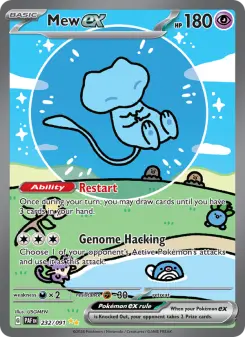
Our scarcity-tax study measured SIRs LOSING to IRs badly over their first year, and the full-window number here still shows the gap: +29.5% against +77.4%. But the six-month column tells a newer story. SIRs ran +47% in the last six months, and the recovery is concentrated in the true chase cards: the Paldean Fates Mew ex SIR is up 114% in six months to over a thousand dollars, and Temporal Forces SIRs like Morty's Conviction ran triple digits. Meanwhile character-trainer SIRs without a chase profile kept bleeding: Arven is down 42% over the window, Iono down 15%, Giovanni's Charisma down 30%. The launch premium on a SIR is a tax; whether you ever earn it back depends on whether the card is THE card of its set, not on the treatment itself.
The undervalued corner: cheap IRs that are already moving
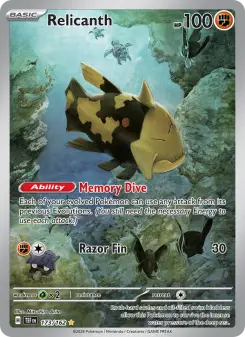
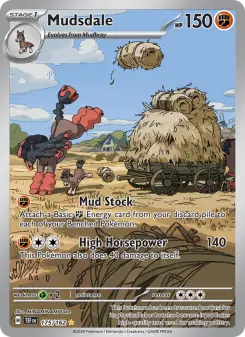
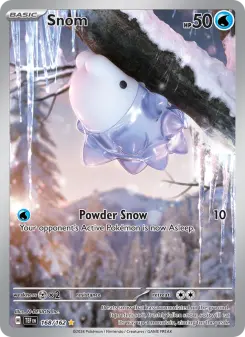
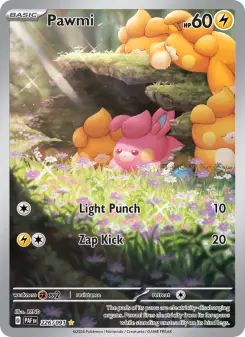
If IRs are the best tier, the actionable question is which IRs are still cheap. We screened the tier for cards trading UNDER the tier's median price today while growing FASTER than the tier's six-month median, meaning the market is actively re-rating them but the dollar entry is still low. The screen lit up one set above all: Temporal Forces. Five of the top eight qualifying cards are TEF Illustration Rares, all still between 9 and 19 dollars. The set sits in the post-hype dead zone our First 90 Days study mapped, its IR block is compounding at 92 to 137 percent six-month rates, and nothing in it requires more than a twenty to own.
The screen: under tier-median price, above tier-median growth
The gold trap, named
Hyper Rares the odds sheet said should be winners
Amazing Rares: nine cards, one print window, no sequel
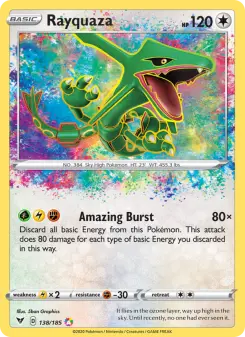
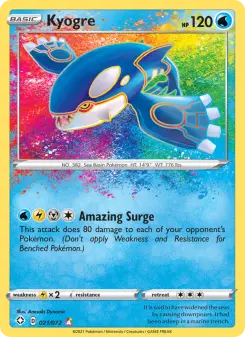
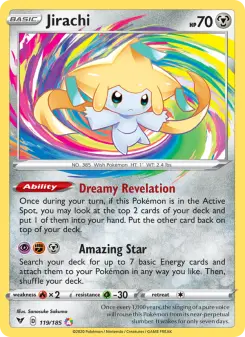
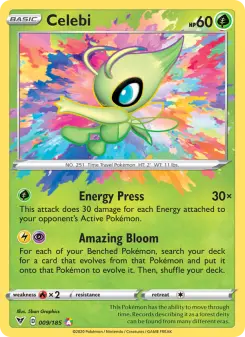
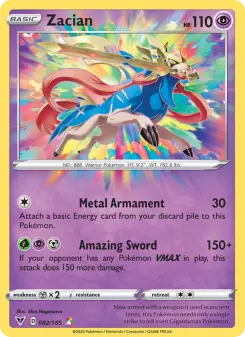
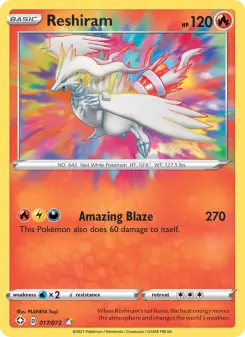
One tier sat outside our original seven-set price universe, so we pulled its two sets specially, and it turns out we buried the lede by leaving it out: the Amazing Rare is the best-performing treatment we have ever measured. Nine cards total, ever. Six in Vivid Voltage (November 2020) and three in Shining Fates (February 2021), every one a legendary or mythical, every one wearing a rainbow paint-splatter foil that ignores the frame line entirely. The Pokémon Company printed the treatment for roughly four months and then killed it. Over the same 18-month window as the main table, the nine-card tier's median growth is +277%, three and a half times the Illustration Rare tier that leads the table, with every single card positive: Kyogre +391%, Jirachi +366%, Celebi +336%, and the chase Rayquaza +277% to about 25 dollars. The last six months still median +83%, though the last 30 days have cooled across the tier, which reads as consolidation after a two-year run rather than a reversal. The art floor explains why: distinctive artwork on iconic Pokémon, a discontinued treatment with zero reprint risk, and a completed nine-card checklist that still costs about 64 dollars to finish.
The complete Amazing Rare checklist, priced and measured
Universe: every card with a full-window Near Mint daily price history in seven sets (Scarlet & Violet 151, Evolving Skies, Paldean Fates, Temporal Forces, Crown Zenith, Obsidian Flames, Team Up), pulled from our TCGplayer price feed on August 6, 2026. Window: February 2025 through August 2026; growth compares 14-day averages at each end, and the six-month column rebases from early February 2026. Cards starting under $1 are excluded as penny noise, leaving 480. Team Up's history begins October 2025 and its cards therefore mostly fall out of the full-window stats. Tier labels are TCGplayer rarity strings; Japanese AR/SAR equivalents are discussed but not in the table because their histories live on a different provider path. Amazing Rares fall outside the seven-set universe, so Vivid Voltage and Shining Fates were pulled separately on August 6, 2026 with full price histories; their growth figures compare the first recorded price (late January 2025) with the latest, point to point, rather than the 14-day-average endpoints used in the main table. Medians throughout; tiers with fewer than 8 qualifying cards omitted.