Should you buy singles at release, or wait out the supply wave? Every content creator has an answer and none of them has a table. We built one. For every English set released since late 2024 with full price coverage from launch, we indexed our set-level singles price to 100 on release week and tracked it daily. The bottom is real, it usually arrives between day 40 and day 90, and it averages about 25 percent off launch pricing. Except when it never comes at all.
Ten launches, indexed from day zero
Set singles index from release week (release = 100)
| Set | Released | Trough | Trough day | Day 90 | Today |
|---|---|---|---|---|---|
| Prismatic Evolutions | Jan 2025 | 99.3 | 24 | 96.9 | 75.4 |
| Journey Together | Mar 2025 | 61.0 | 87 | 59.8 | 54.1 |
| Destined Rivals | May 2025 | 98.7 | 10 | 102.6 | 105.7 |
| Black Bolt | Jul 2025 | 87.9 | 45 | 102.7 | 154.5 |
| White Flare | Jul 2025 | 76.2 | 52 | 82.8 | 123.0 |
| Mega Evolution (ME01) | Sep 2025 | 52.4 | 87 | 51.7 | 53.1 |
| Phantasmal Flames | Nov 2025 | 52.5 | 40 | 66.8 | 73.9 |
| Ascended Heroes | Jan 2026 | 100.0 | 0 | 131.6 | 122.6 |
| Perfect Order | Mar 2026 | 79.1 | 90 | 75.4 | 67.9 |
| Chaos Rising | May 2026 | 46.9 | 58 | 48.2 | 48.2 (day 60) |
Two completely different animals live in this table, and telling them apart at launch is worth more than any other timing skill in the hobby.
The grinder: supply wins for two months
Journey Together, ME01, Phantasmal Flames, Perfect Order, Chaos Rising: ordinary sets follow the same script. Launch pricing holds for two or three weeks on opening hype, then the print wave lands and the index grinds down 21 to 53 percent, bottoming between day 40 and day 90. Buying these at release is the most reliably losing trade in the hobby. Buying the trough is not automatically a win either; note that ME01 sits at 53 a year later and Journey Together at 54. For grinder sets the trough is where you buy the specific cards you actually want, not where you speculate on the set recovering.
The chase set: there is no dip and waiting costs you
Prismatic Evolutions never gave buyers more than a 0.7 percent discount in its first 90 days. Destined Rivals bottomed 1.3 percent under launch on day 10 and was above launch by day 90. Ascended Heroes never traded below its release price at all and was up 31.6 percent by day 90. These sets share a profile: a headline chase card with mainstream pull, allocation problems at retail, and sealed prices that never approached MSRP. When a set launches already supply-constrained, the day 40 to 90 trough simply does not happen, and the waiting strategy that works everywhere else quietly costs you 20 to 30 percent.
Black Bolt and White Flare: the trough plus a catalyst
The July 2025 twin sets are the best timing trade in the table. Both dipped on schedule, Black Bolt to 88 on day 45 and White Flare to 76 on day 52, and both then ran far above launch, to 155 and 123 today. Buying Black Bolt's trough returned 76 percent. The lesson is not that every trough recovers; the grinders above prove otherwise. The twins had what grinders lack: a finite, collectible hook, a complete national Pokédex split across the pair, that kept demand compounding after supply normalized. A trough is only a buy signal when there is a reason demand outlasts the print run.
The launches that wrote the rules
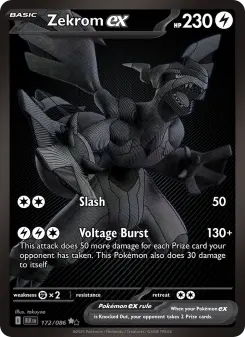
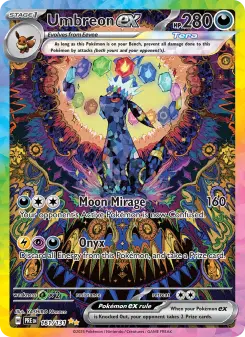
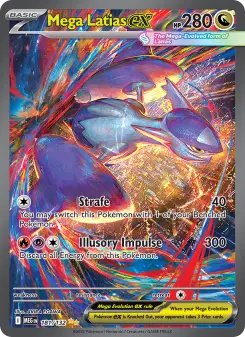
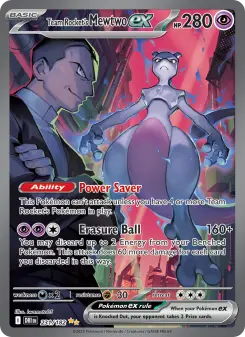
Each set's index is moonstone's set-level singles price series (the average TCGplayer market across the set's tracked singles from our daily feed), rebased to 100 at the first data point on or after the set's release date, tracked through August 6, 2026. Surging Sparks (Nov 2024) is excluded because our series begins 80 days after its release, which would fabricate a launch baseline. Chaos Rising has only 60 days of history; its day 90 column reports day 60 and is excluded from trough-window statistics. Troughs are the series minimum within the first 90 days. Set-level indices average across singles and therefore understate individual chase-card moves in both directions.