There is a comfortable idea in this hobby that the cards which win tournaments are the cards that hold value, that playability is a kind of fundamental underneath the speculation. We can now test it directly. Our playability tape carries 689 distinct card names appearing in Standard-format deck lists across the 51 tournaments tracked on September 14, and our price tape carries daily market prices for the whole catalog. Join them and 688 of those 689 names come back with both a tournament share and a real price range. The correlation between how often a card is played and what its cheapest printing costs is +0.248 on ranks. Against its most expensive printing it is +0.011, which is a polite way of saying zero. Boss's Orders appears in 90.6% of decks in the format and you can buy it for 24 cents.
Playing the game costs almost nothing
Group the 688 cards by how often they show up in a deck list and the medians tell the whole story. The nine cards that appear in more than half of every tracked deck have a median cheapest printing of 24 cents. The 430 cards that appear in under 1% of decks have a median cheapest printing of 15 cents. Nine cents separates the most-played cards in the format from the ones nobody plays. Meanwhile the median expensive printing wanders between $7.31 and $24.46 across the same buckets with no pattern at all.
Price by tournament share, September 14, 2026
| Appears in | Card names | Median cheapest print | Median dearest print |
|---|---|---|---|
| More than 50% of decks | 9 | $0.24 | $16.73 |
| 20% to 50% of decks | 19 | $0.20 | $24.46 |
| 5% to 20% of decks | 81 | $0.20 | $10.51 |
| 1% to 5% of decks | 149 | $0.17 | $7.31 |
| Under 1% of decks | 430 | $0.15 | $11.42 |
The monotone climb down the cheapest column is real and it is the +0.248. Being essential to the format does lift a card's floor. It lifts it by pennies, because the Pokémon Company prints staples in quantity precisely so that the format stays accessible, and because a card in 90% of decks is by definition a card that was opened by everybody. Scarcity and necessity point in opposite directions here, and scarcity wins.
The nine most-played cards in the format, and what they cost
These are the cards you literally cannot build a competitive deck without. Seven of the nine have a printing under 35 cents.
Format staples: tournament share against price range
| Card | Share of decks | EN printings | Cheapest | Dearest |
|---|---|---|---|---|
| Boss's Orders | 90.6% | 9 | $0.24 | $16.73 |
| Night Stretcher | 84.6% | 4 | $0.24 | $8.95 |
| Poké Pad | 83.0% | 4 | $0.28 | $10.60 |
| Lillie's Determination | 82.2% | 4 | $0.34 | $64.85 |
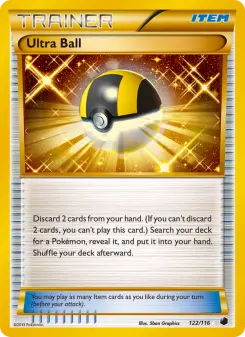
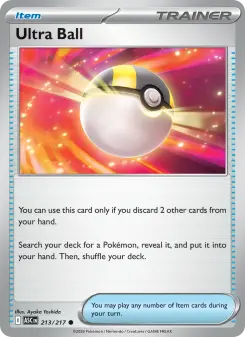
| Ultra Ball | 80.5% | 18 | $0.19 | $962.76 |
| Buddy-Buddy Poffin | 68.8% | 5 | $0.18 | $11.62 |
| Fezandipiti ex | 63.2% | 5 | $3.52 | $55.01 |
| Special Red Card | 59.1% | 2 | $0.18 | $3.16 |
| Meowth ex | 51.5% | 3 | $2.30 | $119.83 |
Two of the nine break the pattern, and they break it the same way. Fezandipiti ex at $3.52 and Meowth ex at $2.30 are Pokémon, not trainers, which means their cheapest printing is a holo-rare-tier card rather than a common. A ten-times-higher floor is what happens when the cheapest legal copy of a staple is printed at rare frequency instead of common frequency. That is a supply fact, not a demand fact.
Same card, same rules text, 5,171 times the price
The most useful number in this study is the gap inside a single card name. Ultra Ball has 18 English printings in our catalog. The cheapest, in Ascended Heroes, is 19 cents. The dearest, the Plasma Freeze Secret Rare, is $962.76. Identical text, identical function, identical legality in the same deck. The entire $962.57 difference is the border, the foil treatment and the print run.
Cheapest against dearest printing, same card name
| Card name | EN printings | Cheapest | Dearest | Multiple |
|---|---|---|---|---|
| Ultra Ball | 18 | $0.19 | $962.76 | 5,171x |
| Rare Candy | 22 | $0.16 | $184.53 | 1,136x |
| Lillie's Determination | 4 | $0.34 | $64.85 | 190x |
| Boss's Orders | 9 | $0.24 | $16.73 | 69x |
| Meowth ex | 3 | $2.30 | $119.83 | 52x |
Rare Candy repeats the trick: 22 printings, 16 cents at the bottom, $184.53 for the Plasma Blast version. And Lillie's Determination does it inside a single set, Mega Evolution, where the uncommon costs 34 cents and the Special Illustration Rare of the same card costs $64.85. A 190-times multiple for artwork, with the competitive function held perfectly constant. This is the cleanest natural experiment the hobby offers, and it says the game is not what you are paying for.
The market's most expensive cards are not legal in anything
Run the join backwards and the point lands harder. The most expensive cards in our catalog do not appear in a single Standard deck list we tracked, because they are not legal in the format and in most cases have not been for a decade or more.
Expensive and unplayable: the top of the market by price
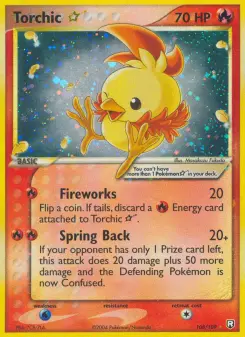

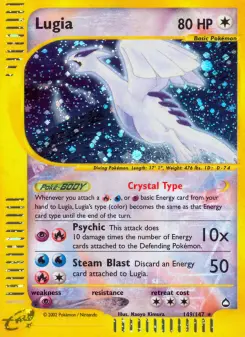
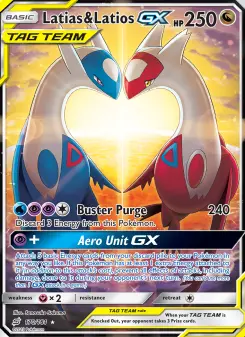
Three of those four are pre-2010 cards that have been unplayable for most of their lives, which makes them easy to dismiss as a separate antiques market. Latias & Latios GX is not: Team Up shipped in 2019 and the card was Standard-legal until the 2021 rotation. Umbreon VMAX, the eighth-dearest English card we track at $2,350.08, makes the same point more sharply. Evolving Skies was in Standard until rotation, and during that time the alt art was already the expensive thing in the set for reasons that had nothing to do with its attacks. When the format moved on, the price did not. Whatever the alt art was worth, it was never the playability.
Three rules that follow from the join
ONE: stop paying a premium for playability. If a card is genuinely essential to the format, the market has almost certainly already printed a 20-cent version of it, and the expensive printing you are looking at is priced on art and rarity. The nine most-played cards in the format have a median entry price of 24 cents, and you do not need the pretty one to win a game.
TWO: the single-printing staple is the only playability trade. Unfair Stamp at $15.47 on a 30.7% play rate is what tournament demand looks like when there is no cheap escape hatch. Screen for heavily played cards with one printing and no announced reprint. That is a small list, and it is the only place where the rotation calendar is genuinely a price catalyst.
THREE: treat rotation as a risk to the floor, not the ceiling. When a card rotates out, the cheap printing loses its only source of demand and drifts toward bulk. The expensive printing barely notices, because nothing it was priced on has changed. Our work on cute versus strong found the same asymmetry from the character side, and the daily liquidity leaderboard shows where the actual trading volume sits, which is not where the deck lists are.
Sources: our playability_snapshots table, sourced from Limitless TCG, covering 1,032 distinct card names in the Standard format across 8 snapshot days from July 30 to September 14, 2026; tournament shares in this article are from the September 14 snapshot, which covers 3,292 deck lists across 51 tracked tournaments. Prices are the mean of each printing's daily TCGplayer market value across the 21 days from August 30 to September 19, 2026, from our price_history table. The two tables are joined on card name to English-language printings only. The September 14 snapshot carries 689 distinct names and 688 of them match a priced English printing, so the join loses one name rather than a meaningful share. (The 1,032 figure that appears elsewhere in our data is the union of all eight snapshot days and is not the population used here.) Because the join is by name, every printing of a card inherits that card's tournament share, which is correct for legality (all printings are equally legal) and is the property this study is testing. Correlations are Spearman rank correlations on the 688 matched names. 'Not Standard legal' means the name did not appear in any tracked Standard deck list on September 14, 2026. Nothing here is financial advice.