The question gets asked two ways. Either a byline is a tell about the cardboard, so that a Ryo Ueda card is a worse submission than the card sitting beside it in the same set, or the byline is only a proxy for when the card was printed. Hard to Gem settled the second reading in September across 22.8 million slabs: the decade decides. It could not settle the first. It did rank 82 illustrators, each of them holding fifteen or more registry lines of at least a hundred slabs, but a pooled rate scores every name against a whole era and a whole language table at once, so that ranking came out sorted by decade and could not pull a hand apart from one, 5ban Graphics aside. Hold the set and the rarity fixed, take each illustrator out of the baseline they are measured against, and what is left is nine points wide.
Ranked on gem rate against same-set, same-rarity peers. 6,970 English cards, PSA registries of 50 or more, build of 2026-10-12
| Illustrator | Cards | Comparable | Raw gem rate | Vs same set, same rarity | t |
|---|---|---|---|---|---|
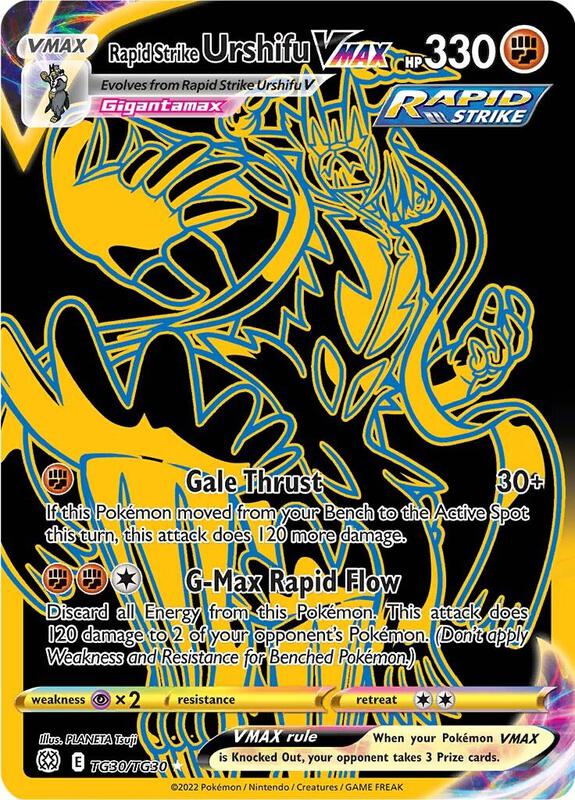
| PLANETA Tsuji | 72 | 62 | 55.0% | +4.3 pt | 3.68 |
| Ryota Murayama | 34 | 26 | 37.3% | +4.2 pt | 2.28 |
| kawayoo | 40 | 30 | 32.0% | +4.1 pt | 2.78 |
| AKIRA EGAWA | 36 | 28 | 45.4% | +3.0 pt | 1.84 |
| Keiji Kinebuchi | 117 | 116 | 25.8% | +2.7 pt | 3.21 |
| Eske Yoshinob | 118 | 115 | 28.9% | +2.5 pt | 3.04 |
| Ayaka Yoshida | 65 | 55 | 37.4% | +2.4 pt | 3.19 |
| Miki Tanaka | 54 | 53 | 30.1% | +2.4 pt | 2.01 |
| Shin Nagasawa | 63 | 52 | 34.2% | +2.3 pt | 2.31 |
| 5ban Graphics | 956 | 686 | 40.8% | +2.2 pt | 7.23 |
| 32 illustrators, ranks 11 to 42 | 2,931 | 2,469 | 14.9% to 51.6% | +2.0 to -2.6 pt | 5 of 32 past 2.00 |
| Hikaru Koike | 35 | 35 | 14.2% | -2.6 pt | -2.44 |
| Akira Komayama | 49 | 45 | 35.1% | -2.6 pt | -2.37 |
| Ryuta Fuse | 48 | 43 | 42.7% | -3.3 pt | -2.57 |
| Naoki Saito | 73 | 65 | 35.2% | -3.5 pt | -3.68 |
| kirisAki | 59 | 54 | 43.4% | -3.6 pt | -3.75 |
| Hitoshi Ariga | 57 | 47 | 38.8% | -4.0 pt | -3.82 |
| Ryo Ueda | 186 | 156 | 10.6% | -4.3 pt | -8.98 |
| Hideki Ishikawa | 56 | 49 | 42.3% | -4.7 pt | -4.83 |
Those two number columns do different jobs. The raw gem rate is the one a collector can read off a registry page, and it is mostly a statement about when somebody was working: Ryo Ueda sits at 10.6% because 148 of his 186 cards are EX, XY and Diamond and Pearl prints, and that stretch of the catalog gems in single digits and teens whoever drew it. The column beside it is the one that answers the question. For every card we take the mean gem rate of the other illustrators' cards in the same set at the same rarity, subtract it, and average the gaps. Painter or Pokemon asked the price version of the question with a different control: it scored each artist on sets the model had never seen, and across the 12,671 held-out cards its species model also scored, the artist explained 14% of where a card ranks inside its own set. Nobody has run a set-and-rarity control on the grade, because the byline and the grading registry sit in different databases and the only thing that joins them is a TCGplayer product id.
The table a collector can see is mostly a calendar
Rank the same 50 illustrators on raw gem rate instead and eight of the top ten change. PLANETA Tsuji survives at the top of both, 55.0% raw and +4.3 points controlled, and AKIRA EGAWA holds a place in both. The tenth-highest raw rate in the table belongs to kirisAki at 43.4%, who ranks 47th of 50 once the set and the rarity are held still. Nothing moved except the yardstick. Forty-five of kirisAki's 59 cards are Sword and Shield or Scarlet and Violet prints and 35 sit in the Ultra Rare or Secret Rare slot, which is a description of two generous eras rather than of a hand.
Gem rate by era, card-level mean
What Ken Sugimori's row is really measuring
Ken Sugimori is the row a reader would quote, and the yardstick decides what it says. Here is the same illustrator measured four ways, all on the same 6,970 cards. Against his era with his own cards still inside the era average, 3.5 points light. Against his era with his own cards removed from it, 5.0 points light. Against his own sets, 1.2 points light, on the 499 of his cards whose set carries five or more cards by other hands. Against the same set at the same rarity, 0.1 points light on 377 cards with a t of -0.17, which is nothing at all. He drew 389 of the 1,409 WotC cards in this population, and 141 of those sit in the Rare slot, which gems at 18.1% across 445 cards while that era's 502 commons gem at 29.3%. The sentence that looked like a finding was a sentence about a rarity slot.
The second correction is smaller and runs the other way. An illustrator with a big body of work is inside the average they get scored against, which flattens them towards it. Removing each illustrator from their own baseline moves Sugimori from 3.5 points light to 5.0 at the era level, and 5ban Graphics, who drew 956 of these cards, from 3.9 points up to 4.8. Every figure in this note is computed with the illustrator taken out.
The row that nearly shipped
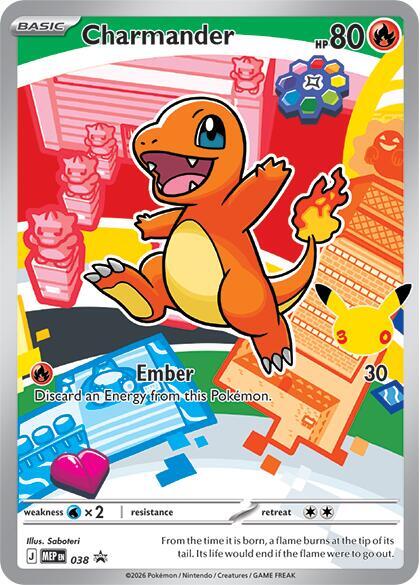
Leave the promo channels in and the top of the table is Saboteri, whose 29 comparable cards sit 28.8 points above their peers at a t of 5.81. Second place in that version is AKIRA EGAWA at 6.0 points, so it is not a close first. It is also not an illustrator effect. Twenty of Saboteri's 33 cards are Mega Evolution era prints and 18 of those are MEP Black Star Promos, the starter pack-ins that people grade by the box.
The three cards that carried the first draft's top row

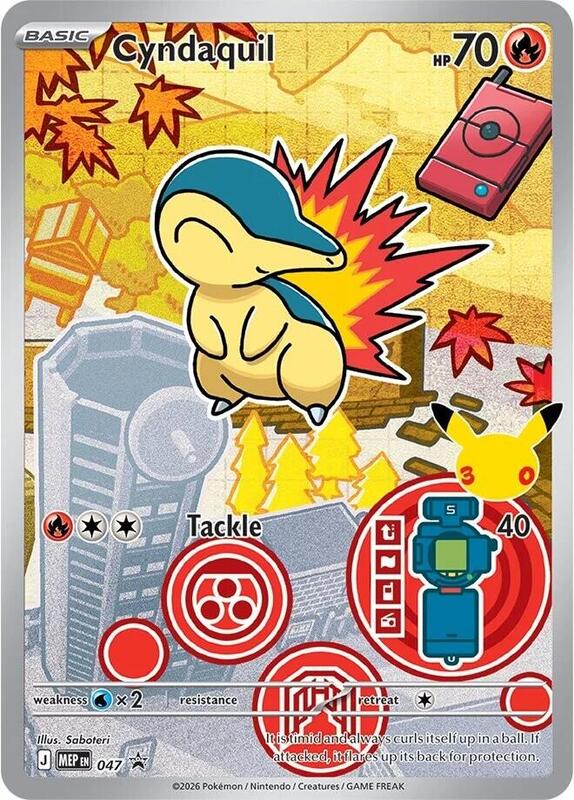
Split Saboteri's own cards and the effect splits with them: their 20 comparable Mega Evolution cards are 42.5 points above peers, their nine Scarlet and Violet cards are 1.5 points below with a t of -0.50. Cut the promo channels, which is what the published table does, and Saboteri has 12 cards and eight comparable ones, below the bar of 25 comparable cards, and no row at all. That is why 771 promo-channel cards come out of the 7,741 that otherwise qualify. A pack-in promo and a pulled-from-a-booster rare are graded by different people in different numbers, and one illustrator can hold a third of a promo channel: 18 of the 54 MEP cards among those 771 are Saboteri's, against seven for the next hand.
The negative with the most evidence behind it
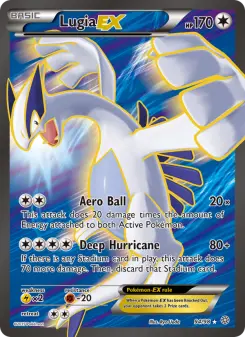
On 156 comparable cards, Ryo Ueda comes in 4.3 points below his peers at a t of -8.98, which is the largest absolute t of the 50 and ahead of 5ban Graphics at 7.23. Hideki Ishikawa is further down the table at 4.7 points below, on 49 comparable cards. The Ueda number is not one bad set either: 119 of his 156 comparable cards came in under their own shelf-mates. Take the 21 Ultra Rares in Ancient Origins. His seven gem at 19.5% and the other 14 gem at 31.4%, and Lugia EX (Ancient Origins) comes back a ten on 15.0% of 3,296 submissions while Hoopa EX (Ancient Origins), the same set and the same rarity word, does it on 50.7%.
Share of an illustrator's comparable cards that gemmed below their same-set, same-rarity peers
Where the comparison gets soft
A rarity string is a coarse thing to hold fixed. Our Rare bucket in Dragon holds 18 of these cards: eight of them are the holo ex prints, which gem at 5.7% on registries in the thousands, and ten are plain rares that gem at 25.0% on registries in the dozens. Four of those eight ex prints are Ryo Ueda's, including Latios ex (Dragon) at 3.3%. Same set, same rarity word, two different objects in a grader's hands.
So we ran it again with a second condition: a peer only counts if its registry is within a factor of two of the card's own, which keeps a chase card from being scored against a bulk rare that happens to share its rarity string. The bar costs 1,608 of the 5,759 comparisons and 11 of the 50 illustrators. Thirty-nine still clear 25 comparable cards, and the spread narrows from 9.1 points to 7.0, from 3.3 above to 3.7 below. Ryo Ueda halves, to 2.1 points below peers on 110 cards, still at a t of -4.72. Sugimori crosses to 1.2 points above, t 2.92. PLANETA Tsuji holds at 3.3 above, a hair behind aky CG Works, who tops that cut on the unrounded figure, and 5ban Graphics holds at 2.1. So the two ends of the table survive the tighter cut and the middle of it does not sit still. Neither does the size: call the artist effect under ten points on the published cut and under seven on the strict one, and in both of them it is smaller than the 50.6 points between the best and worst era.
Two more things this cannot do. A card's gem rate here is lifetime cumulative, every submission PSA has ever graded on that line, so two illustrators whose work was submitted in different decades are being scored against grading standards that moved in between, and The Gem Rate Drift measured that movement card by card. And the number is a share of submissions, not of cards in the world: it says nothing about how many copies exist, only about how the ones people paid to grade came back.
Source: screener_rows_v2, the single published build, built_day 1791819051496 (2026-10-12). Gem rate and submission count originate in report_features from population_snapshots, keyed on the TCGplayer product id, each card's last reading in the window 2026-08-02 to 2026-10-12 that can support a gem claim, lifetime cumulative PSA 10s over submissions. graded_snapshots, which carries two keyspaces, is not read here. Funnel: 52,151 build rows, less 24,401 not English, less 7,618 with no illustrator in our catalog, less 660 with no era, less 3,449 with no stated gem rate (absent, or a zero against a registry of 100 or more, which is a missing provider block and not a zero), less 8,279 with fewer than 50 submissions, less 3 duplicate catalog rows pointing at one registry line (the a and b halves of three Aquapolis cards, each pair one illustrator and one gem rate), leaving 7,741; less 771 cards in the ten Black Star Promo channels, leaving 6,970 cards and 338 illustrators. A card is comparable when its set-and-rarity cell holds five or more cards by other illustrators: 5,759 of the 6,970 are, in 340 of the 681 cells. An illustrator's figure is the mean, over their comparable cards, of that card's gem rate minus the mean of those peers; the illustrator is never in their own baseline. t is that mean over its standard error. The ranking shows the 50 illustrators with 25 or more comparable cards. Card-level gaps have a standard deviation of 7.9 points and a median absolute size of 4.3 points, so no single card means anything on its own. Era baselines are card-level means and are quoted on the population they are computed from: on the 7,741 before promo channels come out, Mega Evolution is 54.8%, Sword and Shield 49.4% and the other bucket 21.0%; on the 6,970 the ranking uses, 56.4%, 50.7% and 21.0%. That other bucket is special sets and tie-in products: of its 181 cards, Generations holds 51, the six McDonald's Collection sets hold 41 between them, and Celebrations holds 20 before its Classic Collection adds 18. Robustness: adding the secret slot to the cell, where 1,656 of the 6,970 carry a number past their set's printed total and 7 rows carry no number or total we can read, leaves 48 illustrators and the spread at 9.1 points, with Ryo Ueda 4.5 points below on 150 comparable cards; dropping the 243 comparable cards (4.2%) that sit in a cell where one illustrator holds the whole top of the number range, with the peer baselines held fixed, leaves 46 illustrators and 8.9 points, and rebuilding those baselines on the survivors instead leaves the same 46 illustrators and 9.0 points; requiring a peer registry within a factor of two leaves 39 illustrators and 7.0 points. Everything is English only, so none of the 1,211 ids that carry both a Japanese and an English set name can double count, and no set-level total is published. Not financial advice.