ME05: Pitch Black released on July 17, 2026, so the thirty days of prices below are not its first month. Over them the set gave up 18.7% of its value, the middle card of the 120 lost 12.5%, and 34 cards finished higher than they started. None of that tells you what to buy. The useful question is narrower: of the cards that fell, which ones have finished. We cut the thirty days of recorded prices into the first twenty three and the last seven, and asked all 120 cards in the set what they did in each stretch on their own. Thirty two of them started above two dollars, and twenty three of those fell at least 15% in the first stretch. Six of the twenty three are flat or up since. Seventeen are still going down, and five of those lost more in the last seven days than in the seven before them.
How the test works
A card is compared only to itself. We take its price on the first day of the window, its price on day twenty three, and its price on the last day. The first pair gives the fall. The second pair gives what has happened since. If you average a set instead, cards drifting in and out of being priced will manufacture a move that no card actually made.
Two filters. A card has to be priced on every stored day of the window, which all 120 of these are, so nothing enters or leaves the sample midway. And it has to have started above two dollars. That second one removes 88 of the 120 cards, 84 of which started under a dollar and four more between one and two. Without it the result fills up with penny cards ticking a cent: on a $0.30 card a one cent tick is a 3% move, so a cheap card shows a dramatic turn every week of its life.
The six that turned
Fell 15% or more in the first 23 days, flat or up in the last 7
| Card | Aug 30 | Sep 22 | Sep 28 | Sep 29 | First 23 days | Last 7 days |
|---|---|---|---|---|---|---|
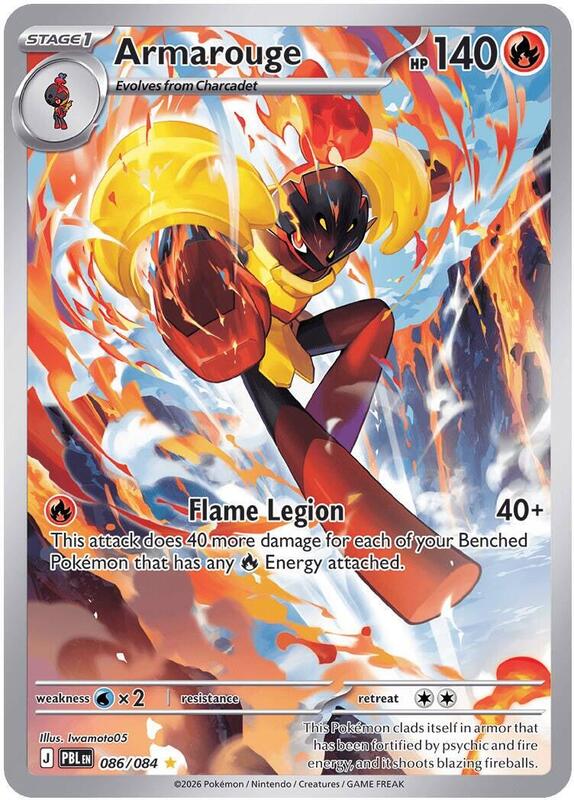
| Armarouge 086/084 | $4.50 | $2.59 | $2.89 | $2.84 | -42.4% | +9.7% |
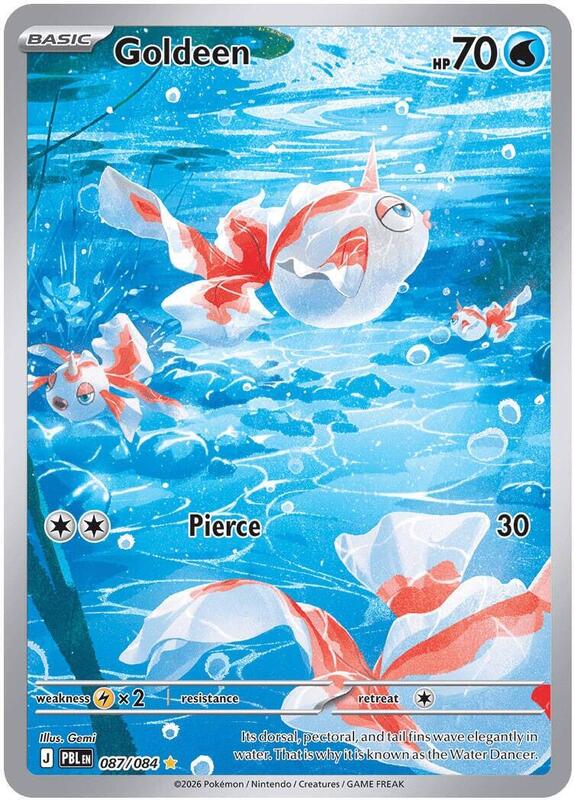
| Goldeen 087/084 | $8.52 | $4.99 | $4.84 | $5.34 | -41.4% | +7.0% |
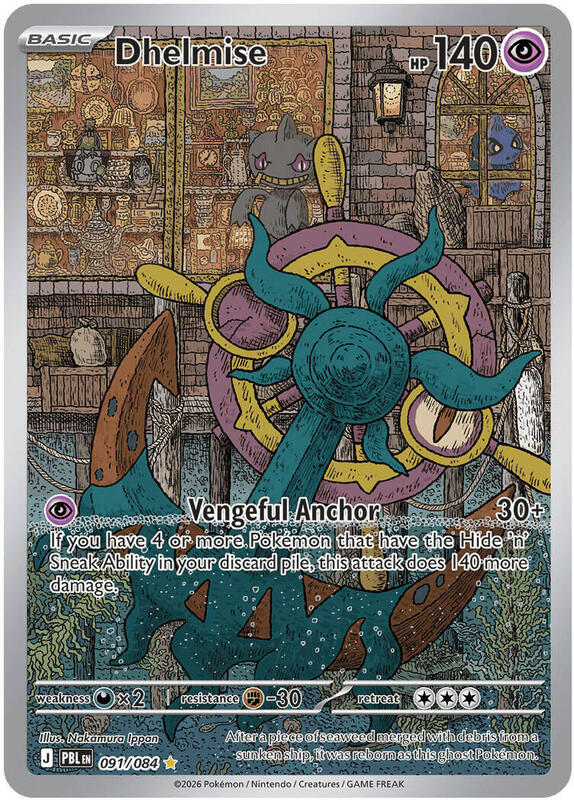
| Dhelmise 091/084 | $2.84 | $2.15 | $2.13 | $2.29 | -24.3% | +6.5% |
| Mega Darkrai ex 101 | $11.28 | $7.29 | $7.61 | $7.70 | -35.4% | +5.6% |
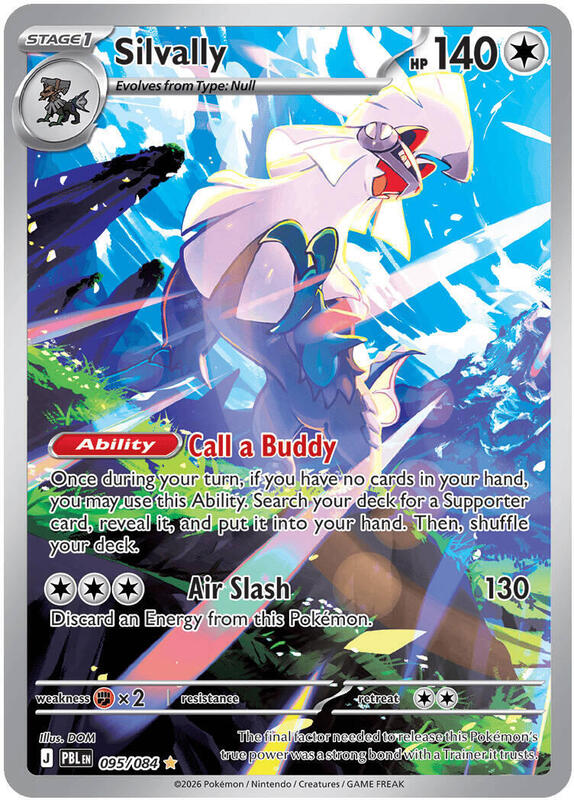
| Silvally 095/084 | $2.63 | $1.71 | $1.43 | $1.79 | -35.0% | +4.7% |
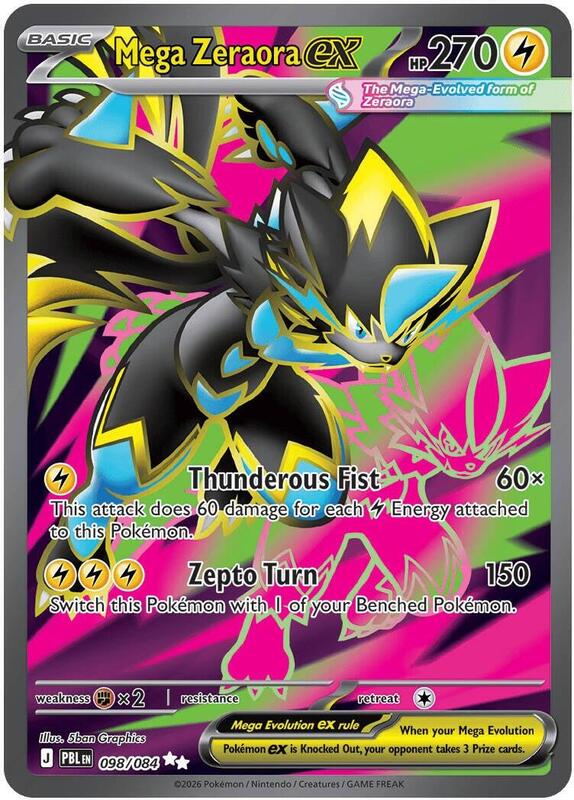
| Mega Zeraora ex 098/084 | $7.51 | $5.96 | $5.77 | $5.97 | -20.6% | +0.2% |
What each of the six has done in the last seven days
All six are Secret or Ultra Rare cards that started between $2.63 and $11.28, which is the part of the set that took the worst of the fall: dollar for dollar, the cards that started between two and twelve dollars are down 26.5% over the month against 5.9% for the cards under a dollar. The bulk of Pitch Black is those cheap cards, and they barely moved in money: the middle one of the 84 that started under a dollar lost a penny over the month, and 74 of the 84 did not tick once in the last seven days, against every one of the 36 cards that started at a dollar or more, which says as much about how often the daily file reprices a ten cent card as it does about the market. So this is not a story about the set recovering. It is a story about part of the expensive end finding a floor while the rest of that same end has not.
What the six depends on
Six is a count at two dates, and it moves when you move them. End it on September 28 instead of September 29 and only three of the twenty three read flat or up, and just two of them are on the list above: Armarouge at +11.6% and Mega Darkrai ex at +4.4%. Goldeen, Dhelmise, Silvally and Mega Zeraora ex all read as still falling a day earlier, which is why their September 28 price is printed in the table. Move the cut instead of the endpoint and the population moves too: at day twenty two it is six of seventeen, though not the same six, because Lurantis ex takes Silvally's place; at day twenty four it is seven of twenty, and averaging each end over three days gives five of twenty, with Silvally the card that drops out.
The two counts are not equally sturdy. Six holds at a floor of $1.50, $2 or $2.50 and at a bar of 14%, 15% or 16%. Seventeen does not: four of the seventeen fell between 15.0% and 15.5% in the first stretch, so at a 16% bar it is thirteen. And read the last three days honestly. Every one of the seventeen made its lowest recorded price of the whole window on September 27, 28 or 29, and thirteen of the seventeen are already above that low while four are sitting on it. One of the six did the same: Silvally. Seven days is a short stretch and this is what short looks like.
Two of the six are thin in ways worth naming. Silvally's low of $1.43 came on September 28, the day before the window closes, and its gain is eight cents. Mega Zeraora ex 098/084 is thin differently: its gain is one cent, and its real fall was six days in early September down to $5.58 on the fifth, seventeen days before the cut, and for the last ten days it has traded between $5.77 and $6.17. Neither is a card that has been climbing.
Why Armarouge is the one to look at
It had the steepest first stretch of any card in the set that started above two dollars, from $4.50 to $2.59, with a low of $2.45 on day twenty, September 19, and it is 15.9% above that low now. Its +9.7% is the biggest seven day gain of the twenty three cards on this test. Five cards in the set gained more over the same seven days: three are cards under a dollar moving six to thirteen cents, and the other two are Crushing Hammer at +18.4% and Wailord ex 097/084 at +16.3%, neither of which is on the test because neither fell 15% in the first stretch, at -11.9% and -12.6%. Those two are also the only cards above two dollars in the whole set worth more today than on August 30, by 4.3% and 1.7%.
Armarouge is also one of only two of the six whose turn is not an artefact of the last day: it reads +11.6% if you stop a day early, and Mega Darkrai ex reads +4.4%. It did not drop once and sit there either. It ground down for three weeks, bottomed on day twenty, and has closed at or above its day twenty three price on five of the seven days since. Day on day across those seven readings, three were up, two flat and two down.
Armarouge 086/084, the recorded daily series
The ones still going down
The cards that did not turn are the reason the six mean anything. If every card that fell had flattened, the test would be measuring the calendar rather than the cards. Seventeen have not flattened, and five of them lost more in the last seven days than in the seven before them. The dearest three of the seventeen are not in the table below: Mega Zeraora ex 114 at $48.35 from $59.38, Mega Chandelure ex 115 at $38.65 from $47.19 and Gwynn 119 at $28.60 from $35.25, each down between 18% and 19% over the month.
Five of the seventeen: fell in the first 23 days and kept falling
| Card | Aug 30 | Sep 29 | First 23 days | Last 7 days |
|---|---|---|---|---|
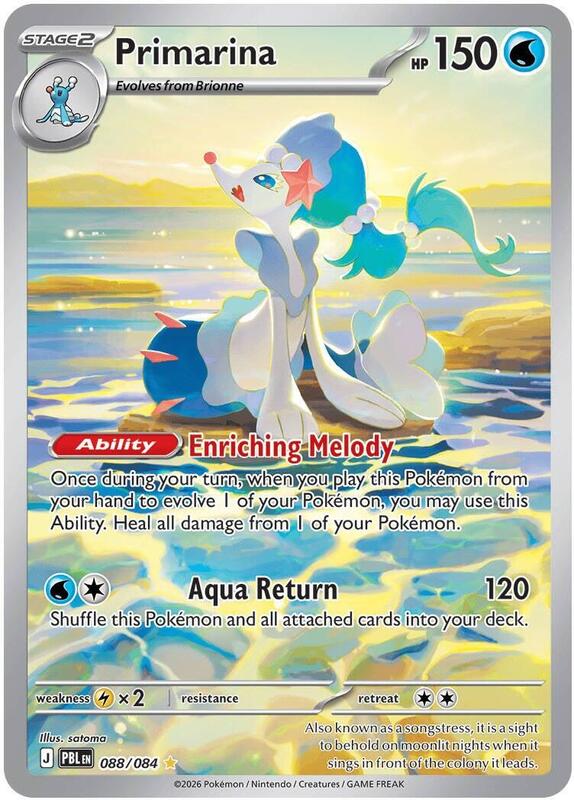
| Primarina 088/084 | $4.34 | $2.46 | -26.3% | -23.1% |
| Brave Bangle 104 | $4.25 | $2.62 | -24.5% | -18.4% |
| Morpeko ex 102 | $5.36 | $3.25 | -25.9% | -18.1% |
| Misty's Vitality 111 | $16.10 | $9.65 | -27.5% | -17.3% |
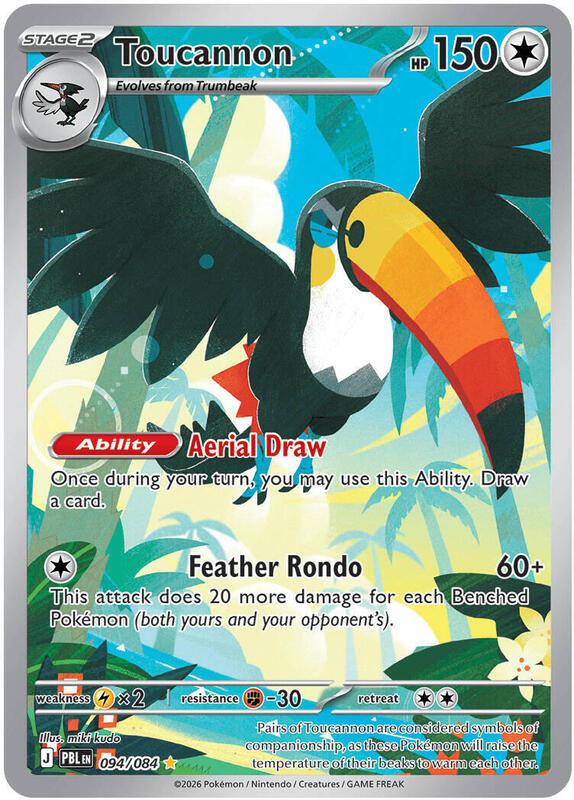
| Toucannon 094/084 | $2.83 | $1.67 | -33.2% | -11.6% |
Of these five, Misty's Vitality is the one with real money in it. It started the window at $16.10, three times the price of anything else in this table, and it has lost 17.3% in the last seven days on top of a 27.5% fall before that. It bottomed at $8.78 on September 27 and is $9.65 now, so the last two days are the first sign of a level in it. Before those two days there was none.
The six that turned and five of the seventeen that did not



Source: price_history, the TCGplayer market price recorded daily, for every catalogue row in ME05: Pitch Black carrying a TCGplayer product id, collapsed to one row per product id before anything is counted, because 1,215 TCGplayer ids in the catalogue are claimed by two rows each. None of this set's 120 rows is one of them, and the five other product ids priced under this set's name are Code Card products rather than catalogue rows, so they are not in the 120. The window runs August 30 to September 29, 2026, thirty one stored days. Five of those days carry the previous day's price for every card in the set, because the daily file did not land: September 1, 3, 6, 8 and 25, one of them inside the last seven. So the window holds 26 readings rather than 31, and those five days are left exactly as recorded. ME05: Pitch Black released on July 17, 2026, 44 days before the window opens, which is what rules out a release day collapse being read as a decline; the largest fall in the set's total between two readings is 2.7%, and that one covers two calendar days because the file before it did not land. All 120 cards are priced on every stored day, which is what rules out a changing sample manufacturing a move. The cut is September 22, giving a first stretch of 23 days and a second of 7. The population for the deceleration test is the 23 cards that started above $2.00 and fell 15% or more in the first stretch; the $2 floor is there because a one cent tick on a cheap card is a large percentage and would fill the result with noise. Flat or up means a second stretch of zero or better. Falling faster means a card lost more over the last seven days than over the seven before them, which compares two stretches of the same length; on the raw thirty day figures no card's seven day fall is larger than its twenty three day fall. The window opens before the September 7 change in what the price column records, and that change is inert here: the price column and the cheapest printing column differ on some day for 74 of the 120 cards, none of them above two dollars and none in the test population, together $9.42 of the set's $804.46 starting value. The market price is derived from recent sales rather than from live listings, so it is neither an asking price nor a comp a reader can point at; `price_min`, the cheapest printing, is the listing-shaped column and is not used here. It is also not a graded figure: only 8 of the 120 cards have any recorded graded sale, so nothing here is a statement about slabs. The last reading is the current day's file and can still move. Seven days is a short second stretch and a turn inside it is a signal to watch rather than a trend, which is why the cards that did not turn are published beside the ones that did, and why the endpoint and cut sweeps are in the body rather than here.