The TCGplayer price feed for 9 October 2026 holds 45,432 Pokemon rows. Keep the ones where a low, a middle, a high and a market price all sit above zero and 35,026 remain, covering 21,358 products across 208 English set names. Each of those 35,026 is a printing, one version of one card, so a card's Holofoil and its Reverse Holofoil are counted apart because they sell apart. Two terms carry the piece. The market price is what a card page quotes as the price, computed from completed sales. The lowest listing, which we'll call the cheapest copy, is the cheapest active listing on that exact printing. Every figure below is a median with its sample size attached, since one four-figure listing would otherwise answer for a 25 cent card.
A $39 card with a $30 copy is the ordinary case
The question people ask is a practical one: the market price says $39, the cheapest copy says $30, what should I actually pay? That card exists in bulk. Of the 3,877 printings quoted between $20 and $100 on 9 October 2026, the median market price is $38.87 and the median cheapest copy is $30.66. Computed per printing before any median is taken, the saving runs $7.95 and the cheapest copy comes to 78.8% of its own market price. So $39 against $30 is the common case, and the useful question is what the $9 buys.
What the cheapest copy costs, as a share of the market price
There are three regimes in that chart. Under a dollar the market price quotes something the listing book barely holds, at four times the cheapest copy. Between $1 and $20 the two numbers argue. From $20 upward the ladder turns orderly and the gap settles near a fifth, which in the top band, where the median card is $193.29, comes to a median $32.63 of real money.
The ladder, by market price band (9 October 2026)
| Market price band | Printings | Median market price | Median cheapest copy | Median middle listing (the midpoint of the asks) | Market price ÷ cheapest |
|---|---|---|---|---|---|
| Under $1 | 17,899 | $0.28 | $0.07 | $0.29 | 4.00x |
| $1 to $5 | 6,710 | $2.21 | $1.00 | $2.25 | 1.98x |
| $5 to $20 | 5,082 | $9.63 | $6.00 | $10.62 | 1.49x |
| $20 to $100 | 3,877 | $38.87 | $30.66 | $50.00 | 1.27x |
| $100 and up | 1,458 | $193.29 | $174.99 | $275.00 | 1.21x |
Once the cheapest copy sells, the next price up is what you pay. Under a dollar the middle listing is 4.67 times the cheapest one. At $20 to $100 it's 1.54 times, so the typical card has a $30.66 bottom rung and a $50.00 middle.
This also corrects something we published. Five Cards in Six Trade on a Single Listing reported that the cheapest copy for sale is the market price to the cent on 83.5% of card lines. That study read our own daily tape, and the column it used holds the cheapest printing of a card. On a card sold in a single printing, the cheapest printing and the quoted price are the same number by construction. The tape still says what it said. Day 20717, 21 September 2026, gives 43,654 of 52,282 lines equal to the cent, and the split by printing count shows why: among the 28,880 lines we can match to the 9 October feed, the two columns agree on 98.3% of single-printing products and on 39.8% of the rest. Measured against the listing book itself the match is rare. Only 141 of the 3,877 printings quoted $20 to $100 have a cheapest listing within two per cent of the market price. In the $5 to $20 band it's 90 of 5,082. That 83.5% is a fact about printings, and this piece supersedes it for anything about listings.
At these prices the market price is already a Near Mint quote
We hold condition quotes for the same printings from the same marketplace, one each for Near Mint, lightly played, moderately played, heavily played and damaged. Near Mint means a clean copy, lightly played allows light edge wear, and the rungs below that run down through visible wear to a damaged card. The market price and the Near Mint quote read the same to the cent on 1,677 of the 2,088 printings quoted $20 to $100 that carry one, and on 742 of 961 above $100. That's 80.3% and 77.2%. So the quoted price at this end of the catalog is already condition-specific, and the condition it specifies is the clean one.
Now hold the cheapest copy against the lightly played quote. On the 2,085 printings quoted $20 to $100 that carry both a lightly played and a Near Mint quote, the median ratio is 0.973. 45.8% land within a tenth of that quote and 71.2% within a fifth, so about seven in ten sit in the neighbourhood of a played copy, and 62.9% are at or under the rung. The fifth you save here is roughly the step the marketplace already charges for wear, because the median lightly played quote in the band is 0.736 of the Near Mint one. Each quote carries the day it was observed, and 95.6% of these were seen on 8 or 9 October 2026, alongside a feed read on the 9th. Above $100 the pattern turns over. On the 954 printings there holding both quotes the median is 1.054, only 32.0% land within a tenth, and 42.3% are at or under the lightly played rung. Expensive cards keep their cheapest copy above the played price.
Six cards quoted $20 to $100, their cheapest copy, and the rung it sits on (9 October 2026)
| Card | Market price | Cheapest copy | Lightly played quote | Cheapest ÷ lightly played |
|---|---|---|---|---|
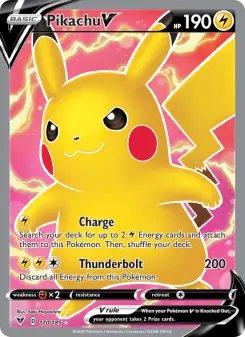
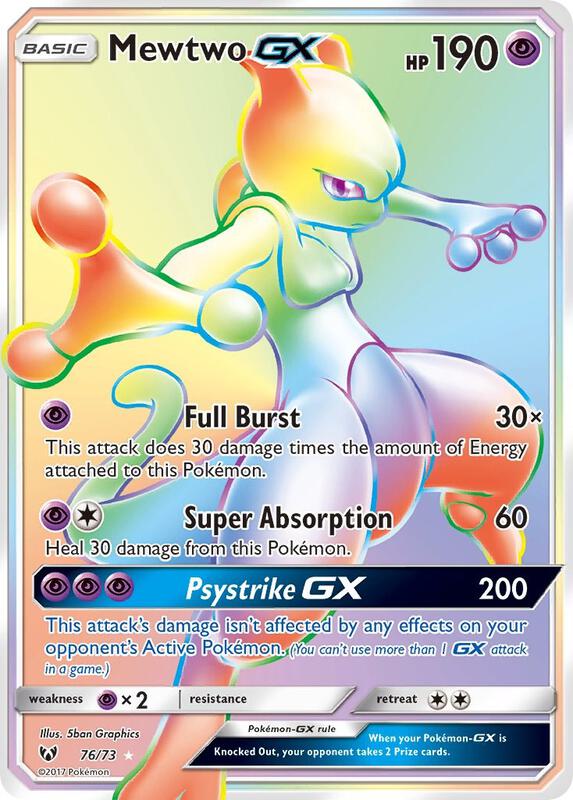
| Mewtwo GX | $96.51 | $71.41 | $71.41 | 1.00x |
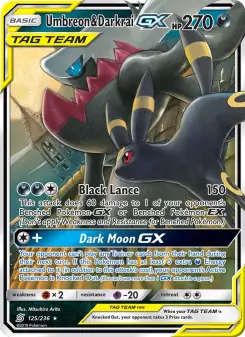
| Umbreon & Darkrai GX | $96.65 | $76.26 | $77.94 | 0.98x |
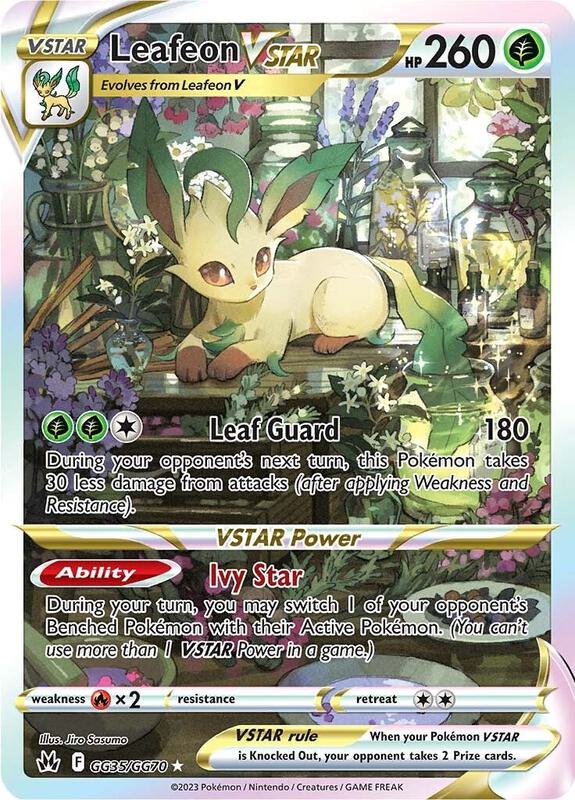
| Leafeon VSTAR | $87.14 | $79.69 | $80.91 | 0.98x |
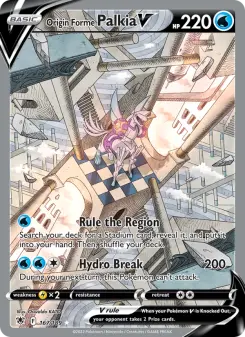
| Origin Forme Palkia V | $85.29 | $75.52 | $75.52 | 1.00x |
| Pikachu V | $44.53 | $35.33 | $37.37 | 0.95x |
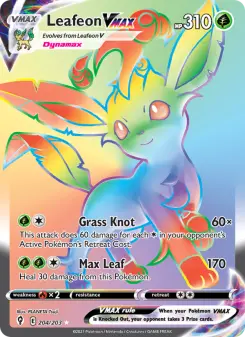
| Leafeon VMAX | $42.83 | $33.50 | $33.51 | 1.00x |
The rung each cheapest copy lands on
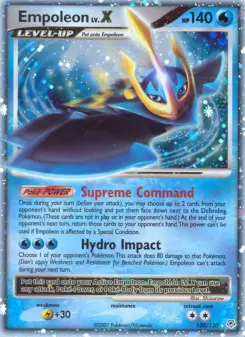
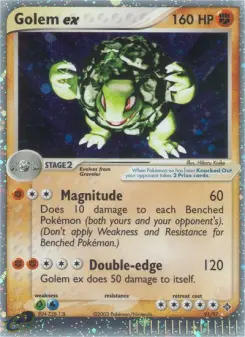
Two tails sit under that median and both show up at the counter. On 276 printings in this band the cheapest copy is listed below the moderately played quote. That is 13.3% of the 2,070 that carry one, and at that price you're buying wear you can see from across a table. Empoleon from Diamond & Pearl is the mild version, with an $89.99 market price matching its Near Mint quote to the cent, $42.97 quoted moderately played, and a cheapest copy at $39.42. Golem ex from the Dragon set is the blunt one: quoted at $79.35, cheapest copy $24.99, damaged quote $25.04. A discount much wider than the band's usual gap is information about the copy.
Discounts that run past the played rung
Where the cheapest copy sits, for the 3,877 printings quoted $20 to $100
Sometimes nobody is selling at the quoted price
On 767 of the 3,877 printings quoted $20 to $100, and on 407 of the 1,458 above $100, the cheapest listing sits more than two per cent above the market price. Count every listing above the quote at all and those become 809 and 428. On cards like these you can't buy a copy at the quoted price. The market price is built from completed sales, so when every seller has priced above it, the quote describes copies that are already gone. The tail splits in two. Above $100, 13.0% of printings are listed between 1.02 and 1.5 times the market price, which is a seller asking a bit over the last sale. Another 14.9% sit above 1.5 times, and that is a placeholder nobody expects to be paid.
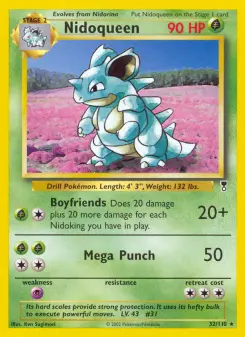
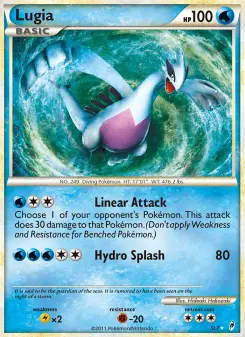
Nidoqueen in its Reverse Holofoil printing carries a $166.32 market price from Legendary Collection and a cheapest listing of $1,809.62. Lugia from Call of Legends is quoted at $400 against a book that holds one price, $15,000, which is why its low, middle and high readings are all the same number. On 77 of the 1,458 printings above $100 the cheapest and the dearest listing read the same number, so the whole shelf is one price. Set an alert on those and wait.
Two books where the market price has no copy behind it
Under a dollar the cheapest listing is a box being cleared
The sub-dollar band is where the market price stops meaning much. A median $0.28 market price against a median $0.07 cheapest copy is a ratio of 4.00 across 17,899 printings. On 11,645 of them the cheapest listing is ten cents or less. Those aren't cards somebody has sorted and sleeved. On 7,704 of the 10,909 sub-dollar printings where we hold any condition quote at all, the cheapest listing sits below every quote we hold for that printing, the damaged one included. At seven cents nobody is quoting a condition, and a seller is clearing a box. Run the same test higher up and it nearly vanishes: 71 of the 2,097 printings quoted $20 to $100 that carry a quote, and 17 of the 980 above $100.
Paying for a checked copy is cheap only where the cards are cheap
TCGplayer Direct is the marketplace's own channel, where it holds the card, confirms the condition and ships it. The feed gives a lowest Direct price per printing wherever one exists, and coverage thins as cards get dearer: 9,548 of the 17,899 sub-dollar printings carry one, down to 387 of the 1,458 above $100. A missing number means the channel doesn't hold that card, so everything below compares only the printings that carry both numbers.
The lowest verified copy, as a share of the market price
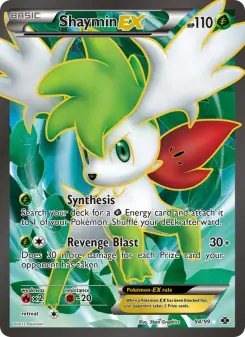
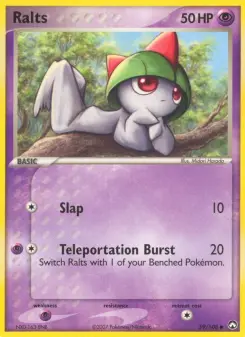
Under a dollar the lowest verified copy is a median 0.639 of the market price and comes in below it on 7,940 of 9,548 printings. Articuno in its Reverse Holofoil printing from Journey Together is the shape of it, quoted at $0.35 with a $0.04 cheapest listing and a verified copy at $0.30. If you want one clean copy of a cheap card, the checked one costs less than the quoted price. Above a dollar it inverts. The verified copy is dearer than the market price on roughly three printings in four, and dearer than the cheapest ordinary listing on 94.6% to 99.1% of them, so up there you're buying a service. Thin coverage at the top produces nonsense too: Ralts in its Reverse Holofoil printing from Power Keepers has a $23.08 market price, a cheapest ordinary listing of $21.81 and a lowest verified price of $992.90. Sometimes the verified price lands on the cheapest copy instead. Shaymin-EX from Next Destinies is quoted at $165.95, and its cheapest copy and its verified copy both read $79.99.
Where the verified price lands
Waiting a day doesn't change the answer
The discount is a standing feature of the listing book. Our window runs 23 September to 9 October 2026, seventeen days. Take the 5,159 English printings that held a market price of $20 or more, and a cheapest listing, on every one of those days. Across 82,544 day-to-day steps the cheapest listing changed 16,057 times and the market price 14,878 times. The listing moves on 19.5% of steps, the quote on 18.0%. The median printing moved each of those numbers on an eighth of its day steps. 922 of the 5,159 never changed their cheapest listing once in seventeen days, and 1,484 never changed their market price.
The gap holds for a fortnight
Those are medians over a fixed set of printings, chosen on their market price on the last day and then tracked backwards, so the lines can't move because the membership changed. They say the typical gap held for a fortnight. An individual card's gap is a separate question, and the per-printing numbers above are the ones to use for it.
What to do, by the market price on the page
| If the market price is | The cheapest copy typically costs | What that usually is | What to do |
|---|---|---|---|
| Under $1 | 25% of market, a median $0.07 against $0.28 | A bulk listing with no stated condition. 70.6% of them sit under every condition quote on the card. | Ignore the cheapest number. The lowest verified copy is a median 0.639 of market, so buy that for one clean card, or buy the card inside a lot. |
| $1 to $5 | 51% of market, a median $1.01 less | 48.8% sit more than 50% under market, and 67.9% below the moderately played quote. | Read the condition line first. A median $1.01 saved here buys a copy the marketplace would quote as played. |
| $5 to $20 | 67% of market, a median $2.92 less | A played copy about a third of the time, within 30% of market on another third. | Worth two minutes on the listing. 34.3% of cheapest copies sit below the moderately played quote, so check the photo. |
| $20 to $100 | 79% of market, a median $7.95 less | A lightly played copy at the lightly played rate. 45.8% land within a tenth of that quote and 71.2% within a fifth. | Pay the cheapest price for a card you'll keep or play. Pay the market price when you want Near Mint, because that's the condition it quotes. |
| $100 and up | 83% of market, a median $32.63 less | 29.4% have no copy listed at or under the market price, and 5.3% have one price in the whole book. | Check that a copy exists at your number before treating the market price as a budget. Where the cheapest listing is above market, an alert beats an offer. |
Cross-section: the TCGplayer price feed for day 20735 (9 October 2026), 45,432 rows, joined on TCGplayer product id to English catalog cards and keeping printings where low, middle, high and market are all above zero. That leaves 35,026 printings over 21,358 products, and the cards behind them carry 208 distinct English set names. 232 of those products are claimed by more than one English catalog row, which affects the set-name count and nothing else, since products and printings are counted on the feed's own ids. Bands are cut on the market price, and every ratio is computed per printing before the median is taken, so one expensive listing cannot set a band's answer. Condition quotes are our stored per-printing readings for Near Mint, lightly played, moderately played, heavily played and damaged from the same marketplace, written by a separate provider sweep and matched here on product id and printing name. That table is a live snapshot keyed on product and condition rather than a dated tape, so it carries a read time: it was read for this piece on 10 October 2026, with its most recent write at 06:10 UTC that morning. 21,320 of the 35,026 printings carry at least one quote, and every comparison states its matched n. Those quotes carry their own observation dates: of the 2,085 lightly played quotes used in the $20 to $100 comparison, 95.6% were seen on 8 or 9 October 2026, 1.7% predate 2 October, and the oldest is 19 January 2026, so a handful of rungs are older than the feed they are compared with. Verified prices are the lowest TCGplayer Direct price in the same feed, present on 16,356 printings over 12,897 products, so Direct figures are medians and shares on that subset. Persistence: all feed rows at a $20 or higher market price across days 20719 to 20735 (23 September to 9 October 2026), 140,506 rows, restricted to the English printings that held both a market price and a cheapest listing on all seventeen days. That leaves 5,159 printings and 82,544 day-to-day steps, every one of them at $20 or more on every day in the window. The seventeen-day chart is a second and wider population: all feed rows at $5 or higher over the same days, 250,359 rows, with each printing assigned to the band its market price fell in on 9 October and then tracked backwards, keeping only printings present on all seventeen days: 4,890 at $5 to $20, 3,868 at $20 to $100 and 1,438 above $100. The feed does not state the condition of the cheapest listing, so the rung a cheapest copy sits on is an inference from the quotes for that printing. One day for the cross-section and seventeen for the persistence window: this is a census of a listing book, not a trend, and no claim here says any of these gaps is widening or narrowing. The earlier reading in Five Cards in Six Trade on a Single Listing used our daily tape's cheapest-printing column, which equals the quoted price by construction on cards sold in a single printing; day 20717 of that tape, 21 September 2026, reproduces its 83.5% (43,654 of 52,282 lines), and matching those lines to the 9 October feed's printing count per product, counting every printing the feed holds for a product whether priced or not, the agreement runs 98.3% on the 14,964 single-printing products against 39.8% on the 13,916 multi-printing ones, so the 83.5% is a printing fact and is superseded here for anything about listings. Condition rungs across the whole catalog are measured in The Condition Tax and Pokemon Card Condition Price Guide. Nothing here is investment advice.