
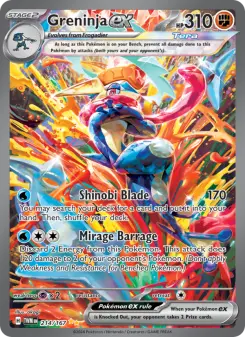
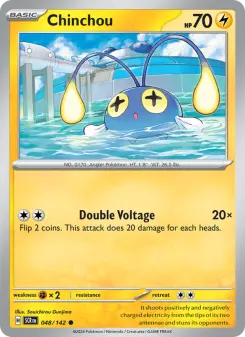
A Charizard costs more than a Chinchou, and nobody needs a study to be told that. The interesting question is which half of the gap is the character and which half is the job the character gets handed. A Charizard is not usually a common in the middle of a set; it is a full art, a secret rare, an ex, the card the set was designed around. So when a Charizard costs forty times a Chinchou we are looking at two effects wearing one coat: buyers wanting the character, and designers giving the character the expensive slot. We priced 21,153 English cards and separated them.
Rank within your own set, so the set cannot take credit
Comparing a Prismatic Evolutions card to a Jungle card in dollars measures the sets, not the characters. So every card is scored by its PERCENTILE inside its own set: the cheapest card in a set is 0, the priciest is 100, and a card at 90 is dearer than nine tenths of the cards printed alongside it. That removes set price level, set size, and era entirely, by construction. The universe is 21,153 priced English cards; the ranking uses the 158 sets holding at least 30 priced cards, which covers 20,405 of them. Species are parsed from the card name by stripping owner prefixes, regional and mega forms, and mechanic suffixes. The parse is a heuristic and it produces some non-Pokémon tokens, notably trainers and items such as Potion and Professor's Research; we label those rather than delete them, because they are a useful control group of cards nobody collects for the character.
Where a character sits in its own set, average percentile across all its printings. Eleven well-known characters and three low-demand controls, chosen to show the range, not the top of a 298-species ranking
| Species | Printings scored | Average within-set percentile | Median price |
|---|---|---|---|
| Charizard | 89 | 91.2 | $68.31 |
| Gengar | 52 | 91.2 | $73.09 |
| Rayquaza | 51 | 90.9 | $112.06 |
| Umbreon | 41 | 90.2 | $96.83 |
| Lugia | 36 | 89.2 | $46.29 |
| Mew | 39 | 88.9 | $103.18 |
| Blastoise | 44 | 88.2 | $51.61 |
| Mewtwo | 85 | 84.8 | $39.38 |
| Snorlax | 53 | 82.6 | $19.91 |
| Pikachu | 154 | 77.8 | $20.33 |
| Eevee | 83 | 68.2 | $5.02 |
| Magnemite | 44 | 19.1 | $0.41 |
| Potion (item) | 40 | 14.3 | $0.18 |
| Chinchou | 25 | 13.6 | $0.38 |
Pikachu at 77.8 across 154 printings is the first surprise, sitting thirteen ranks below Charizard and thirteen below Rayquaza. The mascot is printed constantly, including as promos, energy-adjacent filler and set fodder, and the average of all that lands well below the characters who only show up when a set needs a headliner. Eevee at 68.2 tells the same story from further down. Ubiquity and premium are close to opposites here, which is a useful correction to the idea that a famous name is a price.
How much does the character actually explain, and of what
Fitting a mean for every species and then reporting how much variance those means explain is a rigged exercise: with hundreds of categories, some of that fit is memorised noise. So we did it the way it has to be done. Split the cards at random into two halves, compute the species averages on one half, and score them against the other half they have never seen, twenty times over. The result depends entirely on which ranking you score against, and that dependence is the most important thing in this study. On ordinary cards ranked against the other ORDINARY cards in their set, species means explain 35.4% of the variance out of sample. On mechanic cards ranked against the other MECHANIC cards in their set, 16.8%. On mechanic cards ranked against the whole set, including every common printed beside them, the same species means explain nothing at all: the out-of-sample figure is minus 1.4%, which is to say worse than predicting the average.
That last number is not a failure of the method, it is the answer to a different question, and an earlier draft of this piece quoted the 16.8% while describing the whole-set variable. They are not interchangeable. Once a card has been given the expensive slot, the slot has already told you almost everything about where it sits in its set; who is printed on it adds nothing further. It is only when you ask where a chase card sits among OTHER chase cards that the character reappears, and there it is worth about a sixth of the variance. Both figures are true and they mean opposite things, so both are printed here.
One more restriction has to be shown rather than buried. Scoring a held-out card requires the species to have appeared in the fitting half, and we require at least five printings there. That rule keeps only 65.5% of the held-out ordinary cards, and the species it drops are the rare ones, which are also the ones a mean estimated on a handful of printings would predict worst. Drop the rule and score every held-out card whose species appeared even once, and the figure falls from 35.4% to 21.9%. The honest range for what a character name buys you on an ordinary printing is therefore somewhere between a fifth and a third of within-league rank, depending on how much of the long tail you insist on covering. Inside the chase tier the same relaxation takes 16.8% down to 3.9%.
The casting decision
Now the part the price data alone would hide. Count how often each species is printed as a mechanic card, meaning ex, GX, V, VMAX, VSTAR and their relatives, the slots that carry the artwork and the scarcity. Charizard appears on 92 priced English printings and 63.0% of them are mechanic cards, with 18.5% sitting in a secret-rare numbering slot above the set's printed total. Greninja is the extreme at 77.1% of 35 printings, Gardevoir runs 69.0% of 58, Rayquaza 69.1% of 55, Mewtwo 65.2% of 89. Chinchou, Riolu, Shinx and Zorua are at 0%. Nobody has ever printed a Chinchou VMAX.
Casting rates and rank, ordinary printings versus mechanic printings, for seven of the characters in the table above
| Species | Printings | Share cast as a mechanic card | Rank among ordinary cards | Rank among mechanic cards |
|---|---|---|---|---|
| Charizard | 92 | 63.0% | 96.2 (30 cards) | 82.2 (57 cards) |
| Rayquaza | 55 | 69.1% | 90.4 (15) | 82.1 (32) |
| Umbreon | 44 | 52.3% | 91.8 (20) | 84.3 (23) |
| Gengar | 52 | 38.5% | 92.3 (31) | 83.4 (20) |
| Mewtwo | 89 | 65.2% | 83.3 (29) | 76.1 (49) |
| Pikachu | 180 | 27.2% | 79.3 (112) | 77.1 (42) |
| Eevee | 88 | 18.2% | 70.6 (67) | 73.3 (16) |
Read the two rank columns as separate leagues rather than a before and after, because they are: the ordinary column ranks a card against the other ordinary cards in its set, the mechanic column ranks it against the other chase cards. Charizard beats 96.2% of the ordinary cards printed beside it and 82.2% of the chase cards printed beside it. Both are enormous, and the second is the one that proves the premium is not purely a slot: hand every character in a set the same expensive treatment and Charizard still wins, just by less. Meanwhile the chase slot saves nobody. Duraludon V from Evolving Skies belongs to a species averaging the 24.3rd percentile among mechanic cards across 11 printings; Naganadel, of Naganadel GX in Forbidden Light, averages 27.0 across 12; Persian, whose mechanic printings include Rocket's Persian ex from Unseen Forces, averages 28.1 across 11. A VMAX of a character nobody wants is a VMAX nobody wants.
Every figure here is a rank computed on a quoted price, and a quoted price is a slower instrument than it looks: The Frozen Tape measures how often the number behind these ranks changes at all.
Universe: 21,153 English cards in the moonstone catalog carrying a TCGplayer market price of at least $0.05 read on September 2, 2026, of which 3,158 carry a mechanic suffix in the card name and 17,995 do not. Within-set percentile ranks are computed on the flagship printing's market price, an ask-derived figure rather than a sold median, and NOT on the canonical printing price the card pages show; that choice is inherited from the original study and is the reason a handful of multi-printing cards rank higher here than their card page would suggest. It affects levels far less than dollars, because the measure is a rank. The all-cards ranking uses the 158 sets holding 30 or more priced cards, covering 20,405 cards, and reports species with 20 or more scored printings (298 species). The two-league comparison ranks mechanic cards only against mechanic cards in sets holding 12 or more of them (2,963 cards, 89 sets) and ordinary cards only against ordinary cards in sets holding 20 or more (17,471 cards, 164 sets). Species tokens come from a name parse that strips parenthetical suffixes, owner prefixes such as Team Rocket's, form prefixes such as Alolan, Mega and Hisuian, and mechanic suffixes; the parse merges forms of one Pokémon, takes the first member of a tag team, and leaves trainer and item cards as their own tokens, which is why Potion appears in a species table and is labelled as an item. It also splits some named forms away from their base species, so a species count here is a count of what the parse produced, not a curated dex entry. Casting shares count a printing as mechanic when its name carries one of those suffixes and as a secret slot when its collector number exceeds the set's printed total; 20,778 of the 21,153 carry the printed-total field needed for the second test. Explained-variance figures are the average across 20 random half-splits, fitting species means on one half and scoring the other; both the restricted (5+ printings in the fitting half, 65.5% of held-out cards scored) and unrestricted (1+ printing, 90.1% scored) versions are reported, as is the near-zero result of scoring mechanic cards against their whole set. A rank is not a return: nothing here says a Charizard printing appreciates faster, only that it is priced higher within its own set today. Not financial advice.