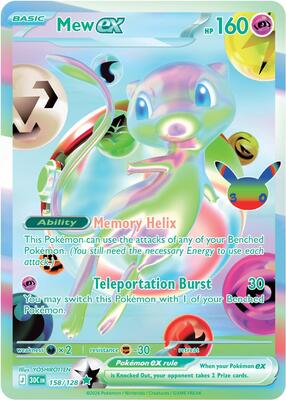
Mew ex 158/128 is the chase card of the 30th anniversary set and it went to four figures, which is the part everybody has seen. Here is the part nobody has. Our entire recorded history for it is sixteen daily readings, and those sixteen readings contain six distinct prices. The card did not drift from $3,333.00 to $1,158.37 over twelve days. It sat at exactly $3,333.00 for six consecutive days, dropped to exactly $2,466.50 for one, sat at exactly $1,977.66 for three, sat at exactly $1,808.25 for two, and then halved again. Five events, not a decline. And across all of it we hold not one sold comp.
Six prices in sixteen days
Every reading we hold for Mew ex 158/128
| Dates | Quoted price | Change | Readings |
|---|---|---|---|
| September 1 to 3 | $3,166.50 | first observation | 3 |
| September 4 to 9 | $3,333.00 | +5.3% | 6 |
| September 10 | $2,466.50 | -26.0% | 1 |
| September 11 to 13 | $1,977.66 | -19.8% | 3 |
| September 14 to 15 | $1,808.25 | -8.6% | 2 |
| September 16 | $1,158.37 | -35.9% | 1 |
Ten of the sixteen readings are repeats of the day before, and every distinct price is held flat to the cent until it is replaced by another flat price. That is not what a traded market looks like. A card changing hands produces a series that wanders, because each sale is a different buyer meeting a different seller. This produces a series that steps, because what is being recorded is one seller's asking price until that listing goes away and the next cheapest becomes the quote.
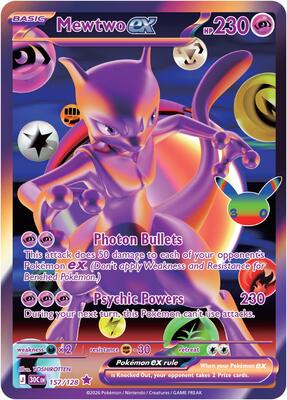
Mewtwo ex 157/128 makes the same point harder. It was quoted at exactly $1,000.00 every single day from August 13 to September 9. Twenty-eight consecutive readings, not one cent of movement, and then $875, then $829.99, then $706.24. Twenty-eight days of a perfectly round number is a listing, not a market.
You cannot buy it at our price
The cheapest listed copy of Mew ex is $1,289.90. The provider's market reading is $1,158.37. The low is 11.4% ABOVE the market figure, which means there is no copy available at that number or anywhere near it. Mewtwo ex is the same shape: a $739.99 low against a $623.99 reading, 18.6% above. Our card page publishes $1,289.90 and $739.99 respectively, because when the market figure falls below every live listing we reconcile up to the floor rather than print a price at which nobody will sell.
That inversion is diagnostic. On a card with a functioning market the market figure sits inside the spread, because it is derived from things that sold. When it falls below every live listing, it is a lagging record of a listing that has since gone while the asks have moved somewhere else. Neither number tells you what the card is worth. The honest statement is that this card has a lowest ask of $1,289.90 and no established value.
Where a three-week-old card sits on a thirty-year book
Taken at the provider's $1,158.37 reading, Mew ex is the 36th most expensive English card we price. The cards immediately around it are Gyarados ☆ δ from Holon Phantoms at $1,200, a Wizards Pokémon Center promo at $1,199, and a Plasma Storm Charizard at $1,150. Above it sit cards like Latias and Latios GX at $3,837.67 and the Dragon Frontiers gold star Mew at $3,500.
Every one of those is at least five years old and most are twenty. They have spent that time establishing how few copies exist in the condition their quote describes. Mew ex has spent three weeks, and its quote has been rewritten five times in that span. Being 36th on this list is not a measurement of the card, it is a measurement of what a handful of sellers are currently asking while the set is still being opened.
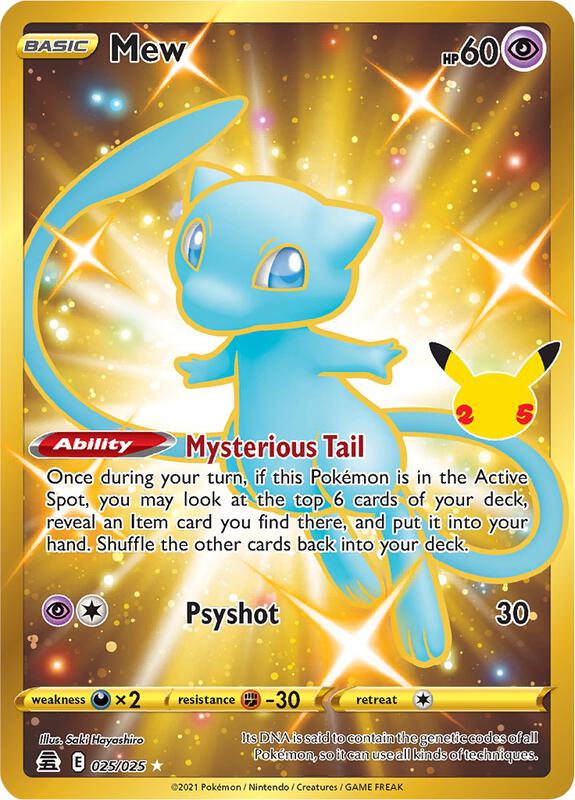
We also publish no population figure for this card, and that is deliberate rather than missing. The registry line the provider served against it is the same line it serves for the 2021 Celebrations Mew ex, which would have attached 12,865 graded copies to a card three weeks old. Our rules withhold a figure that two cards both claim, which is covered in the numbers we do not print.
What to do with a number like this
If you own one, the relevant figure is not $1,158.37 and not $1,289.90 either. It is that the quote has been rewritten five times in twelve days and has fallen 65.2% from its peak, in steps, with no sale recorded at any level. A price series that moves in discrete jumps between flat plateaus is measuring listing turnover. It will keep stepping for as long as the set keeps being opened.
If you are buying, the number that matters is the lowest ask, because that is the copy you can actually acquire, and it is currently above the quoted market. If you are valuing a collection, mark this card at what you could sell it for today, which is a number nobody on our data or anyone else's can give you, because nothing has sold. Our study of how many sales make a price is the general version of this problem, and this card is the cleanest example of it we hold.
Read from moonstone production on September 17, 2026, and RESTATED from the original September 16 publication; see the note at the top for what changed and why. Prices are the provider's own daily series as we cache it, one reading per card per day, quoted unmodified: sixteen readings for Mew ex spanning September 1 to 16 and thirty-five for Mewtwo ex spanning August 13 to September 16. The 65.2% fall is $1,158.37 against the $3,333.00 peak; the separate 63.4% implied by the first observation is against $3,166.50. Percentage changes in the table are each row against the row above it. The catalogue ranking counts English-language cards carrying a live market price above zero, 21,650 on the day of writing, priced by the canonical printing rule the card pages use, with the freshness fix described in the correction note applied. Low is the cheapest listed copy in the same payload as the market figure, so the two are read at the same instant and the inversion is not a timing artifact. The card page publishes the low rather than the market figure whenever the latter falls beneath it; both numbers and which one is published are shown on the card page itself. Zero recorded sales means the stored payload carries an empty sales array and an empty graded array; it is a statement about our tape and NOT a claim that no copy has changed hands anywhere. The withheld population is the shared-registry rule described in the linked piece, not a gap in coverage.