Every hobby has a founding artist. Baseball cards never had one; Magic has a dozen contenders. Pokémon has exactly one: Mitsuhiro Arita, who painted the Base Set Charizard, the original Pikachu, and dozens of the 1996-1999 images that defined what a Pokémon card looks like. Thirty years later he is still illustrating, which is precisely what makes his market interesting. On July 29, 2026 our artist index tracked 400 Arita cards, and the median one cost $17.41 while the top of the list traded like fine art. Understanding why both numbers are true is the whole thesis. (The attribution backfill has since caught up: [his artist page](/artist/mitsuhiro-arita) now carries 877 cards at a $3.06 median, which moves the levels below but not the shape of the argument.)
What an Arita original is worth when supply is capped
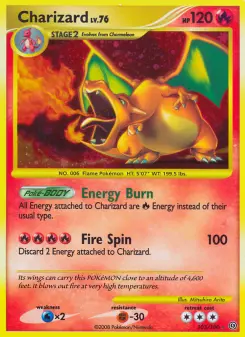
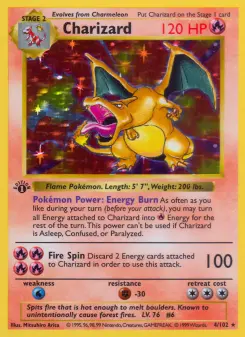
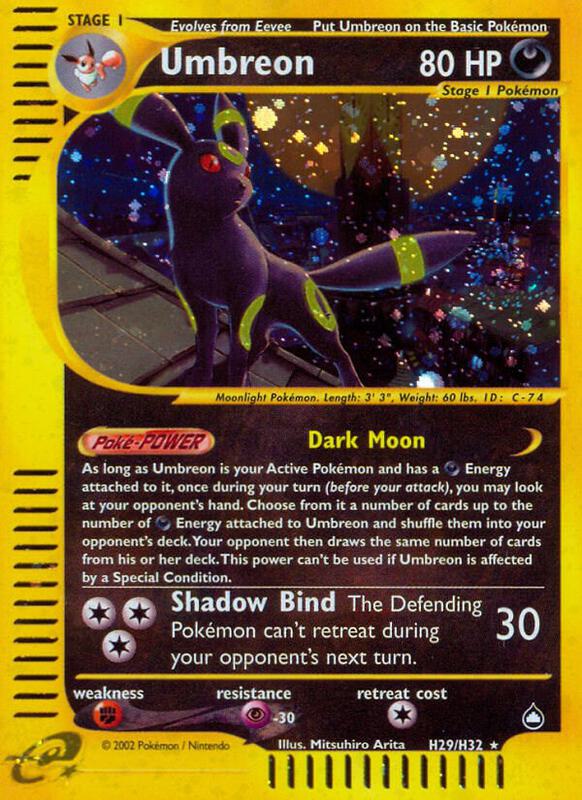
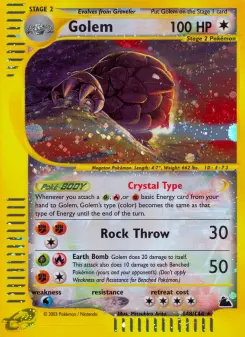
The valuable Arita is concentrated in exactly the print windows our 30-year study flagged: WotC-era icons and the 2002-2003 e-Series trough. His Base Set Charizard is the hobby's reference asset ($12,863 in PSA 10, five figures in Shadowless 1st Edition). But the connoisseur tier is his e-era work, the Aquapolis Umbreon H29 at $1,253 raw and Skyridge Raikou H26 at $475 raw sit in the scarcest print window of the modern era, and his Skyridge Crystal Golem was literally the sleeper our fair-value screen surfaced at 61% below population-implied value. Arita's name concentrates demand; the print window concentrates supply. Where both happen, prices are art-market prices.
The Arita canon, nine of his dearest tracked printings (raw market, July 29, 2026)
| Card | Set | Era | Raw market |
|---|---|---|---|
| Charizard (Shadowless, no catalog page) | Base Set | 1999 | $10,000 · 1st Ed printing |
| Umbreon H29 | Aquapolis | 2003 | $1,253 |
| Charizard | Base Set (unlimited) | 1999 | $800 |
| Charizard | Stormfront | 2008 | $669 |
| Gyarados (Shadowless, no catalog page) | Base Set | 1999 | $600 |
| Golem (Crystal) | Skyridge | 2003 | $600 |
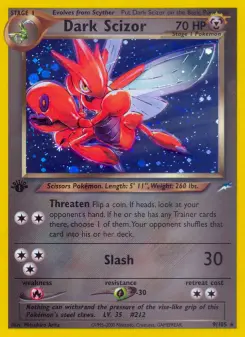
| Dark Scizor | Neo Destiny | 2002 | $595 |
| Raikou H26 | Skyridge | 2003 | $475 |
| Houndoom | Neo Revelation | 2001 | $440 |
Arita originals, linked live
Four hundred cards, median seventeen dollars
Here is what an artist page won't tell you: Arita has never stopped working. He has cards in Stormfront, in XY promos, in Sword & Shield, in current Scarlet & Violet and Mega-era sets, four hundred tracked printings at the time of writing and 877 once the attribution backfill finished, which puts him third by volume behind 5ban Graphics and Ken Sugimori. And the median one traded at $17.41. Modern print runs at ten billion cards a year mean an Arita signature on a 2024 holo carries zero scarcity, the market prices the PRINT, not the pen. This is the same lesson our velocity study taught about liquidity: fame concentrates trading volume, and the most-traded cards have been the worst compounders. An 'Arita tax' on modern product is a tax with no underlying asset.
Artist attribution comes from provider metadata verified per card (the 'artist' field on each product), aggregated across 400 tracked Arita printings as of July 29, 2026; the Arita index is the sum of his 25 most valuable cards' raw market prices at that date, momentum is the median 30-day trend of his linked cards with trend coverage. Raw market prices are TCGplayer asks, not sold comps. PSA figures are median recorded eBay sales with stated sample sizes from our graded data. Cross-referenced claims (fair-value screen, negative-EV list, launch-curve decay, print-clock floors) link to the respective moonstone Research studies where their methodologies are stated. NOTES ADDED 2026-09-22 on an independent recompute: the attribution gap flagged below has since closed, and the catalog now credits Arita with 946 rows over 770 distinct products (877 on his artist page), which is third by volume rather than first, and lands his body of work third of 420 credited illustrators by summed value. Each of those 770 products carries its own TCGplayer id, so no card is counted twice and no shared credit is double-attributed. The canon table is nine hand-picked printings rather than a mechanical top nine, and two of its rows (Shadowless Charizard, Shadowless Gyarados) are products with no catalog page and no internal price series, so they carry no link and are not reproducible from our data. Every price in this piece is a July 29, 2026 reading and several have moved materially since. One known attribution gap at the time of writing: provider artist strings were inconsistent for a minority of cards, so 'tracked' undercounted his true catalog. Verdicts are editorial opinion grounded in the cited data; nothing here is financial advice.