The honest version of this question has three inputs and most answers carry one. You need what the raw card asks, what its PSA 10 actually sells for, and how often PSA has given that specific card a ten. We hold all three for 2,633 products, and the answer on that population is that grading pays far more often than the folklore suggests: 90.7% carry a positive expected value after a $20 fee, and the median one clears the fee by $31.43. The caveat is bigger than the finding. Only 2,633 of the 44,711 priced products in our catalog can be asked this question at all.
The arithmetic, stated so it can be argued with
One submission has three outcomes and we price all three. With probability equal to the card's recorded gem rate it returns a PSA 10 and is worth the PSA 10 sold median. With probability equal to its recorded PSA 9 share it returns a nine and is worth the PSA 9 sold median. Otherwise it comes back as something below a nine, which we value at 85% of the raw ask, the same conservative salvage our card reports use. Subtract the raw ask and a $20 fee. That is the whole model, and 1,949 of the 2,633 cards carry a real PSA 9 count and a usable PSA 9 median, so they run the three-outcome version; the rest run the two-outcome floor, which understates them.
Across the 2,633 cards where we hold a raw ask, a PSA 10 sold median on ten or more verified comps and a trusted PSA registry of 500 slabs or more, 90.7% carry a positive expected value after a $20 fee, with a median net of $31.43, as of September 22, 2026. That is the sentence to cite, and the next section is the one that says what it is conditional on.
Net expected value per submission, distribution across 2,633 cards
| Percentile | Net expected value after the $20 fee |
|---|---|
| 5th | -$4.08 |
| 10th | $0.97 |
| 25th | $10.97 |
| 50th | $31.43 |
| 75th | $83.76 |
| 90th | $245.50 |
| 95th | $505.09 |
The break-even gem rate, band by band
The fee is fixed and the upside is proportional, so the break-even gem rate falls as the card gets dearer. A card asking under $5 needs a median 46.08% of its submissions to come back as tens just to cover the round trip. A card asking over $200 needs 6.49%. That is the mechanism the fee is a fixed cost named, measured here against what each card's registry actually does rather than against an assumed rate.
What a card needs versus what its registry delivers
| Raw ask | Cards | Median break-even gem rate | Median recorded gem rate | Share clearing their own break-even |
|---|---|---|---|---|
| Under $5 | 447 | 46.08% | 58.86% | 68.46% |
| $5 to $20 | 804 | 28.71% | 49.95% | 86.94% |
| $20 to $50 | 573 | 20.60% | 53.71% | 90.23% |
| $50 to $200 | 572 | 11.48% | 46.81% | 96.15% |
| $200 and up | 237 | 6.49% | 43.09% | 96.62% |
2,301 of the 2,633 cards, 87.39%, have a recorded gem rate at or above their own break-even rate. The cheap end is where it fails: on cards asking under $5, nearly a third do not clear, because $20 of fee against a $3 card demands a gem rate most registries do not produce. 79 cards need a gem rate above 100% to break even, which is another way of saying their PSA 10 sold median does not clear the ask plus the fee at any hit rate.
Expected value by raw ask band
| Raw ask | Cards | Median raw ask | Median gem rate | Median net EV | Share positive |
|---|---|---|---|---|---|
| Under $1 | 8 | $0.87 | 58.06% | -$1.93 | 37.50% |
| $1 to $5 | 439 | $3.05 | 58.90% | $7.85 | 80.64% |
| $5 to $20 | 804 | $10.93 | 49.95% | $20.16 | 90.80% |
| $20 to $50 | 573 | $30.14 | 53.71% | $39.59 | 90.92% |
| $50 to $200 | 572 | $87.94 | 46.81% | $96.94 | 95.98% |
| $200 to $1,000 | 216 | $302.56 | 44.30% | $296.22 | 97.22% |
| $1,000 and up | 21 | $1,387.99 | 18.26% | $1,200.38 | 100.00% |
The fee is the whole argument
$20 is a bulk-tier grading fee and nothing else. It excludes postage both ways, insurance, the sleeve and card saver, and every hour of your life spent on submission forms. Swap the fee for a more realistic all-in cost and the headline moves hard. At $30 the positive share drops to 76.41%. At $50 it is 51.35% and the median card nets $1.43. At $75 the median submission loses money. Anybody who quotes our 90.7% without the fee attached is quoting a different study.
The same 2,633 cards at six all-in costs
| All-in cost per card | Share with positive EV | Median net EV |
|---|---|---|
| $20 | 90.70% | $31.43 |
| $25 | 84.69% | $26.43 |
| $30 | 76.41% | $21.43 |
| $50 | 51.35% | $1.43 |
| $75 | 34.64% | -$23.57 |
| $100 | 26.02% | -$48.57 |
The gates move the headline far less than the fee does. Drop the registry floor from 500 slabs to one and the population grows to 3,290 while the positive share barely moves, to 89.60%. Drop the comp floor from ten to two as well and 5,152 cards qualify at 89.09%. The result is not an artefact of a strict universe, which is the useful thing to know about it.
Four looser universes, same arithmetic
| Registry floor | Comp floor | Cards | Share positive | Median net EV |
|---|---|---|---|---|
| 500 slabs | 10 comps | 2,633 | 90.70% | $31.43 |
| 100 slabs | 10 comps | 3,204 | 89.58% | $30.38 |
| Any | 10 comps | 3,290 | 89.60% | $31.06 |
| 500 slabs | 2 comps | 3,224 | 90.79% | $35.69 |
| Any | 2 comps | 5,152 | 89.09% | $35.85 |
Make one or buy one
Expected value answers a question about a card you already own. The separate question is whether producing a PSA 10 is cheaper than buying one. Divide the raw ask plus the fee by the gem rate and you get the expected all-in cost of the copies you have to feed the grader to get one ten out. Against the PSA 10 sold median, that cost is a median 0.74x, so on most cards manufacturing is the cheaper route. On 609 of the 2,633, 23.13%, it is not, and the finished slab sells for less than the expected cost of making one. This calculation ignores the salvage value of the failures, which is real money and pushes the true cost lower still.
The ten best submissions we can price, by net expected value
| Card | Set | Raw ask | PSA 10 sold (comps) | Gem rate | Net EV |
|---|---|---|---|---|---|
| Pretend Team Skull Pikachu | SM-P: Sun & Moon Promos | $3,499.99 | $12,676.74 (17) | 52.20% | +$4,519.15 |
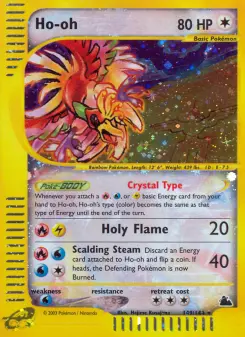
| Ho-oh | Skyridge | $800.00 | $16,187.50 (20) | 7.87% | +$3,254.95 |
| Celebi | Skyridge | $750.00 | $7,950.50 (33) | 17.92% | +$2,775.61 |
| Gengar & Mimikyu GX | Team Up | $1,940.59 | $7,900.00 (63) | 45.34% | +$2,767.04 |
| Suicune ☆ | Unseen Forces | $1,100.00 | $18,450.50 (15) | 6.84% | +$2,681.69 |
| Politoed | Skyridge | $450.00 | $7,735.00 (13) | 23.40% | +$2,586.93 |
| Raikou ☆ | Unseen Forces | $1,600.00 | $20,675.50 (46) | 9.59% | +$2,493.25 |
| Umbreon ex | Golden Sky, Silvery Ocean | $299.99 | $8,100.00 (18) | 20.55% | +$2,369.65 |
| Kabutops | Skyridge | $1,000.00 | $12,799.57 (20) | 15.27% | +$2,361.64 |
| Gardevoir & Sylveon GX | Unbroken Bonds | $640.88 | $5,025.00 (52) | 44.30% | +$2,100.15 |
Four Skyridge cards in ten. That is not a coincidence and it is not a recommendation: it is a set whose raw copies are cheap relative to a slab market built on a tiny surviving population, which is the same structure print-run archaeology traced from the registry side.
The submissions that lose money
| Card | Set | Raw ask | PSA 10 sold (comps) | Gem rate | Net EV |
|---|---|---|---|---|---|
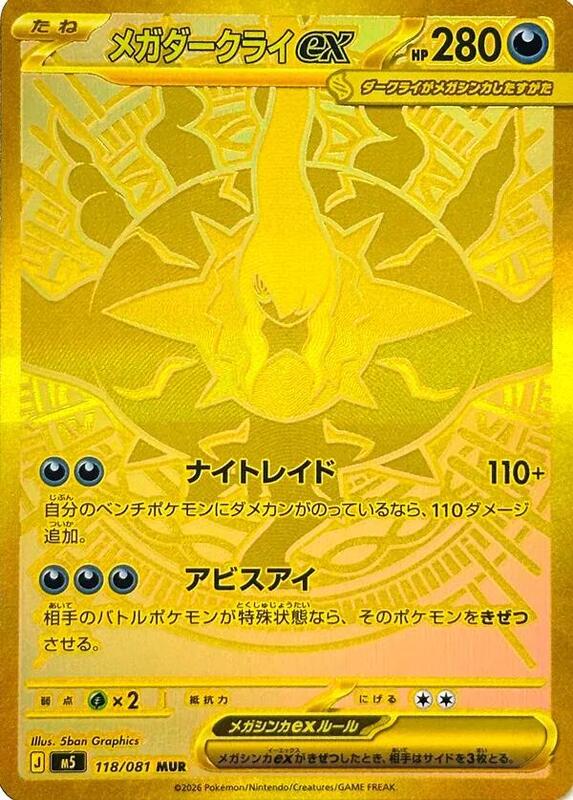
| Mega Darkrai ex | M5: Abyss Eye | $445.56 | $396.00 (46) | 68.60% | -$125.33 |
| ナンジャモ | Clay Burst | $302.41 | $290.34 (30) | 57.75% | -$81.29 |
| サーナイトex | Scarlet ex | $197.25 | $169.50 (61) | 88.09% | -$47.97 |
| ゼクロムex | Black Bolt | $182.17 | $159.58 (296) | 90.64% | -$45.48 |
| Fukuoka's Pikachu | SV-P Promotional Cards | $163.21 | $162.50 (240) | 82.90% | -$33.27 |
| Pikachu | Wizards Black Star Promos | $41.15 | $46.00 (69) | 10.32% | -$30.47 |
| Fletchinder | Paldea Evolved | $21.01 | $22.00 (26) | 20.31% | -$22.47 |
Two different failures sit in that table. The Japanese rows fail because the gem rate is so high that a PSA 10 is the ordinary outcome and the slab earns almost nothing over the raw card; ゼクロムex gems at 90.64% and its ten sells below its ask. The Wizards Pikachu fails the opposite way, gemming at 10.32% into a $46.00 ten. Both end in the same place, which is the point the first negative stamp made on one card and this makes on a population.
What this study cannot show
The selection is the biggest one. A card qualifies only if PSA has already graded at least 500 copies and somebody has already sold ten of the tens. That is a population of cards the hobby has already decided are worth grading, so the 90.7% is the success rate among submissions that a rational market has already filtered, not among the 44,711 priced products in our catalog. 5.89% of priced products qualify. For the other 94%, the honest answer to this article's title is that we do not know, and a registry we cannot see is not a registry of zero.
Second, a gem rate is a registry average over everything anyone ever sent, including copies pulled from packs and copies pulled from a shoebox. Your copy has a condition and the model does not know it. Third, the raw ask is an ASK and the graded medians are SOLD figures, so the cost side of every calculation here is likely overstated and the revenue side is not. Fourth, the 85% salvage on a sub-nine outcome is an assumption, not a measurement, though it is a conservative one. Fifth, the model ignores time: PSA turnaround is months, and a registry that grows while your card sits in it is the tax the population growth tax describes.
What would overturn this
Two tests. Recompute the same universe with the same gates and a $20 fee: if the positive share lands below 80% or above 96%, our construction is wrong. And the break-even table must stay monotone, with the required gem rate falling every step as the raw ask rises while the recorded gem rate does not rise with it. A band where cards need a higher gem rate than the band below it would break the fixed-cost mechanism the whole piece rests on. Related, and narrower: the grading frontier, grading ROI computed honestly, the grading tax.
Universe: rows of `cards` with a TCGplayer product id carrying all three of a latest `price_history` ask above zero (day 20718, September 22, 2026), a latest `graded_snapshots` PSA 10 sold median on ten or more verified comps, and a `population_snapshots` reading that survives three house rules. The registry rules are the ones our card reports use and are not optional: `sharedRegistryKeys` drops a key that two products both claim, `publishableRegistry` cuts a series at any reading that contradicts population physics so only the current registry line is read, and `gemRateIsTrustworthy` refuses a reading whose ten count is absent rather than scoring it as a 0% gem rate. A registry floor of 500 slabs is applied because a gem rate computed on four submissions is arithmetic rather than evidence; the article publishes the result without that floor as well. Cards whose PSA 10 median falls outside 0.85x to 40x the ask are dropped as mismatched comp pools. Rows are collapsed to one per product id. That leaves 2,633. Expected value is gemRate x PSA10median + psa9Share x PSA9median + remainder x 0.85 x ask, minus the ask, minus $20; the PSA 9 leg runs only where both a PSA 9 count and a PSA 9 median on ten or more comps exist, which is 1,949 of the 2,633. Break-even gem rate is (0.15 x ask + 20) / (PSA10median - 0.85 x ask), and its median is taken over the 2,554 cards where that lands between 0% and 100%; the 79 cards whose break-even exceeds 100% are counted in the text but cannot be averaged into a rate, and including them at their computed value would move the median to 24.60%. In the looser universes the PSA 9 comp floor tracks the PSA 10 comp floor rather than staying at ten, so the two-comp rows run the three-outcome model wherever a two-comp PSA 9 median exists. Medians are upper-middle on even samples. Raw figures are asks; graded figures are sold medians. Not financial advice.