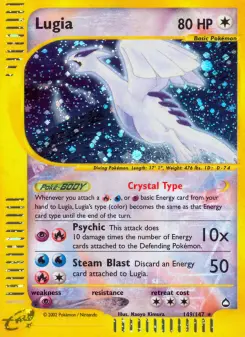

On 10 October 2026 our condition snapshot read Lugia (Aquapolis) at $500.00 for a Near Mint copy and $2,800.00 for a heavily played one. Both rungs carry that same observation date, both carry the same Holofoil printing label, and the product has only one printing. The played ask is 5.6 times the mint ask. It is also above every Near Mint figure we hold for that product: across the 40 readings in the 45 days to 10 October, that tape sat at $1,400.00 on 34 days, $999.95 on four, and $500.00 only on the last two. Both legs of this ladder are wrong at once, which makes Lugia the loud exception rather than the pattern. Ladders with both legs wrong are 490 of the 7,666 we could classify.
Widen it out and the shape is not rare. Across the 31,728 products whose ladder holds at least one played rung quoted on the identical date and printing as its own Near Mint rung, 7,684 price a played copy above the mint copy, which is about a quarter of them. We have published pieces of this before, and each was narrower than it looked. Pokémon Card Condition Price Guide counted 19.4% of 10,658 English lightly played pairs. Are Damaged Pokémon Cards Worth Anything? counted the 5,837 of 21,364 English ladders our own price code refuses, with no same-date rule. A $3,499.99 Pikachu Priced Off a Played Copy named 14 cards one at a time. What none of them could do is say which leg is lying, and the guide diagnosed it from two cards as the Near Mint one. Tested on all 7,666 ladders with a long enough Near Mint series, that diagnosis is backwards: the played ask clears the product's whole Near Mint window on 4,496 of them and the Near Mint quote has collapsed on 1,312, with 490 ladders counted by both tests.
The break is one rung, not a reversed ladder
Share of same-date pairs quoting the played rung above Near Mint
Of the 7,684 inverted ladders, 6,153 break on exactly one rung, 1,284 on two, 222 on three and 25 on all four. Put the same question to the 8,922 ladders that carry all four played rungs on one date alongside their Near Mint rung, and 25 of them run backwards the whole way, 0.3%. So a fully reversed ladder is close to nonexistent. One rung sticking up out of an otherwise sane column is the normal failure. A further 751 of the 31,728 have no rung above Near Mint but hold at least one played rung priced to the cent equal to it, which is a missing price wearing a plausible number.
Which leg is lying
For each inverted ladder we read that product's own Near Mint tape over the 45 days to 11 October 2026 and asked two questions. Is the played ask above every Near Mint reading in the window? Has the Near Mint quote fallen to its own floor, meaning it equals the lowest reading in the window and sits under 95% of its median? 7,666 of the 7,684 hold a series long enough to answer. The played ask clears the whole window on 4,496 of them, 58.6%. The Near Mint quote is at its floor on 1,312, 17.1%. Those two tests are not exclusive, and 490 ladders trip both, so the four way split is this: 4,006 where only the played leg is out of range, 822 where only the mint leg is, 490 where both are, and 2,348 where neither is and the played ask sits inside the range the Near Mint quote has been trading in. The mint leg is the minority case.
The four ways an inverted ladder splits, on the 7,666 with a Near Mint series
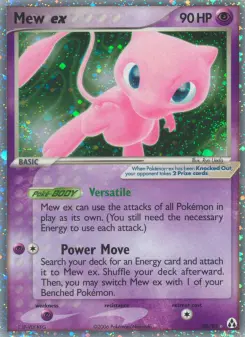
Rocket's Zapdos (Gym Challenge) is the ordinary version of this. Its Near Mint quote, $226.10 on 11 October 2026, is the highest figure in its own 46 reading tape, which ran $218.06 to $226.10 across the window. Nothing collapsed. The lightly played ask on that same date is $349.99. Mew ex (Legend Maker) is the same shape at a sillier scale: its Near Mint quote was $1.38 on 7 October and all 42 readings in the window are $1.38 to the cent, while a damaged copy is asked at $135.00. Neither card has a mint price in trouble. Both look like what a single played listing with nothing near it would print, which is a reading of the shape and not a count we hold.
Most inversions are small. Across the 7,684, the worst played rung is a median 1.2 times the Near Mint quote. It is under 10% above on 2,226 ladders, between 10% and 50% above on 3,606, between 50% and double on 958, and double or more on 894. The expensive tail is thin: of the 1,014 ladders whose own Near Mint quote is $100 or more, 87 are inverted and 11 of those reach 1.5 times or worse. Rank the whole book on the played ask minus the Near Mint ask, keep the pairs quoted between 7 and 11 October, and the top 16 ranks hold 13 products we can name and 3 we cannot. The 13 are the table below, so it is the top of that ranking with three holes in it. The 3 holes are products that match no catalog row. One is the third largest gap in the ranking, a Holofoil product quoted $850.00 Near Mint and $1,975.00 lightly played on 11 October 2026, which we can count and cannot name; the other two sit at ranks 8 and 13. That is the census showing through: of the 7,684 inverted products, 6,251 resolve to an English catalog row, 1,334 to a Japanese one, and 99 to no catalog row at all. The 13 printed rows are English because that is how the ranking fell, not because the census is English. Two of them sit in catalog containers rather than real sets, and are marked as such. The last column is that product's own Near Mint tape over the 45 days to 11 October 2026, so each row shows which leg moved.
The 13 largest dollar gaps that resolve to a catalog row, both rungs quoted on one observation date between 7 and 11 October 2026, condition_quotes read 2026-10-12
| Card | Printing | Near Mint | Played ask | Multiple | Near Mint range over 45 days |
|---|---|---|---|---|---|
| Lugia (Aquapolis) | Holofoil | $500.00 | $2,800.00 heavily played | 5.60x | $500.00 to $1,400.00 |
| Lugia (Neo Genesis) | 1st Edition Holofoil | $160.79 | $1,300.00 moderately played | 8.09x | $160.79 to $164.80 |
| Pikachu Star (Holon Phantoms) | Holofoil | $900.00 | $1,899.99 damaged | 2.11x | $380.00 to $3,200.00 |
| Dark Charizard (Team Rocket) | 1st Edition Holofoil | $121.94 | $568.14 lightly played | 4.66x | $121.94 to $265.83 |
| Charizard Prerelease (XY Promos), catalog bucket | Holofoil | $84.00 | $525.00 lightly played | 6.25x | $84.00 to $89.59 |
| Shining Tyranitar (Neo Destiny) | Unlimited Holofoil | $345.00 | $656.67 lightly played | 1.90x | $345.00 to $662.25 |
| Pokémon Fan Club (POP Series 4) | Normal | $102.00 | $316.33 lightly played | 3.10x | $102.00 to $111.00 |
| Blastoise (Expedition Base Set) | Holofoil | $94.22 | $291.50 moderately played | 3.09x | $94.22 to $400.00 |
| Pikachu ex (Ascended Heroes) | Holofoil | $810.72 | $996.15 lightly played | 1.23x | $810.72 to $1,052.30 |
| Chandelure Cracked Ice Holo (Blister Exclusives), catalog bucket | Holofoil | $20.00 | $179.99 lightly played | 9.00x | $20.00 to $20.00 |
| Mega Charizard Y ex (Ascended Heroes) | Holofoil | $300.78 | $445.57 lightly played | 1.48x | $300.78 to $398.87 |
| Scizor ex (Unseen Forces) | Holofoil | $45.99 | $183.44 moderately played | 3.99x | $45.99 to $300.00 |
| Mew ex (Legend Maker) | Holofoil | $1.38 | $135.00 damaged | 97.83x | $1.38 to $1.38 |
Cut the 31,728 ladders on each product's own Near Mint quote and the rate falls at every step. Under $1 it is 5,040 of 14,886, 33.9%. From $1 to $5 it is 1,412 of 7,214, 19.6%. From $5 to $20, 720 of 5,265, 13.7%. From $20 to $100, 425 of 3,349, 12.7%. At $100 or more, 87 of 1,014, 8.6%. A twenty cent card does not support a separate market in each of five conditions, so the ladder it prints is five numbers that were each discovered on their own rather than a discount curve.
The recent sets invert and the old ones do not
Ranking sets on the raw rate mostly ranks their penny cards, so this table is cut to English catalog rows whose Near Mint quote is $5 or more, on sets holding 30 or more such ladders. 87 sets qualify, and the release dates come from our own set metadata. Four catalog containers clear the same floor and are not sets, so they are not in that 87 and not in the table: Prize Pack Series Cards at 58 of 152, Miscellaneous Cards & Products at 37 of 207, World Championship Decks at 29 of 210 and Blister Exclusives at 7 of 74. The highest share is Ascended Heroes at 43 of 44, 97.7%; it is the newest set in the table, released 2026-01-30, which is 255 days before this read. Second is Destined Rivals at 31 of 33, 93.9%, and that set went on sale on 30 May 2025, the date our own Destined Rivals Is 7.8% Below Its Release Price works from. The seven rows down to the table's 42.4% floor are ranks 1 to 7 of the 87; the next set down is Shrouded Fable at 11 of 30, 36.7%, so no qualifying set is hidden above a printed row. One of the 87 is a judgement call and it is the only one: MEP Black Star Promos is a promo line rather than a numbered expansion, it clears the floor as a set_name group in its own right, and it is left in. At the other end, 22 of the 87 hold no inverted ladder at all above $5. The largest of those is Gym Heroes at 0 of 84, released October 2000, and the next largest Lost Thunder at 0 of 61, released November 2018. The price control is doing real work here: Evolving Skies reads 32.9% inverted across all its ladders and 7.2% once only the $5 and up ones count, and Ultra Prism falls from 45.7% to 2.1%. The uncontrolled version is the sub-dollar band wearing a set name. One thing we have not done is regress the rate on the release date, so read the table as a pattern across thirteen named groups rather than as a tested relationship: six of the seven highest rows carry a release date and all six fall between January 2023 and January 2026, while the six rows with no inverted ladder at all released between 2000 and 2019.
Inverted ladders by set, English catalog rows, Near Mint quote $5 or more, sets with 30 or more such ladders
| Set | Released | Inverted | Share | Note |
|---|---|---|---|---|
| Ascended Heroes | 2026-01-30 | 43 of 44 | 97.7% | newest set here |
| Destined Rivals | 2025-05-30 | 31 of 33 | 93.9% | |
| MEP Black Star Promos | no release date held | 22 of 42 | 52.4% | promo line, kept in the 87 |
| Prismatic Evolutions | 2025-01-17 | 37 of 75 | 49.3% | |
| Twilight Masquerade | 2024-05-24 | 17 of 37 | 45.9% | |
| Crown Zenith Galarian Gallery | 2023-01-20 | 25 of 55 | 45.5% | subset of Crown Zenith |
| Surging Sparks | 2024-11-08 | 14 of 33 | 42.4% | |
| Platinum | 2009-02-11 | 0 of 45 | 0.0% | |
| Supreme Victors | 2009-08-19 | 0 of 48 | 0.0% | |
| Team Up | 2019-02-01 | 0 of 53 | 0.0% | |
| HeartGold SoulSilver | 2010-02-10 | 0 of 56 | 0.0% | |
| Lost Thunder | 2018-11-02 | 0 of 61 | 0.0% | |
| Gym Heroes | 2000-10-14 | 0 of 84 | 0.0% | largest set with none |
Here is one of those ladders end to end. Psyduck (Ascended Heroes), all five rungs quoted 10 October 2026: Near Mint $45.03, lightly played $49.90, moderately played $68.19, heavily played $61.00, damaged $49.06. The cheapest rung on that card is the mint one. Erika's Tangela (Ascended Heroes) does the same thing, Near Mint $10.78, lightly played $14.94, moderately played $18.24 and damaged $16.52 all quoted 10 October, with a heavily played rung at $21.48 carrying an observation date of 3 September, which is why that rung is counted in no figure above. The explanation that fits is that mint copies of a 2026 set are plentiful and handled copies of it are not, so a played listing is priced by whoever happens to hold one. That last step is an inference and we should say so: condition_quotes carries no listing count, so supply depth here is read off the price behaviour and the release date rather than measured. Read the 97.7% as a supply artifact on a young set, not as evidence about how condition gets priced, and read Destined Rivals at 16 months the same way with less force.
What this measure is not
Every figure here is an ask derived from live listings, never a completed sale. The claim this article supports is that a played copy is quoted higher, and nothing in it says a played copy is worth more; an inverted ladder can be one seller's fantasy price that nobody will ever pay. The snapshot is upserted continuously, so no count here pins to a calendar day either. Prior art on the same table measured the drift at roughly 700 rows a day, with the pooled lightly played median moving about a tenth of a point. Read 24.2% as about a quarter, and re-read the table on the day you need the number.
Staleness cannot pose as inversion, because every pair requires the two rungs to carry the identical observation date. That rule threw out 39,765 pairs: 10,183 lightly played, 9,897 moderately played, 9,726 heavily played, 9,959 damaged. It matters, because the any-date version of the test counts 9,302 of 40,822 lightly played pairs, 22.8%, against 6,580 of 30,639 and 21.5% under the same-date rule, so the two are not interchangeable and anyone comparing our notes should check which rule each used. Nor is inversion a symptom of old readings. Of the 30,033 ladders whose Near Mint rung was observed within 7 days of 11 October 2026, 24.5% are inverted, against 19.0% of the 1,603 observed 8 to 30 days back and 15.2% of the 92 observed earlier still. That last figure is 14 ladders out of 92 and should be read as thin, not as a trend.
One tempting explanation does not survive contact. A $500.00 Card Is Three Times More Likely to Be Nobody's Price showed that a price ending in .00 or .99 marks a figure a person typed rather than a market computed, which would be a neat account of a played rung priced out of nowhere. It is not what is happening. Across the 4,363 ladders whose own Near Mint quote is $20 or more, the Near Mint quote ends in .00 or .99 on 48 of the 512 inverted ones, 9.4%, and on 367 of the 3,851 coherent ones, 9.5%. The band control matters because inverted ladders skew cheap and round cents skew expensive; on the uncut population the two shares are 1.8% and 3.7%, which is a price mix rather than a finding.
On none of these 7,684 products can a reader see the rung that inverts, and the reason is our own code. The rule in our price layer, in its own words, is that a ladder pricing a played copy above mint is not describing a market, so an incoherent ladder is refused whole rather than approximated. What the card page shows instead varies, and a dash on a condition tab can mean we hold no quote or that we are withholding one, without saying which. Probed on 12 October 2026: the market endpoint for Blastoise (Expedition Base Set) returns no condition prices at all, Scizor ex (Unseen Forces) returns Near Mint only at $45.99, and Lugia (Aquapolis) returns Near Mint $500.00 and lightly played $150.00 with no heavily played and no moderately played figure, so neither its $2,800.00 nor its $2,225.00 quote is visible anywhere on the site. The Lugia case is the one worth fixing. The gate drops the rungs it distrusts and still publishes $500.00 as that card's market price, which is the figure the product's own Near Mint tape disagrees with on 38 of its last 40 readings.
POPULATION, stated first. condition_quotes read from Turso production on 2026-10-12: 170,451 rows over 52,146 TCGplayer products across five rungs, Near Mint 50,058, lightly played 42,072, moderately played 31,925, damaged 23,385, heavily played 23,011. Its primary key is (tcg_id, condition), so it is a current snapshot with one row per product per condition, upserted in place, and not a time series. Each row carries the date our source last observed it: as_of spans 2025-03-24 to 2026-10-11 with no nulls, 70.6% of rows observed within 7 days of the newest date and 82.5% within 30, and the Near Mint rung is the freshest at 77.6% within 7 days against 59.2% on heavily played, which is the stalest rung. That order is not a clean ladder: lightly played reads 75.2%, moderately played 69.9% and damaged 59.5%, so damaged is fresher than heavily played. Every price is a per-condition market figure derived from live listings, an ask and never a sale. EXCLUSIONS, in order, with counts. 2,088 products carry no Near Mint rung and are dropped, leaving 50,058. No row in the table carries a price of zero or less, so nothing was dropped for a non-positive price. Each played rung is then paired to that product's own Near Mint rung only where the two carry the identical as_of date and the identical printing label, which leaves 30,639 lightly played pairs (10,183 excluded for a different date, 9,236 for no lightly played rung, 1,250 for no Near Mint rung), 21,004 moderately played (9,897 different date, 19,157 no rung, 1,024 no Near Mint), 12,609 heavily played (9,726 different date, 27,723 no rung, 676 no Near Mint) and 12,980 damaged (9,959 different date, 27,119 no rung, 446 no Near Mint). No pair was excluded for a printing mismatch. That is not because a product's rungs always agree: 30 products do carry two distinct printing labels across their rungs, and none of those 30 ever produces a same-date pair across the two labels. No row carries a null printing label either, so no pair matched on two blanks. 31,728 products hold at least one same-date pair and those are the ladders every share above is computed on. A missing rung is an exclusion and is never entered as a zero. IDENTITY. For the set cut and the named rows, each product is collapsed to one catalog row per tcg_id by taking the lexically first card id, because 1,219 of the 56,689 tcg_ids in cards are claimed by more than one catalog row. None of those 1,219 mixes languages, and 1,213 of them are two spellings of one English set name, so the collision this project has been bitten by, a set written in Japanese and in English double-counting, is not what these are; the set key keeps lang separate regardless. The collapse rule does not move the basket: taking the lexically last card id instead returns the same 87 qualifying sets, the same 22 with no inverted ladder, and the same 44 and 33 ladders on Ascended Heroes and Destined Rivals. 31,175 of the 31,728 ladders match a catalog row and 553 match none; among the 7,684 inverted, 6,251 are English, 1,334 Japanese and 99 unmatched. Prize Pack Series Cards, World Championship Decks, Miscellaneous Cards & Products, XY Promos and Blister Exclusives are catalog containers rather than sets; they are dropped from the set table, which is why 87 sets qualify for it out of the 91 groups that clear its 30 ladder floor, and they are labelled where they appear in a named row. MEP Black Star Promos is the one borderline group: it is a promo line, not a numbered expansion, and it is counted as a set rather than a container, which is the only such call in the cut and it changes no other figure here. MECHANISM. The split between a played anomaly and a Near Mint collapse reads nm_history, one Near Mint reading per product per day, for days 20692 to 20737, which is 2026-08-27 to 2026-10-11, in IN-lists of 400 product ids per statement. The classification required at least 10 readings inside the window and 7,666 of the 7,684 inverted products clear that; the named products in the table above hold between 16 and 46 readings each, because the Near Mint sweep does not reach every product every day. An anomaly means the played ask exceeds the highest Near Mint reading in the window. A collapse means the Near Mint quote equals the lowest reading in the window and sits strictly under 95% of its median, where the median on an even count of readings is the upper of the two middle values. Both boundaries were tested rather than assumed: across all twelve combinations of three median conventions, strict and non-strict on the 95% test, and exact against cent rounded comparison, the anomaly count is 4,496 every time, while the collapse count moves between 1,302 and 1,327 and reads 1,312 under the convention printed here. So the played leg does not turn on the convention at all, and the mint leg moves by about a third of a percentage point across the twelve. The two tests are not exclusive, the 490 that are both are reported separately, and the four way split of 4,006, 822, 490 and 2,348 sums to the 7,666. COST AND PLANS. EXPLAIN QUERY PLAN returns SCAN condition_quotes for the one projection read and SCAN cards for the one identity read of the 57,908 rows carrying a non-empty tcg_id; a whole-book census is a full scan by definition, so each was executed once, cached to a local file, and every one of the aggregates above is computed in JavaScript over those two arrays with no further SQL. The per-card lookups plan SEARCH cards USING INDEX sqlite_autoindex_cards_1 and the series reads plan SEARCH nm_history USING INDEX sqlite_autoindex_nm_history_1. WHAT IS NOT HERE. No graded figure, no PSA population, no sold median and no provider price series enters any figure, so neither the two keyspaces of graded_snapshots nor the printing mixing in a provider condition series applies. There is no index, no basket and no change over time: every comparison is within one product on one date. LIVE SURFACE. The card page withholds an incoherent ladder whole, so none of the 7,684 can be checked on this site today; the endpoint readings quoted above were taken from production on 2026-10-12 and the only external check is the TCGplayer product page for each id. RELEASE DATES come from our own set metadata, the 220 row table behind the set pages, read from api_cache by exact key and never by a prefix predicate. Ascended Heroes reads 2026-01-30 there, which corrects a working note that called it a set released weeks before this read; it is the newest set in the table and 255 days old at the read, and the thin-supply reading of its ladders is treated as noise either way. MEP Black Star Promos carries no release date in that table and is printed as such. LINKS. Every card id above was checked against the cards table by primary key on 2026-10-12, a read that plans SEARCH cards USING COVERING INDEX sqlite_autoindex_cards_1, and each one resolves to a row whose name and set match the label given it, with a parenthetical flattened on two variant names, Charizard (Prerelease) and Chandelure (Cracked Ice Holo). Every set link returned 200 from production the same day. Nothing here is investment advice.