
Most liquidity studies are really coverage studies: they measure what the author managed to look up. This one is close to the opposite, and the boundary is worth stating exactly. Of the 21,416 priced English cards in our catalogue on September 22, 2026, 6,950 carry a recorded graded sold median and 14,466, which is 67.5%, do not. Above a dollar that second number is a census rather than a gap: all 10,381 products asking $1 or more carry either a sold median or an explicitly recorded empty probe, 6,674 and 3,707, with nothing left over. Below a dollar the probe record is incomplete at any given moment, because park rows expire after fourteen days and the re-ask rotation reaches cheap cards last, so several thousand of the 11,035 sub-dollar products carry no probe on file on any given day. No claim in this piece rests on them. Almost all of the empty half is bulk and should be: only 2.5% of cards asking under a dollar have a graded comp, and 99.2% of cards asking $500 or more do. The number that matters is in between. Of the 4,879 products in our 129-set universe asking $5 or more, 952 have no recorded graded sale, and they are not spread evenly. In HeartGold SoulSilver it is 31 of 57. In Ascended Heroes it is 0 of 51.
Why this is a census
The graded snapshot job asks the provider for eBay sold comps card by card, by exact TCGplayer product id, and it has two outcomes. If three or more verified sales exist it writes a median into `graded_snapshots`. If none exist it writes a negative cache row, `gradednone:<id>`, and parks the card for fourteen days before paying to ask again. The job's universe is the whole catalogue with no price floor, and above a dollar the two outcomes partition it exactly: of the 10,381 priced English products asking $1 or more, 6,674 carry a median and 3,707 carry an explicit park row, and zero carry neither. That is what makes the $1-and-up half of this study a census rather than a sample. We are not reporting what we happened to find there. We are reporting what came back when we asked about every single card.
Below a dollar it is not a census, and the piece says so rather than rounding it off. Of the 11,035 sub-dollar products, some thousands carry an explicit empty probe and some thousands do not, and the split moves every day, because a park row expires after fourteen days and the job re-asks on a rotation that puts cheap cards last. It moved by 545 cards in the hours we spent checking it. A missing park row is not evidence of a sale; it is the absence of a recent question. No ranking, share or count below is computed over sub-dollar cards, and the 14,466 headline is what it says on the tin: products with no recorded graded sale, not products we have proved were asked about this week. Three further things this does not mean. It does not mean those 14,466 cards have never been sold graded in history; it means the provider's eBay sold record holds fewer than three verified graded sales for them now. It does not mean they are worth nothing; absent is not zero, and every one of them carries a raw ask. And it says nothing about raw sales, only graded ones: a 30-cent common trades raw in bulk lots all day and will never appear in a slab comp. The claim is narrow and exact. These are cards for which a price is published and a graded trade is not on record.
Graded comp hit rate by raw ask band, all 21,416 priced English cards. Asks on 2026-09-22
| Raw ask band | Cards | With any graded sold median | Share | With a PSA 10 median |
|---|---|---|---|---|
| Under $1 | 11,035 | 276 | 2.5% | 1.2% |
| $1 to $5 | 4,221 | 2,004 | 47.5% | 30.6% |
| $5 to $25 | 3,513 | 2,336 | 66.5% | 48.7% |
| $25 to $100 | 1,710 | 1,462 | 85.5% | 56.8% |
| $100 to $500 | 806 | 742 | 92.1% | 59.6% |
| $500 and up | 131 | 130 | 99.2% | 63.4% |
The ladder is monotone, which is the sanity check: the more a card asks, the more likely somebody has traded it in a slab. One row deserves a second look. At $500 and up, 130 of 131 cards have some graded sale, but only 63.4% have a PSA 10 one, so on a third of the most expensive cards in the catalogue the 10 is not what is trading. The Basement of the Registry is the study of what trades instead.
The sets where the expensive cards do not trade
Below a dollar, no graded sale record is normal and uninformative. So the ranking uses only cards asking $5 or more, and only sets holding twenty or more of them, which is 108 of the 129. One of those 108 is then removed by an age rule and named rather than dropped quietly: 30th Celebration was released six days before the cross section and has 25 of 25 such cards with no graded record, because a graded comp pool takes months to exist. That leaves 107. ME05: Pitch Black, released July 17, 2026, would have failed the same age rule and never reached it, holding only 14 cards at $5 or more, 7 of them with no comp.
Ranks 1 to 14 of 107, by the share of a set's $5-and-up cards with no recorded graded sale. Asks on 2026-09-22, graded record read 2026-09-23, 4,593 cards across 107 sets
| # | Set | Released | Share with no graded sale | Cards | Median ask of those cards | Total asked |
|---|---|---|---|---|---|---|
| 1 | HeartGold SoulSilver | 2010 | 54.4% | 31 of 57 | $10.11 | $384 |
| 2 | Boundaries Crossed | 2012 | 54.1% | 20 of 37 | $11.45 | $339 |
| 3 | Legends Awakened | 2008 | 52.3% | 23 of 44 | $13.50 | $327 |
| 4 | Burning Shadows | 2017 | 52.3% | 23 of 44 | $12.68 | $396 |
| 5 | Great Encounters | 2008 | 48.4% | 15 of 31 | $9.27 | $159 |
| 6 | Aquapolis | 2003 | 48.1% | 77 of 160 | $14.30 | $2,404 |
| 7 | Lost Thunder | 2018 | 47.7% | 31 of 65 | $8.86 | $450 |
| 8 | Diamond & Pearl | 2007 | 46.7% | 14 of 30 | $16.43 | $283 |
| 9 | Majestic Dawn | 2008 | 46.2% | 18 of 39 | $11.51 | $216 |
| 10 | Emerald | 2005 | 45.2% | 19 of 42 | $49.99 | $1,235 |
| 11 | Dark Explorers | 2012 | 44.1% | 15 of 34 | $9.86 | $258 |
| 12 | Shining Fates Shiny Vault | 2021 | 43.3% | 13 of 30 | $8.23 | $129 |
| 13 | Forbidden Light | 2018 | 41.5% | 17 of 41 | $11.47 | $306 |
| 14 | Gym Heroes | 2000 | 40.4% | 21 of 52 | $11.02 | $238 |
Aquapolis is the entry that should worry anyone holding one. It has 160 cards asking $5 or more, more than any other set in the top fourteen, and 77 of them, asking $2,404 in total, have no recorded graded sale. Its median such card asks $14.30. Emerald is the reverse shape and the harder case: 19 cards with no graded record and a median ask among them of $49.99, so half of Emerald's untraded cards are asking real money. At the other end of the ranking, 27 of the 107 sets have zero cards at $5 or more with no graded record. 23 of those 27 were released in 2020 or later, including Ascended Heroes, Black Bolt, White Flare, Surging Sparks and Destined Rivals; the four exceptions are Jungle, Team Rocket, Evolutions and Hidden Fates Shiny Vault. That is most of the modern era but not all of it: 29 of the 107 sets were released in 2020 or later and 23 of them sit at zero, while six do not. Two of the six are badly placed, and one is in the table above: Shining Fates Shiny Vault ranks 12th at 43.3%, and Sword & Shield is at 39.1%, 9 of 23. The other four miss zero by a single card each. So the rule is that in a recent ordinary expansion almost everything asking $5 has already been slabbed and sold at least three times, and the exceptions are the annex and the set nobody reopened.
The four ways this is wrong
First objection: you did not look hard enough, or you did not look at all. This is the objection the census exists to answer, and it answers it exactly where the ranking lives. Every one of the 4,879 products asking $5 or more in the universe carries either a graded median or an explicit `gradednone` or `gradednull` park row, of which more than 35,000 were on file across all languages when this was written, all of them dated between September 9 and September 23, 2026. Not one of the 952 untraded cards in this study rests on a missing join rather than a recorded empty answer. The same is true of every product asking $1 or more. It is not true below a dollar, where thousands of products have no park row on file at any moment and the count moves daily, and no figure here is computed over them.
Second objection, and this one the census cannot touch: your provider only sees eBay. Correct, and it is the limit we would most like to remove. If the provider under-sees eBay itself, or if a card changes hands mostly through Goldin, PWCC, a card shop or a Facebook group, that trade is invisible here and the card reads as untraded. The limit sits under every row equally, so it should move the level of the whole table rather than the ordering of it, and the ordering is what this study publishes. The defence is not airtight: a set collected by people who trade privately would be mis-ranked and we would have no way to see it from inside the data. That is the honest shape of the objection, and the only fix is a second graded source, which we do not have.
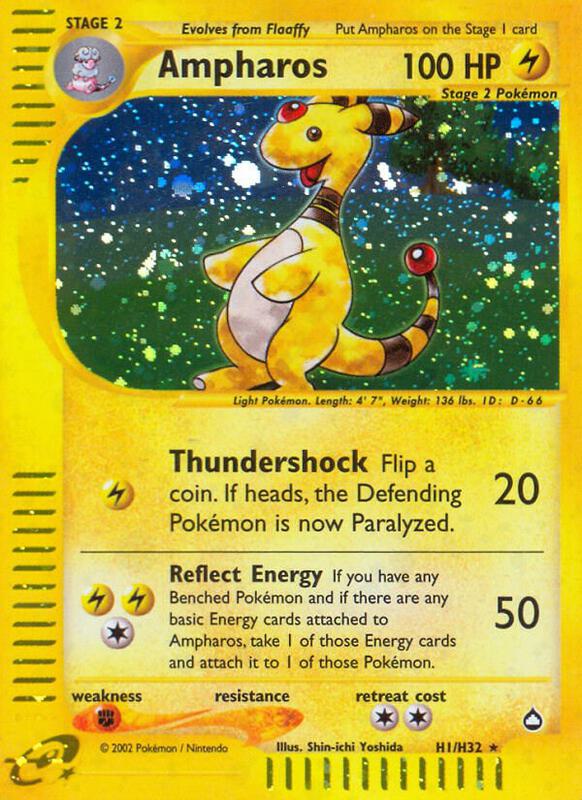
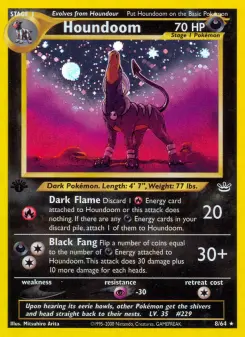
Third objection: these cards have no graded sale because nobody grades them. Partly true and testable. Of the universe's products with no recorded graded sale, 1,192 carry a PSA registry line of 100 or more graded copies, and 368 of those ask $5 or more. Those are cards people demonstrably do submit and that still show no verified sale. The dearest of them are Blastoise ex at $425, Ampharos at $350, Houndoom at $337.50 and Feraligatr at $331.83. One caution on that count, which is why it is a supporting number and not the headline: a PSA registry line can be shared by several products, so a 100-slab gate can admit a card whose own population is smaller. The bias runs toward over-including, and the four cards named above are each checked individually on their own page rather than quoted from the aggregate.
Fourth objection: a card can trade without a comp being recorded, and twelve percent of the sold record gets thrown away before it reaches us. Both true, and the second is measured: Twelve Percent of the Sold Record Is Thrown Away puts the rejection rate at 12.07% across 208,642 candidate comps, rising to 26.76% on PSA 7. A card sitting on two accepted sales is invisible here because the write floor is three. That means this study systematically overstates how many cards never trade, by an amount that is largest on cards near the floor. The direction is known and the fix is a lower floor, which we do not run, because a median built on one sale is the fault that How Many Sales Is a Price exists to prevent.
What would overturn this
The census claim fails the moment a product asking $1 or more turns up carrying neither a graded median nor a park row. That is a query anyone can rerun, it returns zero today, and we will rerun it. Below a dollar it already returns thousands, which is why the claim is scoped rather than swept up. The set ordering fails if a lower write floor reorders it: drop from three verified sales to one and the sets full of cards sitting on a single sale would climb out of the top, and the honest prediction is that the modern sets at 0% would stay at 0% while the 2008 to 2012 band would improve most. And the whole thing is one provider's view of one marketplace. A second graded source with different eBay coverage that produced a different ordering would settle it, and we do not have one.
As of 2026-09-22 for prices (`price_history` day 20718) and 2026-09-23 for the probe census. Universe as in every study in this wave: English catalogue rows with a TCGplayer product id, one row per product id after collapsing 240 duplicates, priced on day 20718: 21,416 products, of which 18,698 sit in the 129 sets carrying a release date and 60 or more products. A product counts as ANSWERED when `graded_snapshots` holds any row for it with a median above zero, read across both the catalogue id and the TCGplayer id; it counts as PROBED AND EMPTY when `api_cache` holds a `gradednone:` or `gradednull:` row for either key, which is an explicit written marker and not the absence of a join. 35,892 `gradednone` rows and 260 `gradednull` rows existed across all languages when this was written, all of them written between 2026-09-09 and 2026-09-23; that count rises every day the job runs and fell by expiry before it, so it is a reading rather than a constant. On the English priced catalogue the counts are 6,950 answered and 14,466 with no recorded graded sale. Of those 14,466, roughly ten thousand carry an explicit empty-probe marker and the rest do not, and every unmarked one asks under $1.00: park rows expire after fourteen days and the re-ask rotation reaches cheap cards last, so the split between the two moves daily while the sum does not. The partition is therefore exact on the $1-and-up half of the catalogue and only there: 10,381 products, 6,674 answered plus 3,707 probed-and-empty, 0 outside both. It is also exact on every population this study ranks, since all 4,879 products at $5 or more are either answered or explicitly marked. The graded cron writes a median only on three or more verified sales and parks an empty answer for fourteen days before re-asking (MIN_SAMPLE and NO_GRADED_DAYS in src/app/api/cron/graded-snapshot/route.ts), so 'no recorded graded sale' means fewer than three verified sales at the last ask, not never sold. Across the 129-set universe, 4,879 products ask $5.00 or more and 952 of them carry no recorded graded sale, 19.5%. The set ranking uses those same cards over sets holding twenty or more of them, which is 108 sets, less one removed by a stated age rule (released within 90 days of 2026-09-22: 30th Celebration), leaving 107 sets holding 4,593 such cards of which 891 have no graded record. ME05: Pitch Black would also have failed the age rule and does not reach the 20-card floor in any case. Ranks 1 to 14 are printed contiguously. Ties are broken by the larger count of untraded cards ranking first and then by the earlier release date; ranks 3 and 4 are an exact tie on both share and count, 23 of 44 each, and are ordered by release date, Legends Awakened in 2008 ahead of Burning Shadows in 2017. 27 of the 107 sets sit at 0.0%. The full ordered 107 is in the scratch dump. Registry populations come from the latest `population_snapshots` row per card; no per-card population absolute is printed, because a PSA registry line can be shared by more than one product. Emerald appears unlinked because that set has no set page. Scripts: apps/web/scripts/rs-probe.mts, rs-figures.mts and rs-extra.mts; figures in apps/web/.scratch-reddit-sets/figures.json. Nothing here is investment advice.