Yes. On September 28, 2026 the marketplace quoted both an ordinary printing and a reverse holofoil printing for 10,820 English cards, and the reverse asked more on 10,689 of them. That is 98.79%. The median reverse asks 2.67 times its own normal copy, which sounds enormous until you look at the money. The median ordinary ask in the census is 28 cents, the median reverse ask is 63 cents, and the median gap measured pair by pair is 35 cents. Both of those facts are the answer. The reverse is almost always the dearer printing, and on most cards the amount is small enough that it only matters in bulk. The pairs where it matters in dollars are old, and there are 2,485 of them.
Two cards, one product id, one afternoon
Every ratio below divides the reverse holofoil quote by the ordinary quote for the same TCGplayer product, taken from the same daily per-printing file on day 20724, which is September 28, 2026. That file is `tcgcsv_prices`, a separate store from the one a card page headlines, which is why a price named here can sit a few percent from the figure on the card's own page: the page reads the daily card file and this census reads the per-printing one. These are market prices, which in this corpus are treated as asks rather than sales, and the distance between the two is measured in Ask Versus Sold. Nothing here is a graded number and nothing here is a sale.
The population is English catalogue rows carrying a TCGplayer product id, collapsed to one row per product id, because 243 product ids are claimed by two rows each and counting both would double the extremes. That is 21,449 products, of which 11,106 carry a priced ordinary printing and a priced reverse holofoil printing on the same day. Two rules then cut that to the census of 10,820 pairs in 117 sets, and both are stated in full below rather than buried: 41 pairs go because the catalogue positively denies the card an ordinary printing, and 245 go because one of their two legs fails the price coherence test this codebase already applies on card pages.
The coherence test is the one that matters, and it is worth a plain explanation because it is the reason this census is smaller than our earlier ones. A printing's market figure is taken from whichever condition of that printing had a live listing, so a single Moderately Played copy can become the market price of the printing while the cheapest Near Mint listing of the same printing sits far above it. The code rejects a leg whose market figure falls below a third of its own listing floor. 236 reverse legs and 9 normal legs fail that test on this day. They are not random: their median ratio is 4.57x against the census median of 2.67x, 102 of them sit in sets released in 2002 and 2003, and 9 of the 111 inversions we would otherwise have printed rest on one of them. Nine rejected legs are named in the sections below precisely because they would have been the article's examples.
One axis cannot be held fixed and it would be dishonest not to say so. Both legs come from the same product, the same day and the same venue, but the per-printing file carries no condition column, and the mechanism above is exactly a condition mismatch. A quote that survives the coherence test is a quote whose market figure is close to its own listing floor, which is the best condition parity this source can offer. It is not a Near Mint against Near Mint comparison, and no figure here should be read as one.
The catalogue's own printing record is used to exclude a contradiction and never to require a confirmation. It removes 41 pairs whose card is recorded as having no ordinary printing at all, mostly the holo rares of FireRed & LeafGreen and Deoxys, whose median ratio is 2.16x and whose median ordinary leg is $26.95. We do not drop a pair for a missing flag, because an absent record is unknown rather than false: the catalogue marks a reverse printing on only 2 of the 1,870 pairs from sets released between 2012 and 2016, while the marketplace quotes both finishes on all 1,870. Demanding a flag on both finishes instead would leave 6,635 pairs across 77 sets at a median 2.65x, two cents from the census figure.
How much more, spread out across 10,820 pairs
Reverse holofoil against its own ordinary printing, share of 10,820 pairs
Two thirds of the census clears 2x: 7,350 pairs, 67.9%. Roughly one pair in seven clears 10x, and 1,188 of those 1,453 pairs sit in sets released before 2012, which is the pattern the next section draws. Read the left edge too, because it is the honest half of the answer. 1,264 pairs sit between parity and 1.5x, and 6,199 pairs, 57.3% of everything, have both printings asking under a dollar. A 2.67x premium on a 13 cent card, which is the median ordinary ask in sets released since 2023, is 22 cents.
In dollars rather than multiples: the premium is $1 or more on 4,065 pairs, $5 or more on 2,485, $20 or more on 1,195, and $100 or more on 184. Those last 184 are 1.7% of the census and every one of them comes from a set released between 2002 and 2010. If you sort your own collection by where the reverse is worth checking, that is the list.
The premium tracks the year the set came out
Median reverse premium by set release year, 2002 to 2026
The same census by era of release, with the money beside the multiple
| Sets released | Pairs | Sets | Median multiple | Reverse dearer | Median normal | Median reverse | Median premium | Pairs with a $5 premium |
|---|---|---|---|---|---|---|---|---|
| 2002 to 2003 | 624 | 7 | 6.07x | 620 of 624 | $5.11 | $42.10 | $30.36 | 571 of 624 |
| 2004 to 2007 | 1,287 | 16 | 11.76x | 1,286 of 1,287 | $1.29 | $20.33 | $18.80 | 1,015 of 1,287 |
| 2008 to 2011 | 1,339 | 16 | 4.85x | 1,328 of 1,339 | $0.72 | $4.95 | $3.79 | 546 of 1,339 |
| 2012 to 2016 | 1,870 | 22 | 2.82x | 1,862 of 1,870 | $0.35 | $0.98 | $0.59 | 247 of 1,870 |
| 2017 to 2019 | 1,640 | 15 | 2.11x | 1,630 of 1,640 | $0.28 | $0.54 | $0.27 | 100 of 1,640 |
| 2020 to 2022 | 1,680 | 15 | 1.97x | 1,639 of 1,680 | $0.15 | $0.28 | $0.15 | 3 of 1,680 |
| 2023 to 2026 | 2,376 | 24 | 1.86x | 2,321 of 2,376 | $0.13 | $0.24 | $0.11 | 1 of 2,376 |
The multiple and the money peak in different eras, and the arithmetic is the reason. The largest multiples sit in sets released from 2004 to 2007, where the median pair is $1.29 against $20.33. The largest dollar premiums sit one era earlier, 2002 to 2003, where the median premium is $30.36 because the ordinary printings in those sets already ask $5.11. A bigger denominator makes a smaller ratio out of a bigger gap. We are not claiming a cause for the gradient here. Survival, print quantities and who is buying are all untested in this data, and no public figures exist for how many of either finish were made.
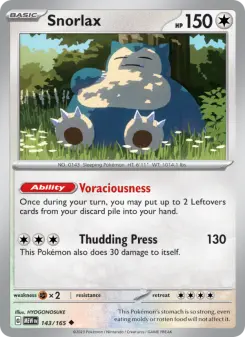
Nothing in the modern half of the chart is worth much in dollars. Exactly one of the 2,376 pairs from sets released since 2023 carries a premium of $5 or more, Snorlax from Crown Zenith at $2.72 against $13.05, and the era median premium is 11 cents. 151 is a fair example of the modern shape: 128 pairs, every one of them dearer as a reverse, at a median 1.96x, which in money is 20 cents against 35 cents.
Which reverse holos are actually worth money
The eight dearest reverse holofoil asks in the census, September 28, 2026
| Card | Set | Ordinary ask | Reverse ask | Multiple |
|---|---|---|---|---|
| Gengar #10 | Skyridge | $509.99 | $1,199.75 | 2.35x |
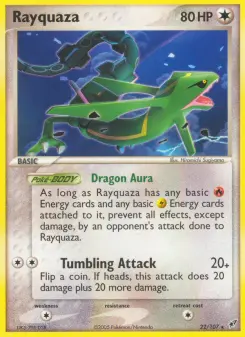
| Rayquaza #22 | Deoxys | $42.19 | $1,193.00 | 28.28x |
| Mewtwo #29 | Legendary Collection | $54.38 | $1,042.66 | 19.17x |
| Gyarados #11 | Skyridge | $199.99 | $999.75 | 5.00x |
| Psyduck #88 | Legendary Collection | $10.26 | $775.00 | 75.54x |
| Psyduck #104 | Aquapolis | $205.92 | $700.00 | 3.40x |
| Magikarp #52 | Legendary Collection | $7.93 | $699.99 | 88.27x |
| Charmander #70 | Legendary Collection | $2.15 | $616.33 | 286.67x |
233 of the 10,820 reverse legs ask $100 or more, 11 ask $500 or more and 3 clear $1,000. Only 18 ordinary legs ask $100 or more. That asymmetry is the whole answer: on this census the four-figure asks are all on the reverse, and on three of the eight dearest the reverse copies a Common.
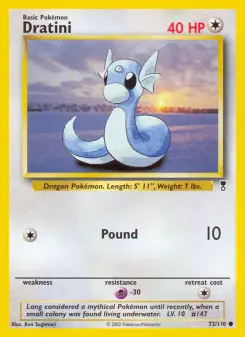
The widest ratio we can price is Dratini from Legendary Collection, $1.11 as an ordinary card and $366.66 as a reverse, 330.32x. That number is dated and it moves: the printings census recorded the same pair at 333x on September 23, five days earlier, because the ordinary leg was requoted. Treat every card named in this piece as a reading rather than a standing ranking.
Four pairs that show the range, priced September 28, 2026
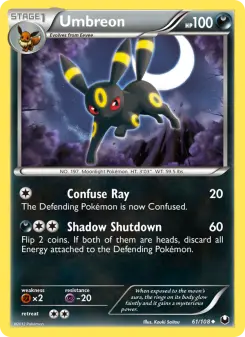
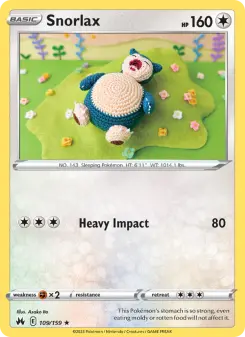
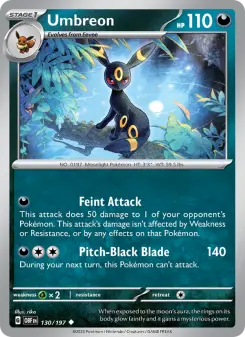
Is the reverse holo rarer? This data cannot say
A price is not a print run. Nothing we hold counts how many reverse holos were printed, and we know of no public source that does, a limit the printings census runs into as well. The catalogue flag we use above is a declaration that a finish exists, not a quantity. So the honest scope of this article is what the two printings ask on one day, nothing about how many were made and nothing about how many survive in grade.
One structural fact decides who this article is about. The reverse premium is a story about commons and uncommons. Across the 9,272 pairs whose card carries a rarity in our catalogue, the median sits between 2.11x and 2.53x on all of Common, Uncommon and Rare, so the tier does not sort it. The modern chase rarities are not in the census at all: no Illustration Rare and no Special Illustration Rare appears among the 10,820 pairs, because none of them is sold in two finishes, a point the modern rarity study makes card by card and the rarity chart prices tier by tier. There is no reverse holo of your alt art.
When the reverse is worth less
102 pairs invert, 0.9% of the census, and 29 more tie to the cent. Most inversions are noise at the bottom: only 26 of the 102 have either leg asking $1 or more, and only 6 have either leg at $20 or more. On a pair quoted at 15 cents and 6 cents, a penny of rounding is the whole finding, and the deepest inversion at any size is exactly that: Gogoat from Vivid Voltage at $0.15 against $0.06, which is 0.40x of very little.
The inversions that survive the coherence test cluster in modern sets and they are all cheap. Paradox Rift holds 10, Champion's Path 8 and Prismatic Evolutions 7, and not one of those 25 pairs has a printing asking more than 30 cents. Of the 111 sets holding 40 or more pairs on this day, Champion's Path is last on both measures: a median 1.42x, and only 77.3% of its 44 pairs dearer as a reverse. This is the section the coherence test changed most. Without it the deepest inversion in the census would have been Chatot from Majestic Dawn at 0.11x, whose reverse carries a market figure of 15 cents against a listing floor of $37.96, and the deepest with real money on it would have been Weakness Guard from Aquapolis at 0.24x, whose reverse reads $14.66 against a $430.00 floor. Nothing is asking $14.66 for that card.
Every inversion where either printing asks $20 or more
| Card | Set | Ordinary ask | Reverse ask | Multiple |
|---|---|---|---|---|
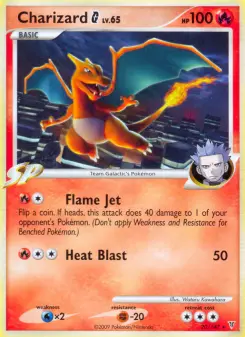
| Charizard G | Supreme Victors | $92.68 | $67.92 | 0.73x |
| Sudowoodo | Aquapolis | $62.62 | $50.66 | 0.81x |
| Espeon | Aquapolis | $165.66 | $136.27 | 0.82x |
| Gengar | Arceus | $92.32 | $80.25 | 0.87x |
| Mew | Expedition Base Set | $149.58 | $133.68 | 0.89x |
| Arcanine | Aquapolis | $142.38 | $141.90 | 0.997x |
Four of those six sit in the e-Card sets, where an ordinary printing is often the scarce object in its own right, and three of the four are in Aquapolis alone. Espeon is the clearest case: a Rare whose plain printing asks $165.66 while its own reverse asks $136.27, with both figures close enough to their listing floors to survive the coherence test. When the version without the extra foil is the one collectors want, the reverse is the consolation. Note what this table is not: it is six rows out of 10,820, and on 98.79% of the census the arrow points the other way.
Reverse against the card's own holo, which is a different question
Some cards are printed as a set holo and as a reverse, with no ordinary version in between. On the 1,081 pairs where the marketplace quotes both a holofoil and a reverse holofoil on September 28, 2026, and both legs clear the coherence test, the reverse is dearer 72.7% of the time at a median 1.29x. That is a much narrower edge than 2.67x, and it flips on the expensive pairs, which is the subject of The Reverse Holo Versus the Holo Itself. Foil beats no foil by a wide margin. Foil beats foil by a little.
How this sits beside our earlier reverse holo censuses
The Reverse Holo Is Not Filler published 2.03x on September 4, 2026 and recomputed itself at 2.44x on September 22. The printings census published 2.79x on September 23. This census reads 2.71x before the coherence test and 2.67x after it. None of that is a correction, and the pieces of the difference can be named. The 2.44x pooled two different comparisons, reverse against ordinary and reverse against holo, into one median; read against ordinary printings alone, that recompute gave 2.74x. Its holo comparison gave 1.23x on 1,044 pairs against our 1.29x on 1,081. What differs here is the coherence test. The September 22 recompute reports applying it and removing zero rows on its own source; on this one it removes 245 pairs, worth four cents on the headline and most of the tail, and we say plainly in the methodology that we cannot reconcile those two results.
One thing has genuinely changed since those pieces, and it is the reason this one can exist. Both of them disclaimed that their per-printing source was a current-state store with no history, so neither census can be replayed at its own date. The per-printing store now carries a day on every row, and its history runs days 20719 to 20724, September 23 to September 28, 2026, holding 272,776 rows. Rerun on each of those six days, this census holds between 10,816 and 10,836 pairs, a median between 2.67x and 2.70x, and a share dearer between 98.68% and 98.85%. The number is stable over the only window we can currently replay, and it is now reproducible rather than asserted.
What would overturn this
The cheapest test is the six-day replay above, run for longer. Six days hold the median inside 0.04x, from 2.667x to 2.700x, on a pair count that moves by up to twenty products between days. If a month moves it more than about 0.2x with no change in the population, the figure is an artefact of which listings happened to be live rather than a level, and the headline should be quoted as a range. The second test is the coherence rule itself, and it cuts the other way from the one people expect: we reject a leg whose market figure sits below a third of its own listing floor, and a stricter ratio would reject more of the old expensive pairs and pull the era table down. Rerun the census at a ratio of two and of five. If the 2002 to 2003 era median moves more than a point between them, the vintage half of this article is a statement about our filter rather than about the market. The third test needs a source we do not have: a per-condition record for each printing, which would let the two legs be matched on condition instead of merely screened for coherence.
As of the per-printing price store `tcgcsv_prices` day 20724, which is 2026-09-28, the newest day on which that store is complete; it holds 272,776 rows over days 20719 to 20724. Population: `cards` rows with lang = 'en' and a non-empty tcg_id, collapsed to one row per tcg_id, preferring a catalogue-native id over a synthetic `enx-` one and then the lexically first id; 21,692 rows collapse to 21,449 products, 243 rows collapsing away because 243 product ids are claimed by two English rows each. A pair requires that product to carry, on day 20724, a `sub_type` of 'Normal' and a `sub_type` of 'Reverse Holofoil', each with a `market` figure strictly above zero. Market figures are treated as asks, not sales, throughout this corpus; no graded or sold figure appears in this article. 11,106 products meet that price test. TWO EXCLUSIONS, both stated in the body. First, 41 pairs where `cards.variant_flags`, the TCGdex per-card printing declaration decoded in src/server/printing-identity.ts, is present and does not include 'n', meaning the catalogue positively denies an ordinary printing: 14 in FireRed & LeafGreen, 12 in Deoxys, 9 in Team Rocket Returns, 5 in Emerald and 1 in Unleashed, median ratio 2.16x, median ordinary leg $26.95. A missing or NULL flag is never a reason to drop a pair, because absent is unknown rather than false. Second, 245 pairs where either leg fails `printingPriceIncoherent` from packages/core/src/printing.ts, the same test card pages apply, evaluated on the leg's own `market` and `low` so that only the listing-floor branch fires: a leg is rejected when its market figure falls below a third of its own low. 236 of the rejected legs are reverse legs and 9 are normal legs, none of them both; their median ratio is 4.57x, their median ordinary leg is $3.60, and by era of release they fall 102, 56, 72, 13, 1, 0, 0 from the 2002-2003 block to the 2023-2026 one, the 244 that sum there plus one pair whose provider group carries no release date. One puzzle belongs here rather than in a footnote. Our September 22 reverse holo recompute states in its own methodology that it applied this same test to its source and that the test removed zero rows, and the September 23 printings census does not mention it at all. On the per-printing store on this day the same test rejects 245 pairs. We cannot reconcile those two results from here, and we are not going to assume which source differs; what we can say is that the test is applied to both legs of every pair in this census and the rejected legs are listed by count and by era below. That leaves the census of 10,820 pairs in 117 sets, 111 of which hold 40 or more pairs. The strict alternative, requiring the flags to declare both a normal and a reverse printing, gives 6,635 pairs in 77 sets and a median 2.65x; the flag record is incomplete by era, marking a reverse printing on 2 of the 1,870 pairs from sets released 2012 to 2016 while the marketplace quotes both finishes on all 1,870, which is why the flag is used only to exclude a contradiction. 30th Celebration is excluded by the wave rule for sets released inside the measurement window, and it contributes no priced pair on this day, so the rule changes nothing here. Japanese rows are out of scope: all 38,965 of them carry no printing flags, and English and Japanese product ids do not overlap. Ratios are reverse divided by ordinary. Medians take the upper-middle value on even samples and are never means, because thin printings are noisy. Counts, not percentages, are the primary figures: 10,689 pairs dearer as a reverse, 102 cheaper, 29 equal to the cent, summing to 10,820. Release dates are `tcgcsv_groups.published_on` joined through `tcgcsv_products.group_id` on the same product id, covering 10,816 of the 10,820 pairs; the other 4 sit in provider groups whose published_on carries a fetch timestamp of 2026-09-28T20:00:06Z rather than a release date, 19 groups in all, being the POP Series, trainer kit and promo groups, and those 4 pairs are excluded from the release-year chart and the era table while remaining in every pooled figure. The seven era rows are closed on both years, contiguous, and partition the dated pairs with no gap and no overlap: 624 plus 1,287 plus 1,339 plus 1,870 plus 1,640 plus 1,680 plus 2,376 is 10,816. No set released before 2002 contributes a pair; the earliest is Legendary Collection, published 2002-05-24 in the provider's own record. Rarity figures cover the 9,272 pairs whose catalogue row carries a rarity: Common 4,043 pairs at 2.50x, Uncommon 3,723 at 2.53x, Rare 1,443 at 2.11x and Secret 63 at 2.30x, that last too thin to rank; the remaining 1,548 pairs carry no rarity in our catalogue, 1,543 of them in sets released 2007 to 2011 and the other five being one Aquapolis row and the four undated POP Series pairs, so they are reported as absent rather than as a tier of their own. The holofoil comparison applies the same contradiction rule against 'h' and the same coherence test to both legs, and yields 1,081 pairs. The six-day replay reruns the whole census, both exclusions included, on days 20719 through 20724. Set-level figures are only reported for sets holding 40 or more pairs. Prices in this article come from the per-printing store, so a card page, which reads the daily card file `price_history`, can show a figure a few percent away for the same card on the same day. Link check, run once across the whole wave on 2026-09-28: every card id printed anywhere in these five studies resolves to a catalogue row whose name matches the label the sentence gives it, all 129 of them; every set link returned 200 from production; and every linked article slug resolves inside this corpus. Deoxys and Expedition Base Set have no set page on this site and are named in plain text rather than linked. Nothing here is a print run figure, a graded figure, or investment advice.