PSA's cheapest trading card service level is $59.99 a card, read off PSA's own service level page on September 23, 2026. Only 1,568 English cards qualify for the arithmetic here: the ones where we hold, on one day, a PSA 10 sold median, a PSA 9 sold median and a gem rate from PSA's registry, which is the share of graded copies that came back a 10. That's 1,568 of the 21,412 English printings our daily price feed covered on October 10, 2026, so most of the catalogue sits outside this piece, because the sales record there is too thin to price a submission against. Expected value per submission is what one card pays on average: the PSA 10 price weighted by how often a ten arrives, the PSA 9 price by how often it doesn't, minus what the raw (ungraded) copy cost and minus the fee. It comes out positive on 95.8 percent of the panel at a $20 fee and on 45.2 percent at the fee PSA's price list forces on each card. And $59.99 is a floor. PSA paused its Value, Value Bulk, Value Plus and Value Max tiers on June 2, 2026 to work down its backlog, then reopened at the bottom with Standard on September 14. Twelve cards cost $719.88 before postage either way. Thirty-nine figures across twelve of this site's own pieces still price a submission at $20 to $25, and four of the twelve call that PSA's value or bulk tier, which is a tier nobody can buy today.
Five service levels, and a ceiling on each
PSA publishes five service levels open to direct submission, and each one covers declared values up to a ceiling. Declared value is the figure you write on the submission form for what the graded card is worth, and it's what picks your tier. Cross a ceiling and you're buying the next level up, so the fee jumps from $59.99 to $79.99 the moment a card is worth more than $1,000, and to $199 above $1,500. The price list works like a staircase: your declared value picks the step, and the step sets the fee.
Seven cards in eight buy PSA's cheapest tier
| Service level | Published fee | Insures a declared value up to | Cards that buy it | Grading pays at that fee | At a $20 fee |
|---|---|---|---|---|---|
| Standard | $59.99 | $1,000 | 1,367 of 1,568 | 38.3% | 95.2% |
| Priority | $79.99 | $1,500 | 48 | 100.0% | 100.0% |
| Express | $199 | $2,500 | 49 | 87.8% | 100.0% |
| Super Express | $349 | $5,000 | 74 | 89.2% | 100.0% |
| Premier | $599 | $10,000 | 30 | 93.3% | 100.0% |
87 of every 100 cards in the panel land in that first row, so for almost everybody the answer to the cost question is $59.99 and the staircase above it is academic. The declared value is also partly your choice. Declare at the raw price and you buy a cheaper tier, with less insurance behind the card and an upcharge waiting if the graded card turns out to be worth more than you said. We declare at the PSA 10 sold median throughout, because the ten is the copy a submitter is paying PSA to protect. 21 English cards that pass every other test carry a PSA 10 median above $10,000, which sits above PSA's highest published ceiling; PSA quotes those per item, so we leave them out.
What tripling the fee does to the answer
Triple the fee and half the panel stops paying
At $20 the answer is yes on 1,502 of the 1,568 cards and the middle card clears $35.04. At the fee each card's declared value actually buys, the count is 708 and the middle card loses $5.98. In between, 794 cards cross from yes to no on nothing but the invoice. Their median PSA 10 sells for $95.00 and their median raw copy costs $8.39. These are the ordinary cards people box up because someone said grading was worth it.
Four cards that cleared $20 and no longer clear anything
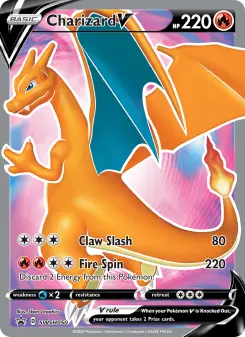
Charizard V from Champion's Path gems 63.0 percent of the time, which is a good card by every grading heuristic in circulation. It loses $18.88 a submission anyway, because a raw copy costs $258.20 and the ten sells for $432.00. A high gem rate can't rescue a thin gap between the raw card and the graded one. The fee comes out of that gap, and here the gap is $173.80 before eBay takes its cut.
Look up one number before you fill in the form
Where grading still pays, by what the PSA 10 actually sells for
Every band above $200 was a yes at the old fee and most are still a yes now. Below $100 the picture inverts: of those 480 cards, 420 paid at a $20 fee and 5 pay today. The top band sits slightly under the one beneath it, and the staircase explains that. Once a card's ten passes $1,000 its declared value buys Priority at $79.99 or dearer, where the band below pays $59.99. One card in the top band has a ten of exactly $1,000.00, and PSA's Standard ceiling is inclusive, so it still buys Standard. That single card is why the nine bands under $1,000 count 1,366 while the Standard tier group counts 1,367.
The arithmetic under that chart is short enough to do at the kitchen table. eBay's published fee on a Trading Cards sale is 13.25 percent of the sale plus 40 cents, so a PSA 10 has to sell for $69.61 before the $59.99 invoice is back in your pocket, and that's before the raw card cost you anything at all. At a $20 fee the same floor was $23.52. Of the 2,611 English cards where we hold both a live raw price and a PSA 10 median, 636 of them, 24.4 percent, sell their tens below $69.61. For those cards a perfect grade is still a loss.
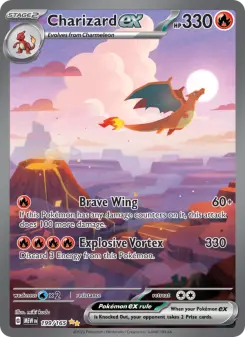
Four submissions that still make money at the real fee
The cheapest tier is the one that hurts
Standard takes 48.3% of the payout, Premier 9.5%
The $599 tier is the gentlest of the five. Card values climb faster than the staircase does, so the middle Premier card gives up 9.5 percent of its payout and the middle Standard card gives up 48.3 percent. Nearly half the money a $143.75 ten pays out goes straight back to PSA. That's why the answer moved. The cheapest fee on the list is the only one most cards ever meet, and it's now large next to the cards that meet it.
Three cards where the staircase decides it
| Card | Raw | PSA 10 median | Gem rate | Tier its declared value buys | Expected value at a $20 fee | At the real fee |
|---|---|---|---|---|---|---|
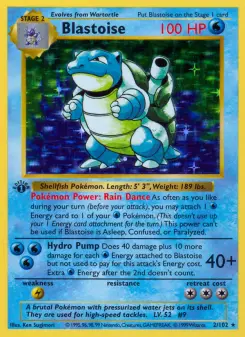
| Blastoise (Base Set, card 2 of 102) | $222.69 | $7,700.00 (6 sales) | 0.7% | Premier $599 | +$606.72 | +$27.72 |
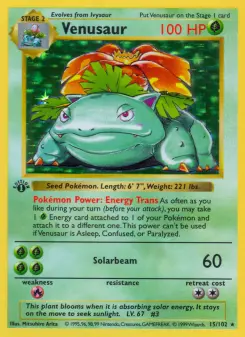
| Venusaur (Base Set, card 15 of 102) | $168.98 | $3,240.00 (5 sales) | 1.2% | Super Express $349 | +$328.68 | -$0.32 |
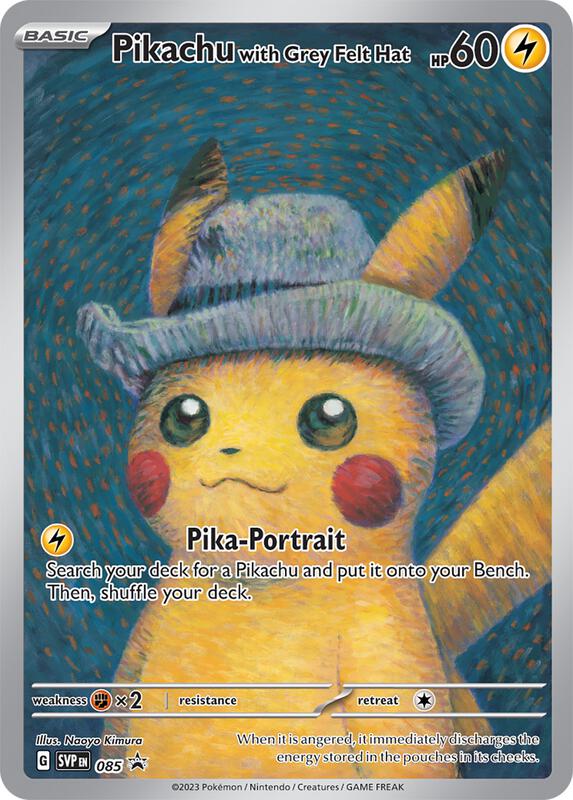
| Pikachu with Grey Felt Hat | $1,015.89 | $2,825.00 (259 sales) | 42.4% | Super Express $349 | +$486.84 | +$157.84 |
Both Base Set rows rest on very few recorded PSA 10 sales, six for the Blastoise and five for the Venusaur, and almost none of their expectation comes from the ten. A Base Set Blastoise gems 0.7 percent of the time, so the PSA 9 median carries the arithmetic while the big ten only sets the declared value, which then sets a $599 fee. The felt hat Pikachu is the opposite case, 259 recorded PSA 10 sales and a 42.4 percent gem rate, and it still hands over the $329 that separates the $349 tier from a $20 fee.
The declared value sets the fee, and these three show it
Thirty-nine figures on this site run on fees nobody can buy
Search every article and study we publish for a $20, $22 or $25 amount printed within 120 characters of the word fee or the phrase "a submission", in a grading context, and 39 figures come back across 12 of the 223 pieces we published before this one. Twenty-two of the 39 use $20, thirteen use $25 and the other four use $22. Four of the twelve call the fee a value or bulk tier. The piece carrying nine of the 39 states in its own body that its $20 is the grading fee alone, excluding postage both ways, insurance, the sleeve and the card saver. The eight that name no tier print a bare $20, $22 or $25, and seven of those eight never mention postage anywhere. The dates make it worse. The earliest of the twelve went up on July 26, 2026 and the latest on September 29, both after PSA pulled its value tiers on June 2, and three went up after Standard reopened at $59.99. The fee had already changed by the time those numbers were typed.
Every piece of ours that still prices a submission at the old fee
| Piece | Published | Fee it assumes | Figures |
|---|---|---|---|
| Is Grading Pokémon Cards Worth It? 2,633 Answers | 2026-09-22 | $20 | 9 |
| The Fee Is a Fixed Cost | 2026-09-03 | $25, plus a $20 rung | 6 |
| The Grading Frontier | 2026-08-04 | $25 | 6 |
| Where Money Went to Die | 2026-07-26 | $22 | 4 |
| Grading ROI, Computed Honestly | 2026-08-26 | $20 | 3 |
| The Ask Is Lying to You | 2026-08-30 | $20 | 2 |
| The First Negative Stamp | 2026-08-30 | $20 | 2 |
| The Umbreon Standard | 2026-08-28 | $20 | 2 |
| Thirty-Two Days After We Called the Mania | 2026-09-29 | $20 | 2 |
| Everyone Grades the Freebies | 2026-08-28 | $20 | 1 |
| Fifteen Tens From 12,323 Tries | 2026-09-21 | $25 | 1 |
| The Grading Tax | 2026-08-06 | $25 | 1 |
Every live surface now reads one published fee file, which landed on September 23, 2026: the card page and its report, the PSA calculator, the Should I Grade This panel, the home masthead, the insights generator and the Pro market report all price a submission from PSA's current service levels. The twelve pieces above don't, because an article is a dated document and quietly rewriting the numbers inside one is worse than leaving them. The direction of each finding holds. The fees they assume run $20 to $25 against today's $59.99 floor, so every share of cards that clears one of them is too generous.
For four cards in five we can't answer this at all
Our nightly build scored 26,253 cards on October 10, 2026, and 5,164 of them carry a PSA 10 sold median, which is 19.7 percent. English cards specifically: 2,612 of 20,640. The expected value panel is smaller again at 1,568, because it also needs a PSA 9 median and a registry gem rate, and that's 7.3 percent of the 21,412 distinct English printings our daily price feed covered that day.
A missing PSA 10 median is a fact about supply, not a verdict on the card. It means nobody has recorded a verified PSA 10 sale of that printing inside our window, usually because few copies have been graded and fewer have changed hands. The card might grade beautifully. A ten might fetch plenty. What's absent is a comparable sale to price the submission against, and at $59.99 a card, spending the fee to find out is an expensive way to get a quote.
What to do with the twelve cards in the shoebox
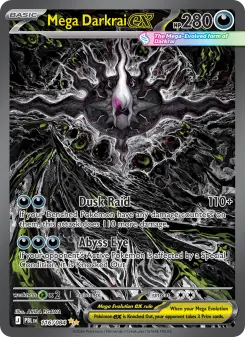
Cost first: twelve times $59.99 at the cheapest open tier, plus postage both ways, plus the insured return leg. Then price the tens before you fill in anything. A ten under $69.61 can't return the fee even if the grade is certain. Under $150 the submission pays on 43 of our 705 panel cards. The one that still works looks like Mega Darkrai ex from Pitch Black, a $997.50 ten that arrives 63.2 percent of the time and clears $437.60 a card. Charizard V at a $90.00 ten is the other kind, and it loses $16.50 on the same $59.99. If the twelve cards are mostly promos and modern holos, the honest answer is that the fee now costs more than the upside, and the cards are worth more to you raw.
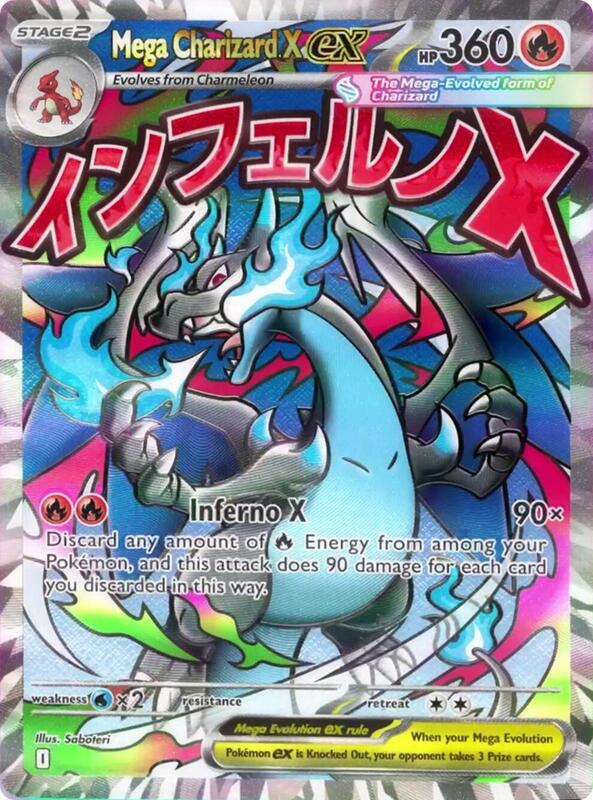
Population: report_features, our nightly scored-card table, build stamped October 10, 2026, joined to the English catalogue. 2,612 English cards carry a PSA 10 sold median on five or more recorded sales, and 2,611 of those also carry a live raw market price; 2,611 is the denominator for the guaranteed-ten line and for the break-even share. 1,589 of the 2,611 also carry a PSA 9 sold median on five or more sales and a PSA registry gem rate. 1,568 of those have a PSA 10 median at or under $10,000, PSA's highest published ceiling, and are the panel every expected value figure here is computed on; the 21 above it are left out, because PSA quotes its Premium service levels per item and we would be inventing the fee. Graded medians are the headline figure our card pages print: the median of the recent verified-sale window where we hold one, 90 days for most rows and 180 or 365 where the recent window is wider, with the sale count quoted beside it, gated at five sales and at 0.5x to 45x the raw price, which drops grade-inverted and runaway comps out of the window. Gem rate means the share of graded copies that came back a 10; ours are PSA registry proportions from our population snapshots, read off the trusted pair of readings for that registry line. Every gem rate in the panel is a recorded one, and a card with no gem count drops out before the arithmetic; the lowest rate that survives is 0.73 percent. Raw prices are the canonical printing market price our card pages show; for three of the eleven cards named here (Mega Darkrai ex, Mega Charizard X ex and the SWSH050 Charizard V) it differs from the bare TCGplayer product row by under four percent, because the card carries more than one printing row. Fees are published third-party figures held in one file, src/lib/grading-fees.ts: PSA's trading card service levels and eBay's non-store Trading Cards final value fee of 13.25 percent to $7,500 and 2.35 percent above that, plus $0.40 an order over $10 and $0.30 at or under, both read on September 23, 2026. ONE LIMIT ON THAT: the June 2 pause, the September 14 Standard reopen and the four paused tier names are quoted from that file, which was first committed on September 23, 2026, and nobody in this chain has re-read PSA's own page since. If PSA has reopened its value tiers, every share in this article moves. Expected value per submission = gem rate x the PSA 10 median net of eBay's fee, plus (1 minus the gem rate) x the PSA 9 median net of eBay's fee, minus the raw price, minus the grading fee. That is a two-outcome model: the ten, and everything else valued at the nine. It is generous on the downside, since a card returning a 7 does not fetch the nine's price, and conservative on the payout, since both graded legs are net of the selling fee while the raw card is charged in full. Our earlier grading pieces used a three-outcome model with a sub-nine salvage term and no selling fee, so their figures are comparable with these only in direction. The guaranteed-ten line weighs only the PSA 10 median against the raw price and the fee, on the full 2,611. Medians use the upper-middle value on even samples. The corpus audit counted every $20, $22 or $25 amount in src/lib/articles.ts and src/lib/studies appearing within 120 characters of the word fee or the phrase 'a submission' in a grading context, walking the article objects field by field and cross-checking against a raw scan of the source text. That is 39 figures across 12 of the 223 pieces published before this one, which quotes the old fee only as history. Twenty-two of the 39 are $20, thirteen are $25 and four are $22. Amounts with further digits after a point or comma are not matches, which is what keeps $22.50 and $20,550 out of the count, and a sensitivity rung inside a fee ladder does count, which is why The Fee Is a Fixed Cost contributes a $20 rung alongside its five $25 figures. Two matches were read and set aside as prices: a $25 price band in Where the New Slabs Go, and a $25 ask threshold in Pokémon Card Ask vs Sold Price, Measured where the nearby word 'fees' means postage and packing. Not counted anywhere above, because no figure we can cite applies to every reader: shipping to PSA and the insured return leg; shipping and insurance to the eventual buyer; PSA Collectors Club membership, where the chosen tier requires one; penny sleeves, semi-rigids and submission supplies; value-based upcharges PSA applies when the graded card is worth more than the declared value; payment processing or sales tax beyond eBay's published final value fee. Nothing here is financial advice.