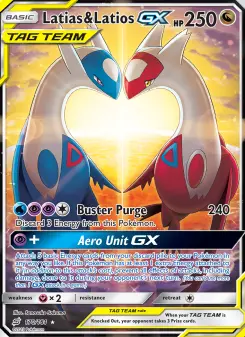
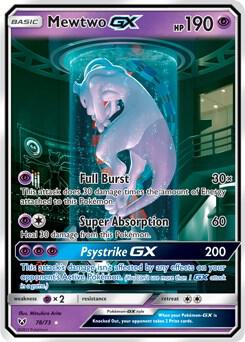
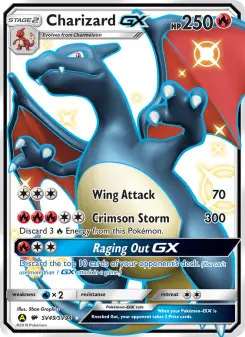
The Sun & Moon era ran from February 2017 to November 2019 and our catalog holds **2,669 cards** across its seventeen English sets. On 2026-09-23 the 2,659 of them that carry a live ask are worth **$45,018.97** together, and the distribution is the finding: the median card asks **45 cents**, 1,605 of them ask under a dollar, and **52 cards hold half the era's entire value**. That is more top-heavy than the Diamond & Pearl era, where half the value takes 61 cards of 1,949, and one set, Team Up, is a quarter of it.
The seventeen sets, in release order
Every set the era printed is here, dated from the recorded release field, with nothing excluded by price and no top-N window. SM Black Star Promos is not one of the seventeen, on purpose: the ten English Black Star Promo families are counted together in are Black Star promos worth anything, and including a 248-card promo family in an era census would double-count it against that study.
The Sun & Moon era, all 17 sets, 2026-09-23
| Set | Released | Cards | Priced | Summed ask | Median card | Under $1 | $100 and up | Top 5 share |
|---|---|---|---|---|---|---|---|---|
| [Sun & Moon](/research/set-screen/sun%20%26%20moon) | 2017-02-03 | 172 | 163 | $662.03 | $0.23 | 124 | 1 | 48.7% |
| Guardians Rising | 2017-05-05 | 169 | 169 | $1,063.71 | $0.35 | 110 | 1 | 39.4% |
| Burning Shadows | 2017-08-04 | 169 | 169 | $1,760.12 | $0.31 | 109 | 1 | 58.8% |
| Shining Legends | 2017-10-06 | 78 | 78 | $1,553.51 | $0.38 | 51 | 3 | 83.2% |
| Crimson Invasion | 2017-11-03 | 125 | 124 | $508.58 | $0.37 | 81 | 0 | 39.1% |
| Ultra Prism | 2018-02-02 | 173 | 173 | $2,225.05 | $0.45 | 108 | 3 | 47.6% |
| Forbidden Light | 2018-05-04 | 146 | 146 | $1,308.69 | $0.65 | 85 | 2 | 34.1% |
| Celestial Storm | 2018-08-03 | 183 | 183 | $1,929.23 | $0.44 | 112 | 3 | 43.4% |
| Dragon Majesty | 2018-09-07 | 78 | 78 | $768.18 | $0.65 | 41 | 1 | 48.8% |
| Lost Thunder | 2018-11-02 | 236 | 236 | $2,707.78 | $0.84 | 130 | 8 | 34.3% |
| Team Up | 2019-02-01 | 196 | 196 | $11,467.87 | $0.53 | 117 | 17 | 67.1% |
| Detective Pikachu | 2019-04-05 | 18 | 18 | $82.90 | $1.53 | 7 | 0 | 77.6% |
| Unbroken Bonds | 2019-05-03 | 234 | 234 | $4,010.42 | $0.45 | 148 | 11 | 40.8% |
| Unified Minds | 2019-08-02 | 258 | 258 | $4,714.32 | $0.38 | 173 | 15 | 40.1% |
| Hidden Fates | 2019-08-23 | 69 | 69 | $291.94 | $0.32 | 48 | 0 | 78.2% |
| Hidden Fates Shiny Vault | 2019-08-23 | 94 | 94 | $3,463.66 | $12.39 | 0 | 8 | 47.1% |
| Cosmic Eclipse | 2019-11-01 | 271 | 271 | $6,500.98 | $0.42 | 161 | 19 | 32.0% |
Team Up is 25.5% of the era on 7.3% of its cards. Hidden Fates Shiny Vault is the only set in the era with **not a single card under a dollar**: its median card asks $12.39 against $0.32 for the 69-card main Hidden Fates set released the same day. That pair is the cleanest evidence in the era for what the set inside the set measured across eight subset and parent pairs.
Two link notes, because a claim about a URL is a figure. [Sun & Moon](/research/set-screen/sun%20%26%20moon) has no `/set/` page: the set-value series that page needs does not exist for it, so the set screen is the only working surface and that is what is linked. Every other set in the table resolves at `/set/`, and each title was fetched and read back rather than inferred from a status code.
Where the value actually sits
A single card, Latias & Latios GX, is 8.69% of the era. The top ten cards are 25.2%, the top hundred are 63.1%, and half the money is in 52 cards of 2,659. The other end of the same distribution is 1,605 cards asking under a dollar and 90 asking under ten cents.
Both eras by ask band, share of cards and share of value
| Ask band | Sun & Moon cards | Share of cards | Share of value | Diamond & Pearl cards | Share of cards | Share of value |
|---|---|---|---|---|---|---|
| Under $0.25 | 664 | 25.0% | 0.3% | 17 | 0.9% | 0.0% |
| $0.25 to $1 | 941 | 35.4% | 0.9% | 799 | 41.0% | 1.0% |
| $1 to $5 | 332 | 12.5% | 1.9% | 494 | 25.3% | 2.8% |
| $5 to $25 | 412 | 15.5% | 10.8% | 350 | 18.0% | 9.7% |
| $25 to $100 | 217 | 8.2% | 24.5% | 183 | 9.4% | 22.4% |
| $100 and up | 93 | 3.5% | 61.6% | 106 | 5.4% | 64.1% |
The two eras put almost the same share of their money in the same places, 61.6% and 64.1% above $100, and differ entirely at the bottom: a quarter of the Sun & Moon era asks under 25 cents against 0.9% of Diamond & Pearl. The 2007 to 2011 sets have a floor near a quarter and the 2017 to 2019 sets do not, which is what twelve more years of print run looks like in a price table.
The twelve dearest cards of the era, with their sold graded medians
| Card | Set | Ask | PSA 10 sold median | Sales | PSA 9 sold median | Sales |
|---|---|---|---|---|---|---|
| Latias & Latios GX 170 | Team Up | $3,910.42 | $15,050.00 | 46 | $5,550.00 | 33 |
| Gengar & Mimikyu GX 165 | Team Up | $2,020.10 | $7,900.00 | 63 | $2,426.25 | 37 |
| Magikarp & Wailord GX 161 | Team Up | $882.13 | $4,275.00 | 77 | $1,232.50 | 35 |
| Mewtwo GX 78 | Shining Legends | $809.37 | $8,000.00 | 253 | $1,507.50 | 408 |
| Charizard GX 150 | Burning Shadows | $769.02 | $6,100.00 | 22 | $926.48 | 52 |
| Charizard-GX SV49 | Hidden Fates Shiny Vault | $768.10 | $1,158.93 | 108 | $528.00 | 118 |
| Gardevoir & Sylveon GX 205 | Unbroken Bonds | $640.88 | $5,166.00 | 64 | $1,126.25 | 55 |
| Arceus & Dialga & Palkia GX 221 | Cosmic Eclipse | $568.26 | $3,837.50 | 39 | $748.00 | 39 |
| Gengar & Mimikyu GX 186 | Team Up | $496.58 | $2,700.47 | 35 | $538.00 | 25 |
| Blastoise & Piplup GX 215 | Cosmic Eclipse | $496.14 | $2,949.99 | 41 | $549.66 | 64 |
| Lillie 151 | Ultra Prism | $469.23 | $1,842.00 | 21 | $403.75 | 22 |
| Mewtwo & Mew GX 242 | Unified Minds | $420.76 | $2,070.00 | 43 | $477.49 | 28 |
Magikarp & Wailord GX is the third row and it has its own study: see Magikarp & Wailord GX value for the per-card graded ladder, which is deliberately not repeated here.
The era where the ten still trades
**536 of the 2,659 priced cards carry a PSA 10 sold median** on two or more recorded sales, 498 carry a PSA 9 median, and 403 carry both. The median PSA 10 premium over the raw ask is 7.76 times, with a quartile range of 4.77 to 14.20. The median PSA 9 sells for 0.231 of the PSA 10 on the 403 cards that have both. Where a trustworthy gem rate exists on 50 or more submissions, 914 cards, the median rate is **43.1%**, so a submission from this era is roughly a coin flip. The deepest recorded PSA 10 tape in the era does not belong to any of the era's dear cards: it is Moltres & Zapdos & Articuno GX 44 from Hidden Fates, 647 recorded sales at a $155.21 median on a card asking $49.33 raw, and the next three deepest are Hidden Fates cards too. That number is the whole reason the era's ten still has a market, and it is the sharpest contrast with the era that came before it: see Diamond and Pearl era card prices, where the same measurement returns 4.4%.
Four cards were dropped from the graded population because they record more than two sales per graded copy, or record sales at a grade where the registry line records no copies at all. A slab resells, so one sale per copy is not a ceiling and the bar is a declared one rather than a physical limit. Celesteela shows 15 recorded PSA 10 sales against 5 tens, three per copy. Slaking shows 7 PSA 9 sales against 3 nines. Jirachi ◇ records 5 PSA 10 sales and 6 PSA 9 sales against a line recording no copies at either grade, and Lucario 4 PSA 9 sales against no recorded nines. The filter is built before any graded figure, so the 536, the 498, the 403, the 7.76 and the quartiles are all counted over the remaining 2,655 cards. At a stricter bar of 1 sale per copy the same four cards, and no others, would go.
What this study cannot show
Every price is an ask on one marketplace on one day, not a sale, and 10 of the 2,669 cards carry no ask at all and are counted in the checklist but not in the sums. The era total is a sum of near-mint single-card quotes and is not what a set costs to build; the completion bill owns that question. The ten English Black Star Promo families are excluded, which removes the SM-P-era English promos entirely from a study about an English era, and that is a real hole rather than a rounding choice. Graded medians exist for a fifth of the era and are not available for the rest; those cards are unrecorded, not worthless. No claim is made about print runs: we do not hold them. And the concentration figures are computed over asks, so a single stale quote on a chase card moves them.
What would overturn it
Recompute the seventeen set sums on any complete day of the tape and add them. If the era total lands outside roughly $43,000 to $47,000 while the same seventeen sets are in it, one of us has the population wrong, and the first place to look is whether a promo family has been folded in. If the count of cards holding half the value comes back above 150, the top-heaviness claim is wrong.
Population: every `cards` row in the seventeen English set names listed in the table, 2,669 rows on 2026-09-23. Deduplicating on TCGplayer product id collapses 0 rows here, against 1,212 across the whole catalog and 240 across the English half, so this era contributes none of that debt. 2,659 rows carry an ask; 10 do not and are excluded from every sum and median, included in every card count. Prices are asks from the daily card tape `price_history` on epoch day 20719, 2026-09-23, a complete day carrying 52,378 priced products; the partial days 20704 to 20713 are not used. Population is PRODUCTS, not catalog rows: one row per TCGplayer product id where present, else the catalog id, ties broken to the lexicographically smallest catalog id. Graded figures are SOLD medians from `graded_snapshots`, latest day per card and grade, read across both the catalog-id and the product-id keyspaces and taking the fresher row, then dropping any surviving median dated before day 20695, the first day of the current daily graded tape, and quoted only where the sample is 2 or more. PSA figures are REGISTRY LINES from `population_snapshots`, latest day per key; many products share one line, so no per-set sum of them is printed. Medians are upper-middle on even samples. The set-value series `sethist2:` is not used anywhere in this study, so a /set/ page's own "Full Set" figure will not match these sums: that is two instruments, not an error. Release dates come from `api_cache` key `report:spread:setsmeta`, which spells several of these sets differently from the catalog (SM Base Set for Sun & Moon, SM - Team Up for Team Up); the mapping is one to one and is applied by hand in the script. Graded coverage counts a card as carrying a median when its sample is 2 or more, the same bar the card pages use, and any median dated before day 20695, the first day of the current daily graded tape, is dropped as stale: the catalog-id keyspace is never refreshed, so an old row there can survive the fresher-row rule with nothing newer to beat it. That removed 2 rows in this era, a PSA 10 on sm10-199 dated day 20690 and a CGC 9 on sm9-33 dated day 20694, and 0 rows in the Diamond & Pearl era. Gem rates use `gemRateIsTrustworthy()` from @cardapp/core/server and require 50 or more submissions: 914 cards qualify, and a card without a trustworthy row is excluded rather than counted as zero. SHARED-KEY TEST: A recorded sold count above the registry's own count at a grade is NOT an impossibility: `graded_snapshots` counts SALES and `population_snapshots` counts graded COPIES, and a slab that resells is counted twice on one side and once on the other. What the ratio measures is recorded sales per graded copy, and only a large ratio is evidence that the graded key is pooling another product onto this card. The bar applied here is a DECLARED one, 2 recorded sales per graded copy, not a physical limit. A card is also dropped when two or more sales are recorded at a grade and the registry line records no copies at that grade, because the denominator is then unusable and our feed does not distinguish an absent grade breakdown from a real zero. WHAT THE TEST COULD BE RUN ON: 635 of the 2,659 priced cards carry a PSA 10 or PSA 9 sold median at the two-sale bar and all 635 carry a registry row, so the test is evaluable on every one of them and not evaluable on none. Four cards fail it here, named above, and are dropped before any graded figure is computed, leaving a graded population of 2,655 against 2,659 priced cards; a stricter bar of 1 would remove the same four. EXCLUDED BY WAVE BOUNDARY: SM Black Star Promos and the other nine English Black Star Promo families, counted in are Black Star promos worth anything; the per-card study of sm9-161 lives in Magikarp & Wailord GX value and of smp-SM191 in Mewtwo & Mew GX SM191. LINKS: every set URL above was fetched and its title read back on 2026-09-23. Sun & Moon 404s at /set/ and is linked to its set screen. Related set-level studies with a different gate: which Pokemon sets are mostly bulk, chase card share of set value, the PSA 10 premium ranked across 90 sets and which set has the most $100 cards all require 60 or more priced products and a recorded release date, 129 sets and 18,698 products; every set in this table clears that gate except Detective Pikachu, so this census and those rankings agree on population and differ in that this one is a whole era rather than a rank across sets.