Mostly no, and the exceptions are extreme. Across all ten English Black Star Promo families, 1,347 cards of which 1,307 carry an ask on September 23, 2026, the median promo asks $8.30 and 54.2% of them ask under ten dollars. The whole run is worth $45,730.41, and 98 cards, 7.5% of the checklist, hold 57.8% of that. The nine cards asking $500 or more hold 18.6% on their own. A Black Star Promo is a lottery ticket with a very long tail, and which family it came out of changes the odds more than which Pokémon is on it. The other two giveaway populations we price behave differently again: What Are POP Series Pokémon Cards Worth and What Are McDonald's Pokémon Cards Worth.
Ten families, one label
A Black Star Promo is a card with a black star where the set symbol goes, handed out rather than pulled: in a tin, with a magazine, at a league night, inside a video-game bundle. The English run splits into ten numbered families and they carry zero set links between them from the 187 articles we had published before this one, which is what put them in this batch. Two of the ten already have a study: The Handout Grails covers the Wizards family and Everyone Grades the Freebies covers the MEP family and its extraordinary registry depth. These ten families are also the reason our era censuses carry an exclusion: Sun and Moon Era Card Prices and Diamond and Pearl Era Card Prices leave every Black Star Promo out and point here instead, so the SM and DP families are counted once, in this study. What a ten-family view adds is the comparison neither of them can make: those two families sit at opposite ends of almost every column below, and the eight families between them are where the shape of the run actually lives.
The ten English Black Star Promo families, asks on September 23, 2026
| Family | Cards | Priced | Summed ask | Median ask | At $100 or more | Under $1 | Dearest card |
|---|---|---|---|---|---|---|---|
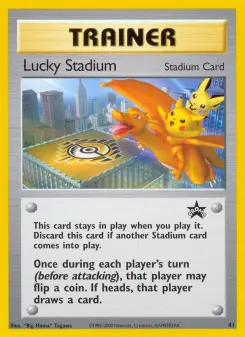
| [Wizards](/research/set-screen/wizards%20black%20star%20promos) | 53 | 51 | $6,338.89 | $44.27 | 9 | 0 | Lucky Stadium $1,700.00 |
| [Nintendo](/research/set-screen/nintendo%20black%20star%20promos) | 40 | 34 | $4,933.25 | $72.05 | 14 | 0 | Mudkip $1,500.00 |
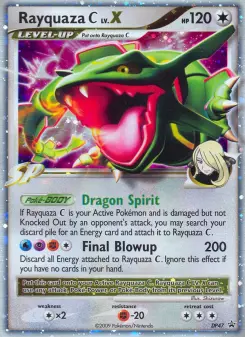
| DP | 56 | 52 | $3,596.32 | $42.94 | 10 | 0 | Rayquaza C $471.25 |
| [HGSS](/research/set-screen/hgss%20black%20star%20promos) | 25 | 24 | $1,205.31 | $38.47 | 1 | 0 | Lugia $233.53 |
| BW | 101 | 96 | $5,431.71 | $20.94 | 12 | 0 | Eevee $800.00 |
| XY | 216 | 210 | $9,304.82 | $19.28 | 22 | 2 | Pikachu EX $501.32 |
| SM | 248 | 246 | $6,544.68 | $9.80 | 18 | 16 | Mewtwo & Mew GX $387.37 |
| [SWSH](/research/set-screen/swsh%20black%20star%20promos) | 302 | 302 | $4,408.67 | $3.36 | 8 | 51 | Special Delivery Bidoof $558.05 |
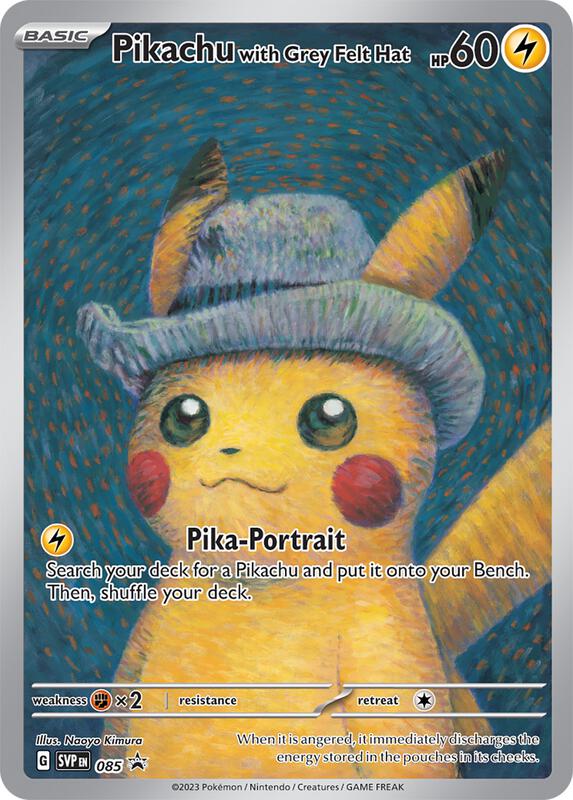
| [SVP](/research/set-screen/svp%20black%20star%20promos) | 226 | 214 | $3,356.48 | $2.27 | 4 | 68 | Pikachu with Grey Felt Hat $1,066.19 |
| [MEP](/research/set-screen/mep%20black%20star%20promos) | 80 | 78 | $610.28 | $5.61 | 0 | 19 | Haunter $48.34 |
| All ten | 1,347 | 1,307 | $45,730.41 | $8.30 | 98 | 156 | Lucky Stadium $1,700.00 |
Ordered by era, the median column falls from $72.05 on the Nintendo promos to $2.27 on the SVP promos, with two steps out of order: the Wizards family sits below Nintendo at $44.27, and MEP sits above SVP at $5.61. The count column runs the other way: SWSH and SVP hold 528 of the 1,347 cards between them and $7,765.15 of the $45,730.41. Modern promo families are large and cheap; old ones are small and dear. That is not a discovery about promos so much as the same age gradient the whole catalog shows, and Do Pokémon Sets Gain Value With Age measures it across 100 sets.
The shape, not the top ten
A top-ten table would tell you almost nothing here, because the question is what a promo is worth rather than what the best promo is worth. These seven bands cover all 1,307 priced cards with no gaps and no overlaps, and they sum to the full $45,730.41.
Every priced Black Star Promo by ask band. The bands are exhaustive and sum to 1,307 cards and $45,730.41
| Ask band | Cards | Share of cards | Summed ask | Share of value |
|---|---|---|---|---|
| Under $1 | 156 | 11.9% | $98.02 | 0.2% |
| $1 to $4.99 | 350 | 26.8% | $937.02 | 2.0% |
| $5 to $9.99 | 203 | 15.5% | $1,447.69 | 3.2% |
| $10 to $24.99 | 253 | 19.4% | $4,086.88 | 8.9% |
| $25 to $99.99 | 247 | 18.9% | $12,718.82 | 27.8% |
| $100 to $499.99 | 89 | 6.8% | $17,939.89 | 39.2% |
| $500 or more | 9 | 0.7% | $8,502.09 | 18.6% |
709 of the 1,307, 54.2%, ask under ten dollars and hold 5.4% of the money between them. The mean promo is $34.99 and the median is $8.30, a ratio of 4.2, and that gap is the honest answer to the headline. The concentration is steeper than the catalog at large, where 1% of cards hold 45% of value in Where the Money Sleeps; here 7.5% hold 57.8%, which is less extreme per card but sits on a population that was given away rather than sold.
Where the money actually is
Nine cards ask $500 or more and they come from six different families spread across the whole run, which is the argument against treating any one family as the answer.
Every Black Star Promo asking $500 or more on September 23, 2026. Asks are listings; PSA medians are sold prices
| Card | Family | Ask | PSA 10 sold | PSA 9 sold |
|---|---|---|---|---|
| Lucky Stadium | Wizards | $1,700.00 | $7,150.00 (n=21) | $2,655.95 (n=22) |
| Mudkip | Nintendo | $1,500.00 | $1,997.50 (n=11), withdrawn as stale | $3,500.00 (n=3) |
| Pokémon Center | Wizards | $1,199.00 | not recorded | $1,900.00 (n=26) |
| Pikachu with Grey Felt Hat | SVP | $1,066.19 | $2,550.00 (n=722) | $915.00 (n=569) |
| Eevee | BW | $800.00 | not recorded | not recorded |
| Paradise Resort | SVP | $597.50 | $1,050.00 (n=8) | $36.00 (n=27), withdrawn as stale |
| Rayquaza ex | Nintendo | $580.03 | not recorded | $7,600.00 (n=30) |
| Special Delivery Bidoof | SWSH | $558.05 | $3,150.00 (n=35) | $618.88 (n=70) |
| Pikachu EX | XY | $501.32 | not recorded | $5,150.00 (n=42) |
Five of the nine carry no PSA 10 sold median we would use: four have none at all and Mudkip has one dated August 10, 2026, before the current tape began. One of the four with nothing, Eevee from the BW family, has no graded row of any grade. Its $800.00 ask rests on nothing we can check. Rayquaza ex is stranger still: no PSA 10 comp, a PSA 9 comp at $7,600.00 on thirty sales, and a raw ask of $580.03. Two of the nine are the Wizards-era giveaways that The Handout Grails is about, Lucky Stadium and Pokémon Center, and two are Nintendo-era promos, Mudkip and Rayquaza ex. Two more are from the SVP family, and one of those, Pikachu with Grey Felt Hat, carries 722 recorded PSA 10 sales, the deepest graded tape of any card in this table. Two more named cards in this population carry their own studies: Mewtwo & Mew GX SM191 and Special Delivery Charizard SWSH075, which asks $208.31 with a PSA 10 sold median of $1,311.93 on 98 sales.
The grading gradient, and the hole in the middle of it
Gem rate is the share of a card's PSA registry line that came back a 10, and a rate is only used here when the row passes our trustworthiness check, which rejects a recorded zero on a line deep enough that zero tens contradicts the rest of the row. The per-family medians are not a straight line with age. They fall from 20.4% on the Wizards promos to 1.4% on the DP promos, then climb to 48.0% on MEP. The four families in the trough, DP, HGSS, BW and XY, sit between 1.4% and 4.1%, and they are the four era blocks between the Wizards run and Sun and Moon.
Grading by family. Gem rates are medians over the cards whose registry row passes the trustworthiness check; a quotable PSA 10 sale means ten or more recorded sales and a registry line that survives the collision test
| Family | Cards with a trustworthy gem rate | Median gem rate | Cards with a quotable PSA 10 sale | Median PSA 10 over ask |
|---|---|---|---|---|
| [Wizards](/research/set-screen/wizards%20black%20star%20promos) | 50 | 20.4% | 37 | 15.92x |
| [Nintendo](/research/set-screen/nintendo%20black%20star%20promos) | 18 | 7.8% | 5 | 8.91x |
| DP | 40 | 1.4% | 0 | no quotable card |
| [HGSS](/research/set-screen/hgss%20black%20star%20promos) | 11 | 2.1% | 0 | no quotable card |
| BW | 75 | 4.1% | 0 | no quotable card |
| XY | 149 | 4.0% | 14 | 44.14x |
| SM | 227 | 14.5% | 55 | 19.71x |
| [SWSH](/research/set-screen/swsh%20black%20star%20promos) | 293 | 29.8% | 73 | 19.37x |
| [SVP](/research/set-screen/svp%20black%20star%20promos) | 204 | 31.4% | 67 | 17.45x |
| [MEP](/research/set-screen/mep%20black%20star%20promos) | 66 | 48.0% | 33 | 16.35x |
Three families have no quotable PSA 10 price at all, and they sit next to each other: DP, HGSS and BW, 182 cards and $10,233.34 of ask between them. DP is the sharpest of the three. Fifty-six cards, $3,596.32 of ask, ten of them asking $100 or more, a median trustworthy gem rate of 1.4%, and not one card in the family with a PSA 10 sold median that clears ten sales. Its best-known card, Rayquaza C, has returned exactly one PSA 10 on a registry line that had recorded 1,333 gradings when we read it on September 22, 2026, a rate of 0.08%, which is where Fifteen Tens From 12,323 Tries found it at a shallower reading of the same line. On a family like this the PSA 9 is the product: 26 of the 56 carry a usable PSA 9 comp and none carries a gated 10. The era-level version of this gradient, across 17,730 cards rather than ten families, is Hard to Gem, and the way the premium collapses as gemming gets easier is Easy Grades Are Cheap Grades.
Ten rows were withheld from that table by a collision test, and the test is worth describing because promos are where it bites hardest. Several products can share one PSA registry line, and when they do, the sold tape attached to the line belongs to a different card. The test compares recorded sales at a grade against the number of copies the registry holds at that grade. One sale per copy is not a ceiling, because a slab can be sold more than once, so the bar is set at two sales per graded copy and the stricter alternative is reported beside it rather than hidden. Of 294 promo PSA 10 medians that clear ten sales, 10 fail the two-per-copy bar and are withheld. The clearest is Mega Lucario ex in the MEP family, whose tape records 1,037 PSA 10 sales against a registry line holding one. One of the ten is a different shape from the other nine and is worth naming for that reason: Pikachu records 249 PSA 10 sales against a registry line of two submissions and no recorded tens at all, so there is no denominator to divide by; it is withheld because a sold tape that large cannot describe a line that small, not because it crossed a ratio. The ten break down as two Wizards, three SM, three MEP, one SWSH and one BW, the two named above included, and the BW withdrawal is the reason that family's column reads zero rather than one. Under the stricter one-sale-per-copy bar two more rows go: Moltres at 169 sales against 135 tens, 1.25 per copy, and Sobble at 23 against 14, 1.64 per copy. That would take the Wizards column from 37 cards at 15.92x to 36 at 17.39x and the ten-family total from 284 to 282, leaving the 19.37x median across all ten unchanged. Both of those rows look like resale to us, which is why the published bar is the looser one, and the figure the stricter bar would print is here so you can take it instead. A withheld cell is the honest output either way, not a gap to be filled with the number we happen to hold.
What this cannot show
Five limits. First, every price here is an ask on one day, and 40 of the 1,347 cards carry no ask at all and are excluded from every value figure; they are not zeros, they are cards nobody is listing. Second, our daily tape is 25 days long, so this study holds no return, no trend and no peak for any promo family. Third, the graded medians are a provider's recorded sales, and a family with no gated PSA 10 card is a family where we cannot quote a graded price, not one where the grade is worthless. Fourth, a PSA registry line can be shared by several products, so no slab count is printed anywhere here and the gem-rate column is a median of per-card rates rather than a pooled rate. Four of the ten families, DP, BW, XY and SM, have no set screen we can link: `foldSetName()` collapses five Black Star Promo names to one key on that route and the tie breaks to SWSH, so `/research/set-screen/dp black star promos` renders a SWSH page. Those four are linked to their `/set/` pages instead, which resolve correctly and carry the provider's broader total. Fifth, and this is the structural one: the set index this site publishes for a promo family is not the family as this study counts it. A stored `sethist2` series under our ten catalog names returns nothing, but all ten exist under the PROVIDER's spelling and all ten render a `/set/` page: Wizards is wotc promo, DP is diamond and pearl promos, SM is sm promos, and so on down the list. Nine of the ten list the family's own cards; the MEP page renders its total with no card list at all. All ten count more priced products than we do, so their totals run higher: the Wizards page reads $9,277 against our $6,338.89 and the SM page $15,201 against our $6,544.68. Every family total in this study is a sum we computed over the daily card tape, card by card, and the two instruments are not interchangeable. A set-level promo number you read anywhere, ours included, is only as good as the population behind it.
What would overturn this
A single DP Black Star Promo acquiring a PSA 10 sold median on ten or more sales would break the zero in that row and give the family a multiple for the first time. A recount of the ten families that finds a different card total, ours is 1,347 rows after deduplicating on the TCGplayer product id, would move every denominator. And the concentration finding turns on nine cards: if two of them lose their listings the way Eevee could, the $500-or-more band's 18.6% falls with them, which is what it means for a share to rest on nine asks.
Population. Every catalog row whose `set_name` is one of the ten English Black Star Promo families: Wizards, Nintendo, DP, HGSS, BW, XY, SM, SWSH, SVP and MEP. 1,347 distinct products after deduplicating the 63,555-row catalog on `tcg_id`, which collapses 1,212 rows overall. No price floor, no top-N window, no rarity filter. Other English promo sets in the catalog (Alternate Art Promos, Promos-A, Miscellaneous Promos) are not Black Star Promo families and are excluded. Prices. `price_history` on day 20719, 2026-09-23, 52,378 priced products; these are ASKS, the daily dump's market figure for the canonical printing rather than the dearest one, never sales. 1,307 of the 1,347 carry one; the 40 without are excluded from every sum, median and share, and the counts are printed so the reader can see the exclusion rather than infer it. The band table is exhaustive over those 1,307 and its five columns sum to 1,307 cards and $45,730.41. Graded. `graded_snapshots`, latest day per card key and grade, read across the catalog-id and TCGplayer-id keyspaces and resolved by taking the fresher row. These are SOLD medians and each is printed with its sample size. Stale-row rule, applied across this whole batch: after the fresher-keyspace read, any median dated before day 20695 (2026-08-30, the start of the current daily tape) is dropped, because the graded feed rotates roughly a seventh of the catalog a day and an older row is a reading from a different week. It removed two PSA 10 medians (one Nintendo, one SVP) and five PSA 9 medians (one each in DP, HGSS, BW, SVP and MEP) out of the 1,347 cards, and every count in the grading table is after that removal. Collision test, run on every graded row used in this study: several products can share one PSA registry line, so a sold count at a grade is compared against the registry count at that grade whenever the registry row passes the trustworthiness check, and a row recording more than two sales per graded copy is withheld. One sale per copy is not a ceiling, because a slab can be sold more than once, so this is a declared threshold and not an impossibility; the stricter one-sale-per-copy bar is counted beside it below. It withholds 10 of the 294 promo PSA 10 medians that clear ten sales: two Wizards, three SM, three MEP, one SWSH and one BW, leaving 284. Nine of the ten fail on the ratio; the tenth, basep-27 Pikachu, sits on a registry line recording zero tens, which is a missing denominator rather than a ratio above the bar, and is withheld on the same reasoning. Of the 1,347 cards, 620 carry both a graded row and a registry row the check accepts and are therefore testable, and 67 carry a graded row on an untestable registry row; the untestable ones are not withheld and that asymmetry is stated rather than hidden. Sensitivity: the stricter one-sale-per-copy bar withholds two further gated PSA 10 rows, basep-21 Moltres at 1.25 sales per copy and mep-054 Sobble at 1.64, taking the Wizards column from 37 cards at 15.92x to 36 at 17.39x and the ten-family gated total from 284 to 282, with the 19.37x median across all ten unchanged. It also withholds four further PSA 9 rows, none of which is printed anywhere in this study. Every ranking, count and multiple in the grading table requires ten or more recorded sales; `Median PSA 10 over ask` is the median of the per-card ratio of a gated PSA 10 median to that card's day-20719 ask, never a ratio of sums. Registry and gem rates. `population_snapshots`, latest day per key, read across both keyspaces. A gem rate is used only when the row passes `gemRateIsTrustworthy()`, which rejects a recorded zero tens on a line of 100 or more, or on a line that also records PSA 9s or PSA 10 sales, because rows written before 2026-09-17 carry a parse artifact of exactly that shape. The card counts in the gem column are the cards that passed, and they are printed rather than hidden. No registry absolute is published as a slab count: several products share one line and a per-family sum would double count. Set index. `sethist2:<family>` under our ten catalog names returns nothing, but the series exist under the PROVIDER's set names and all ten render at `/set/`: `wotc promo`, `nintendo promos`, `diamond and pearl promos`, `hgss promos`, `black and white promos`, `xy promos`, `sm promos`, `swsh: sword & shield promo cards`, `sv: scarlet & violet promo cards` and `me: mega evolution promo`. Each was fetched on 2026-09-23; nine of the ten render the family's own cards and `me: mega evolution promo` renders its index total with no card list at all. Each counts more priced products than this study does (69, 75, 60, 31, 128, 241, 312, 341, 283 and 130 against our 51, 34, 52, 24, 96, 210, 246, 302, 214 and 78), so their `Full Set` totals are higher and are not the figures printed here. A lookup on our catalog spelling returns nothing and must not be read as an absent series. Every family total in this study is a sum over the day-20719 card tape. Links. Every page linked from this study was fetched on 2026-09-23 and its title read back to confirm it is the family the sentence means. Four families, DP, BW, XY and SM, have no correct set screen, because `foldSetName()` in src/server/set-screen.ts strips the leading era token and five Black Star Promo names collapse to one key that SWSH wins on card count; those four are linked to their `/set/` pages instead and each was fetched and its card list checked against the family. Median convention: upper-middle on even samples.